Published: Rabiʻ II 1, 1447 AH
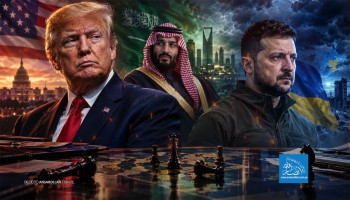
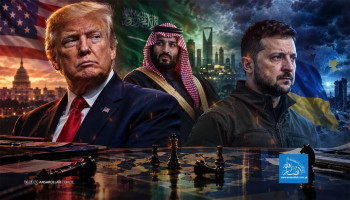
The stormy disputes between the tools of aggression against Yemen have returned to the forefront, reflecting the true nature of the projects driving them and the masters financing them. The disagreements among these tools — far less than actual partners — are not mere surface-level quarrels, but an explicit expression of deep divisions and the fragility of competing foreign agendas suffocating occupied territories. These agendas are stretched between Saudi Arabia, the UAE, the United States, Britain, and, most glaringly, Israel, which now openly exercises a field management role in strategically important areas under the control of these mercenaries.
The escalating rifts within the so-called “Presidential Leadership Council” highlight a bitter truth that requires no analysis: the fragile entity is nothing but a foreign-made illusion, funded from abroad, imitating the form of a state while being hollowed out by contradictions born of absolute subservience to occupying powers. The “legitimacy” they claim is nothing more than a counterfeit stamp signed in Riyadh, Abu Dhabi, Washington, and London, while Yemen’s people in the occupied areas pay the price of these mercenaries’ dependency and betrayal — a cheap cost for a “stability” that exists only in their rhetoric and embellished speeches.
The so-called “Council” was formed in April 2022, not as a Yemeni solution to an internal conflict but as an occupiers’ project designed specifically to divide Yemen into pieces managed from abroad. Its eight members, each carrying a different foreign passport, represent scattered interests: the head of the Southern Transitional Council champions separation under UAE sponsorship; others pursue a hollow “legitimacy” that translates only to Riyadh’s mandate over Yemen; while the West manages its interests through military bases disguised as “security cooperation.” Even the Israeli entity, a beneficiary since the beginning, now wields significant influence in some occupied areas, seeking to confront Yemenis up close through mercenary tools and shift the battleground onto Yemeni soil — supervising military operations in the south under the pretext of “counterterrorism,” while mercenaries brand it “a strategic partnership.”
The recent decisions by Aidarus al-Zoubaidi were nothing more than a natural reflection of this manufactured division. When he issues appointments in ministries and local authorities, his supporters label them “a southern partnership entitlement,” while his opponents call them “an overreach of powers.” In reality, these are staged plays funded and performed before cameras, aiming to obscure the truth: every individual in the “Council” serves a foreign interest. Saudi Arabia seeks resource control; the UAE seeks to fragment the south; the United States seeks bases, economic dominance, and Yemen’s destabilization as part of its broader strategy to weaken resistance to Zionist projects in the region; Britain hopes to restore what it sees as its colonial legacy and secure maritime trade through absolute guardianship over Yemen; while the Zionist entity pursues multiple objectives, including inflicting a decisive defeat on Yemenis by proxy, and eliminating what it deems the Yemeni threat.
The near-permanent absence of six Council members from meetings and sessions has only one explanation: they are preoccupied with serving their foreign masters’ agendas. The meetings they occasionally announce are of far less importance than the real task they are assigned: executing external directives. These gatherings therefore, serve only as façades to market “legitimacy” to the world, while Yemen’s fate is decided behind closed doors in secret communications between regional and international actors. Even Saudi Arabia’s latest attempt to “contain the escalation” is nothing more than a desperate effort to reshuffle cards before the collapse of the entire entity, and to prepare it for another round, supervised by Washington and aligned with Israeli agendas.
What is striking is that disputes meant to remain behind closed doors have spilled into the open, despite relentless external efforts to resolve and prevent escalation. Instead, they have deepened and turned into public clashes, as seen in al-Zoubaidi’s latest decisions, which transformed corridors into arenas of protest and confrontation. The Saudi-led coalition attempted seasonal interventions and “solutions” to contain a scene spiraling out of control.
The true depth of this chaos lies not in recent appointments or decrees, but in the nature of the political project itself — or more accurately, the conflicting projects — which hold Yemen hostage to foreign tutelage. These projects range from separatist agendas to calls for “state restoration” that are little more than covers for private gains. They depend heavily on direct Western and Israeli interventions on the ground. The latter has become an undeniable reality, with the Israeli enemy working to exploit it as a gateway to strike Yemen and neutralize one of its most dangerous and fast-growing existential threats.
Analysts point out that divisions within the Council are “natural,” while the abnormality lies in attempts to build on them as a foundation for illusory goals and to masquerade as a “legitimacy” incompatible with the Council’s own agendas. From the very beginning, the Council was created as a divisive project for external purposes, not for the service of Yemen. While some claim it aims to “restore the state,” in reality, it is actively dismantling it. The southern separatist project opposes Yemen’s unity; Riyadh’s project reproduces herd-style hegemony and authoritarian power; the West runs its interests through private security firms; and Israel quietly expands its influence in the south. All of this operates under one roof called the “Presidential Leadership Council” — a roof that cannot endure for long, surviving only through constant external interventions and patchwork fixes.
The clearest reality today is that the so-called “Presidential Leadership Council” is nothing but an artificial illusion, a failed project from the outset. A structure created abroad and managed abroad can never produce national governance, nor can mercenaries led from beyond the borders rebuild a state. Yemen will remain free through its proud people, rooted in their faith-based identity and their authentic Arab and Islamic belonging.