Ansarollah Website Official Report
Published: Rabiʻ II 21, 1447 AH
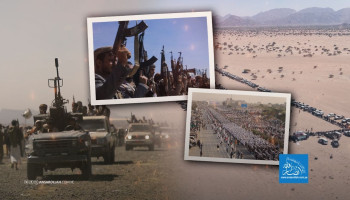
Over the course of 735 days, Yemen has written — in letters of fire, dignity, and defiance — immortal lines in the record of the Arab and Islamic nations. The Yemeni stance has reaffirmed that belonging to Palestine is not a matter of slogans or appeals, but of solid action on the ground that changes the balance of power and exposes the world’s impotence before a free will that refuses subjugation.
Two years have passed since Yemen chose not to stand idly by before the genocide in Gaza, nor to remain silent like others shackled to the illusions of normalization and failure. Instead, Yemen chose the path of action and honor — the path of those who believe that the struggle against Zionism is not about geography, but about humanity, dignity, and identity.
This report presents a comprehensive statistical overview of the Yemeni Armed Forces’ military operations in support of Gaza, beginning with naval operations and detailing the number and nationality of ships targeted up to October 7, 2025. It also includes a table of engagements with U.S. warships, as well as a detailed account of operations carried out deep inside the Israeli entity, including the types of weapons used and target locations. The data is based entirely on the official statements of Armed Forces Spokesperson Brigadier General Yahya Saree, from the first announcement through October 7, 2025.
A downloadable PDF version of the full report is available below.
The Sea Speaks in Yemen’s Voice
The Red Sea has never been as restless as it is today — now, it speaks with a distinctly Yemeni accent, one that asserts sovereignty and redefines deterrence. Since Yemen’s historic decision to impose a maritime ban on the Israeli entity's vessels and all ships dealing with the Zionist enemy, the region’s maritime map has been redrawn. Trade routes have shifted, and major economic calculations have been upended.
Yemen succeeded in halting the passage of hundreds of ships belonging to the Zionist enemy, as well as American and British vessels, extending its ban to any that violated its sovereign decision. This was not a political display nor an act of propaganda; it was a calculated military operation, executed with advanced technology and a far-reaching strategic vision. The Red Sea has become a restricted zone for the Israeli enemy's navigation, forcing major shipping companies to alter their global routes.
Among the 25 Israeli vessels targeted, the first was the Galaxy Leader, seized by Yemen’s Navy on November 19, 2023, and towed to Hodeidah Port with 25 crew members aboard — marking the start of a new phase of maritime operations.
Two years into Yemen’s naval blockade, the Israeli enemy's ships no longer dare to cross Bab al-Mandab, and the Port of Umm ar-Rashrash has turned into a painful economic memory for Tel Aviv. Shipping routes now divert around the Cape of Good Hope, doubling costs and losses — proof that Yemen’s decision was not a mere threat but a principled and faithful commitment carried out with discipline and resolve.
Yemen targeted over 76 ships in total — including 41 in the Red Sea, 13 in the Gulf of Aden and Arabian Sea, and five in the Indian Ocean, among them MARATHOPOLIS and Santa Ursula near Socotra. In the Mediterranean, five ships were hit, while seven vessels were struck in Haifa Port in joint operations with Iraqi resistance forces.
Thus, Yemen has established its own equation:
“Whoever colludes in Gaza’s genocide shall not sail our seas in peace.”
Legendary Resilience Against U.S.-British Aggression
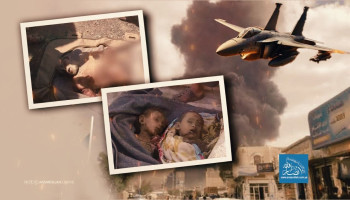
In response, the U.S. and Britain — backed by Europe and the Zionist entity — launched a wide-scale military campaign under the pretext of “protecting freedom of navigation.” Their goal: to break Yemen’s will and silence its voice of support for Gaza. Yet, reality defied their plans.
Months of continuous bombardment failed to achieve any of their declared objectives. Yemeni willpower remained unbroken, and operations not only continued but expanded. Every missile dropped on Yemeni soil seemed to give birth to a thousand new resolutions to continue on the path of dignity.
Yemen went beyond defense, engaging in over 68 battles with U.S. aircraft carriers, destroyers, and frigates, inflicting strategic damage and forcing Washington to request de-escalation in exchange for halting attacks on American vessels. Meanwhile, Yemen continued its strikes on Israeli and Israeli-linked ships and targeted 30 U.S. commercial vessels during this period.
The Yemeni Technological Miracle
To the astonishment of global military think tanks, Yemen — a besieged and impoverished nation — has built advanced military capabilities rivaling those of major armies. Using drones, ballistic and cruise missiles, Yemeni forces have reached deep into the Zionist entity striking sensitive targets in occupied Yaffa, Haifa, Asqalan, Bi'r al-Sab, and the al-Negeb.
These precision strikes announced the birth of a new balance of deterrence — one founded not on foreign bases or alliances, but on national will and indigenous innovation.
American and Israeli defense systems — from Patriot and THAAD to Arrow, David’s Sling, and the Iron Dome — all failed to intercept Yemen’s missiles and drones. The Yemeni mind proved to be the most advanced weapon, and Yemeni resolve the most precise technology.
Missiles in the Heart of Israel
Inside Tel Aviv, confusion reigned. Sirens wailed in occupied Yaffa, Asqalan, Umm ar-Rashrash, Haifa, al-Quds, al-Negeb, and Dimona, as Yemeni missiles breached the much-vaunted Israeli entity's defense network.
Generals were left frightened, while Yemenis smiled — their message clear: distance is no barrier, and the hand raised against Gaza will be cut.
Yemen has so far launched 1,835 operations, including ballistic, cruise, and hypersonic missiles, drones, and naval strikes.
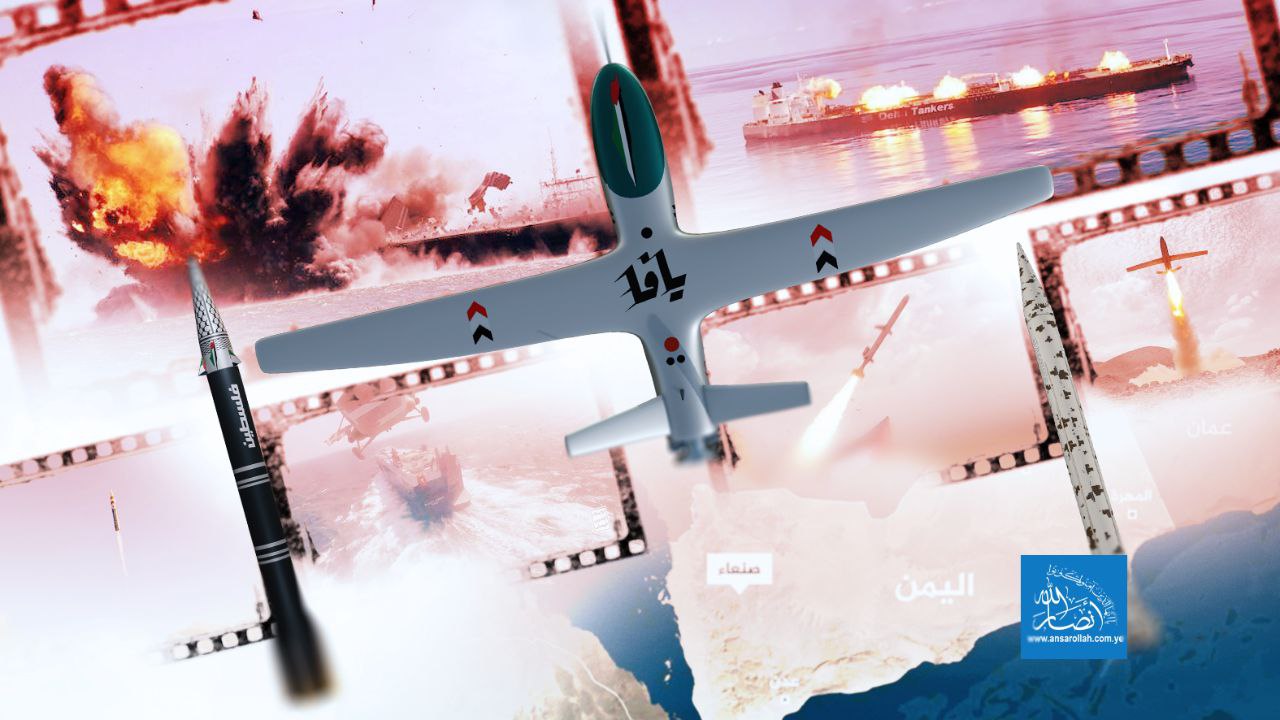
In Yaffa, 74 missiles were fired, including 42 “Palestine-2” hypersonic missiles, 4 multi-warhead Palestine-2 variants, 11 other hypersonic types, and 17 “Dhu al-Fiqar” ballistic missiles. More than 60 drones were deployed, including 18 “Yaffa”-class UAVs.
Against Umm ar-Rashrash (Eilat), Yemen launched over 60 ballistic and cruise missiles and more than 120 drones.
When Stance Becomes a Weapon
Not all battles are measured by the number of missiles fired or the scale of destruction. Some are defined by symbolism, principle, and steadfastness. Over two years, Yemen has offered the region a profound lesson: dignity cannot be purchased, and sincerity in cause outlasts armies.
When Yemenis declared, “You are not alone,” they weren’t chanting slogans but signing a pact of blood and solidarity. When Sayyid Abdul-Malik Badrudeen al-Houthi declared the Red Sea a “red line” for Israeli vessels, he knew the cost — but he also knew that freedom is not granted, it is taken.
Europe Joins the Failure
Europe, too, sought to intervene, believing its military presence could suppress Yemen’s resolve. It sent warships and issued repeated statements about “freedom of navigation,” only to discover that the battle was not merely naval, but political and moral.
Each air raid was met by even larger Yemeni demonstrations for Palestine, revealing a deep national unity between the people and their leadership. Like the U.S. and Britain, Europe failed, for it confronted a nation fighting not for power or wealth, but for principle.
Shockwaves in the Zionist Entity: Military, Economic, and Psychological
Yemen stood firm like a dam before a torrent. Its strikes were not mere retaliations but deliberate messages engraved into history: oppression always has a price.
The attacks shook the Israeli entity’s military confidence, economy, and public morale. As missiles struck key sites across occupied Palestine, economic chains were disrupted, foreign investment faltered, and the illusion of absolute security crumbled.
For the first time, the Zionist enemy faced a real strategic and psychological earthquake — one that proved that deterrence is no longer the monopoly of conventional powers.
Gaza and Yemen: A Unity of Blood and Destiny
Yemen’s support for Gaza was not tactical or temporary — it was a moral and spiritual commitment rooted in faith and shared destiny. Yemen tied its fate to Gaza, believing that Palestine is the scale of Arab dignity, and that abandoning it means abandoning identity itself.
For over two years, Yemen has provided military, political, media, and humanitarian support. Every demonstration in Sana’a and other cities was a frontline of awareness, and every speech a window of hope amid Arab silence.
Two Years of Glory, A New Phase Begins
As Yemen closes the first chapter of its support for Gaza, the moment is not seen as a passing episode but as a strategic transformation that reshaped the region. Yemen has become an active power influencing global and regional decision-making.
It has redefined strength — not as hardware, but as faith and will; and redefined Arabism — not as slogans in summits, but as sacrificing blood in defense of dignity.
From Sana’a to Gaza, from the Red Sea to the Mediterranean, Yemenis and Palestinians have together written a new chapter of freedom, declaring that even under the fiercest aggression, the nation can rise from its ashes and weave victory from its pain.
Yemen: The Pulse of Arabism and the Conscience of the Nation
Two years of Yemeni support for Gaza are more than just dates in the calendar of war — they mark the rebirth of an Arab spirit once buried under normalization and despair. Yemen has proven that the oppressed, when armed with faith, can become stronger than any empire.
It has been proven that resistance is not a military option, but a way of life, and that even the sea can be a weapon in the hands of the free.
Now, as the second round of this confrontation concludes, Yemen stands tall on the shores of the Red Sea, raising its flag and affirming:
“No ship that supports the genocide in Gaza shall pass in peace.”
This is Yemen — a nation that measures its stances not by calculation, but by honor. It has turned the sea into an arena of dignity, and the sky into a platform for freedom.
Two years of resilience. Two years of honor. Two years of support.
And history will forever record:
“From Sana’a came the decision, and from Gaza came the echo — We do not break.”