Ansarollah Website Official Report
Published: Rabiʻ II 23, 1447 AH
Between saying and doing, there is a testing distance few successfully cross. The Yemenis crossed it with distinction and historic excellence, through a support action raised on the pillar of sincerity. This action scored a proxy victory for all Arabs and the majority of Muslims.
Before the Flood, how could people distinguish the chaff from the wheat, the sincere from the collaborator, who sided with the enemy and who with Palestine (that land whose fate was destined to be linked to the fate of the entire Ummah, no matter how some tried to disavow or evade it — consequences come either singly or en masse)? This is what the Flood taught us; support proved it and deepened its consolidation in our nation's memory of abandonment, until it seemed the Ummah walked in one valley while Yemen and Gaza walked in another — on a path fewer had traversed and more had objected to.
In the history of conflicts, verbal solidarity and actual support are often separated; the former had nearly become the summit of what international solidarity and diplomatic action produced as the outcome of humane interaction. Yemen—decisively and with full capacity—wrote a new, different chapter in the dictionaries of relations and principles when it decided to leap from the square of condemnation into the circle of consequential, costly action. Yemeni support became a decisive element, not only in reinforcing Gaza's steadfastness but in imposing a different tempo on the battle, culminating in the declaration of Gaza's historic victory and its people within the tableau of the great victory, or what we Yemenis call, "the Promised Victory and the Sacred Jihad", a title that transcends mere support to embrace direct confrontation with the Ummah’s enemy and historical adversary.
Geography as a Tool of Sovereignty and Support
The turning point in Yemeni support was converting solidarity into a sovereign decision that exploited strategic geography. The Red Sea became a tool of pressure in the Yemenis’ hands; they placed it within the map of support for Gaza and in the arsenal of their political negotiators. It became a card that imposed new rules of engagement on the major powers. Yemeni experts explain this qualitative shift, emphasizing the principle of sovereignty:
"Yemen is a pivotal state in the Red Sea region, it controls the southern gate, and Yemen has the right to impose its influence and hegemony over its maritime domain, and to be able to benefit from its geography, to employ its geographic reality in ways that achieve its interests, and more than that, to make it a first line of defense for Arab national security and not only to protect Yemen."
With this strategic awareness, the stance shifted from moral support to a Yemeni fait accompli that affected Zionist navigation — drawing support into a phase the entity and its backers had not prepared for.
A Naval Blockade That Paralyzed the Enemy’s Economic Artery
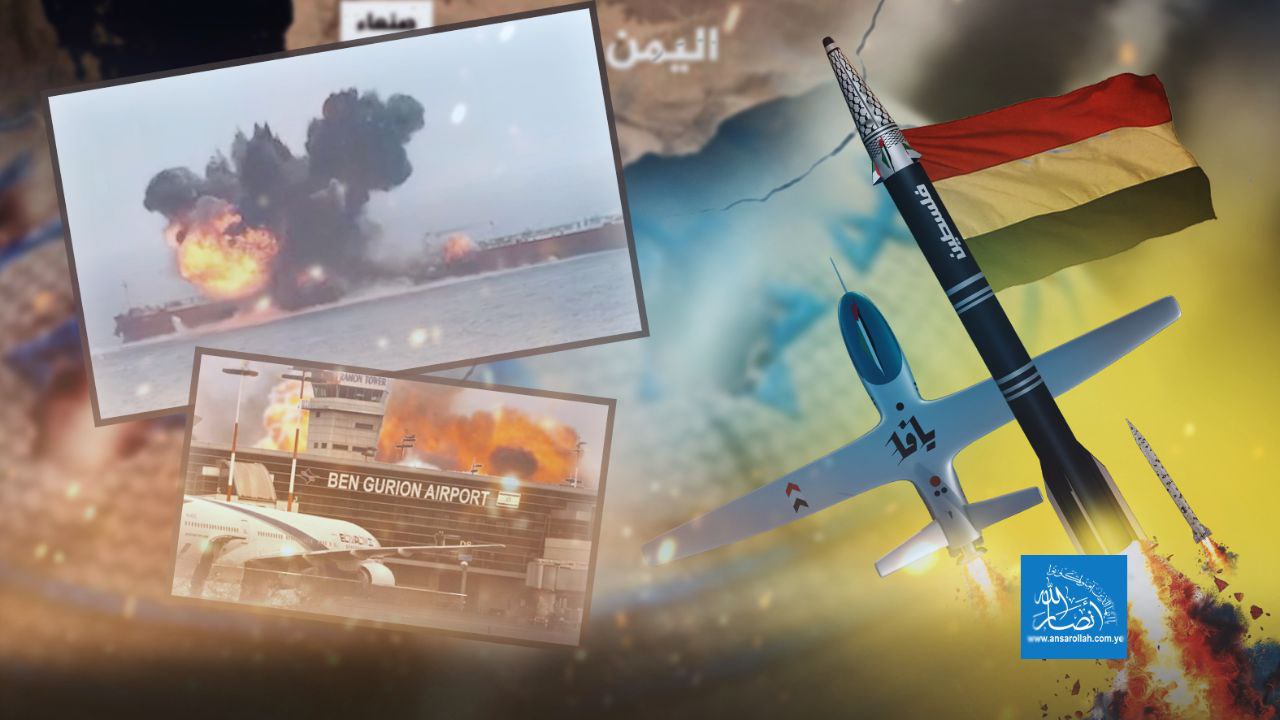
Yemeni support transcended mere military presence to seek effects capable of producing profound influence and inflicting direct damage on the enemy — whether through rockets and drones, or by striking strategic blows to economic arteries affecting the adversary’s ability to continue its aggression without an exorbitant cost. Hence, Yemen's decision to close the port of Umm ar-Rashrash by entirely preventing Zionist navigation through waterways under the jurisdiction and control of the Yemeni Armed Forces. Indeed, Yemeni naval operations — employing various types of military means and tools — succeeded in imposing a de facto maritime blockade on the Zionist entity, beginning with direct hits on its ships and then targeting vessels linked to it or bound for its ports, through phased escalations that produced direct results, as analysts documented:
"The port of Umm ar-Rashrash 'Eilat' is completely halted, and the percentage of Yemeni military operations declines with the reduction and even cessation of movement of targeted or hostile ships, and when its movement stops it certainly will not have military operations."
Yemenis’ success, in the early months of support, in reducing a vital port and essential artery to closure — which remains closed to this day — meant Yemen struck directly at a major economic vein. Global shipping firms were forced to reroute around the Cape of Good Hope; major navigation companies refrained from dealing with the enemy entity or took longer, costlier, and riskier routes. This deepened the internal crisis of the entity and raised the cost of continuing the aggression against Gaza over time.
Diverting Western Effort
The Western coalition dubbed the "Coalition of Prosperity" had to allocate a large portion of its advanced military capabilities to the Red Sea to defend "Zionist navigation," placing them in a defensive posture protecting Israeli vessels rather than fully supporting the assault on Gaza. This dispersion of effort partially eased pressure on the Gaza front and, from a strategic perspective, affirmed the impossibility of separating battlefronts or isolating theaters from one another within supporting circles. Yemen evolved into an axis of influence possessing powerful pressure cards that cannot be bypassed or whose effects can be minimized.
Because the battle was not easy and represented a true test of local capabilities against major powers with technical superiority, Yemen — under the pressure of battlefield challenges — was driven toward unprecedented development in military industries and offensive and defensive capabilities, fed by operational field feedback that enhanced experience and honed capacity simultaneously.
Experts on Yemen's growing power say:
"The battle imposes on the Yemeni side more military effort, and also more developmental work regarding force and weapons, and certainly the Yemeni side benefited greatly during the past period in developing this military power so that it can have effectiveness."
Moreover, the Yemeni missiles and drones' ability to bypass interception and tracking systems reflects — even according to admissions from Israelis and Americans themselves — the rapid responsiveness of the Yemeni mind in handling the technical complexities faced sequentially during the battle. This attests to a multiplication of technical expertise and the ability to overcome advanced defense systems, as well as disclosures of the development of hypersonic missiles — a massive technological shift that bewildered the enemy's calculations and flipped deterrence balances in the region.
Moral Impact and Cementing the Equation of Victory
More than a component of pure military or economic support operations, the Yemeni support front — given its exceptional steadfastness and resilience against diverse military alliances and operations from the Biden era to the Trump period — became the moral artery that pumped the spirit of steadfastness into Gaza and across the Islamic world, which had been stunned by escalating Zionist transgressions in several countries. Yemen, in its unique condition, managed to curb Zionist bullying and offered a different lesson to all freedom lovers in the world about what can be done simply by breaking the barrier of fear, acknowledging the danger, making the decision to confront practically, and confronting the Zionist-American project despite difficult circumstances. The Yemeni people transformed their internal suffering into a motive to support the oppressed.
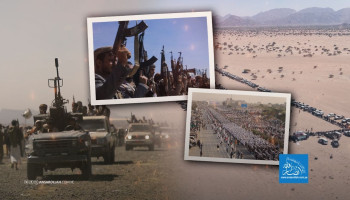
The popular and mass support that Yemenis demonstrated — millions weekly across various provinces — represented the real backing and the solid ground upon which Yemeni military action stood; a comprehensive position combining popular and official, civilian and military components. It included mass presence, political presence, and translated into military action on multiple levels and arenas, in a historic turning point where the Ummah’s central cause moves beyond the formalities of verbal solidarity to effective and influential military and political support that aligns with the aspirations of Arab masses and expresses the essence of their religious and nationalist will.