Published: Rabiʻ II 25, 1447 AH
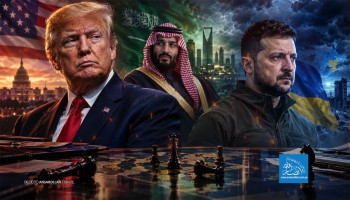
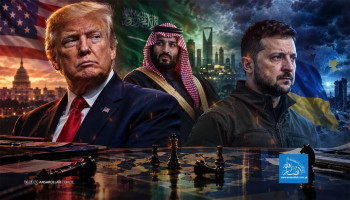
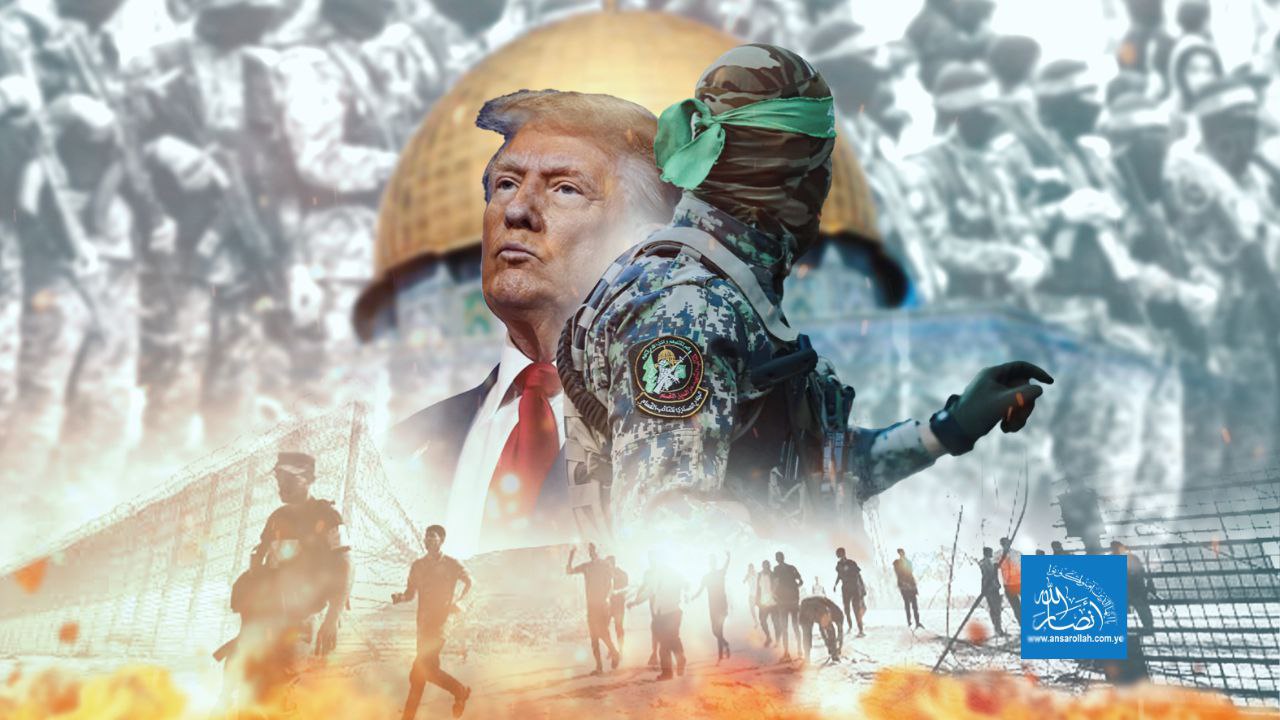
Since the moment the criminal Donald Trump set foot in the White House, he made no effort to conceal what was already known: that Palestine occupied no place in the priorities of his administration except as a file to be liquidated. Washington’s vision for the region—expressed by Trump with unprecedented clarity—was one of blatant bias in favor of the Zionist entity, revealing the true face of U.S. policy: support for domination and the imposition of dictates.
The Trump administration took a series of unprecedented steps regarding the Palestinian cause, including its recognition of occupied al-Quds as the capital of the Israeli entity and the relocation of the U.S. Embassy there in 2017. These measures culminated in the so-called “Deal of the Century” in 2020—a plan designed not to resolve the conflict but to legitimize the occupation of Palestine, built entirely on the desires and ambitions of Tel Aviv.
The deal aimed to enforce submission under the guise of “peace,” cementing the status quo as a replacement for Palestinian rights. Its core message was unmistakable: a Palestine without resistance, al-Quds without Arab sovereignty, land in the hands of the usurper, and a Palestinian people forced into the role of the silent victim. Yet these designs collided with an unforeseen wall—the steadfastness of the Palestinian people. For those who hold fast to their rights inevitably reshape the balance of power, no matter how uneven the scales of iron and fire may seem.
The Palestinian resistance proved that power is not measured by military might or material resources, but by the justice of the cause, faith in the right, and the unyielding will to defend it. Through this steadfastness, the resistance imposed itself upon the international political arena—because it stood firm, endured, fought, and ultimately exposed the global hypocrisy surrounding its struggle.
A Deal for Liquidation, Not Settlement
In truth, the “Deal of the Century” was nothing more than another link in a decades-long chain of attempts to erase the Palestinian cause. As stated by Sayyed Abdulmalik Badruddeen al-Houthi, this is part of a long and ongoing series of Zionist crimes that reached their peak during the Trump era, marked by efforts to drag certain Arab regimes into normalization, alter educational curricula, and restructure regional economies to orbit around the Israeli entity.
The plan sought to make the Zionist entity a central player in the regional axis—not only through military might but also through political, economic, media, and cultural alliances extending into the minds of future generations. The intent was clear: the Israeli enemy glorified in textbooks, Tel Aviv celebrated as the heart of the region, and Palestine reduced to a fading memory.
Driven by the broader Zionist ambition to dominate the Arab world from the ocean to the Gulf under the so-called “Greater Israel Project,” the scheme aimed to eliminate every Palestinian right—sovereignty, return, borders, and guardianship over holy sites. Even the “two-state solution” was buried, while sovereignty over al-Aqsa Mosque was downgraded from ownership to coordination, and the legalization of settlements became an American-backed reality.
From the Deal to Trusteeship
Following the field developments imposed by the resistance, the “Deal of the Century” began to collapse, giving way to a new Trump initiative titled “Gaza 2025 Plan.” Though dressed in the language of development, the new plan was in truth an even more deceitful attempt to end and permanently liquidate the Palestinian cause.
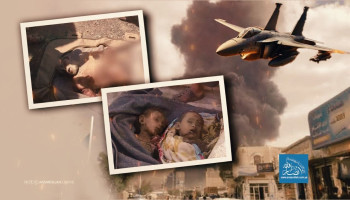
The plan’s promise of Gaza reconstruction came as a conditional bribe: rebuilding in exchange for disarmament, calm in exchange for external trusteeship. Its central objective was to secure the Israeli entity at any cost—even if that cost was the erasure of Palestinian sovereignty and the blood of Gaza’s children.
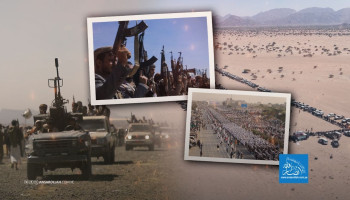
This came amid unlimited U.S. support for the Zionist enemy—military, financial, and political—accompanied by calls to eradicate the Palestinian resistance. Yet through its steadfast defiance, the resistance thwarted this disguised form of trusteeship and imposed a new equation: the fate of Gaza is determined by its people: no foreign guardianship, and no release of enemy soldiers without a fair exchange deal.
The Al-Aqsa Flood
The repercussions of the Palestinian resistance’s heroic operation on October 7, 2023—Al-Aqsa Flood—continue to define the course of events in Palestine. The operation exposed the fragility of an Israeli army long portrayed as “invincible,” stripping away the moral and political cover that Washington and Tel Aviv had long relied upon.
Two years on, the operation remains a horizontal blow to the Zionist security establishment and a vertical strike against the broader American project in the region. After al-Aqsa Flood, the resistance could no longer be ignored—neither on the battlefield nor in diplomacy. Negotiation with it has become an inevitability, not by choice, but by the reality established through strength on the ground.
The Fall into the “Surrender” Trap
As this new reality solidified, even within the United States, voices began acknowledging Trump’s failure. A report published by the American website Antiwar confirmed that the root of Israel’s defeat lies in the endurance of the resistance and its ability to overturn the tables.
The report described the illusion of “Palestinian surrender,” on which the deal had been built, as a mere myth. Through operations such as al-Aqsa Flood, the resistance imposed new realities, exposed the falsehood of the Zionist narrative, and forced major powers to reconsider their positions.
The report further emphasized that disarming the resistance has become an impossible dream, and that the resistance axis—from Gaza to southern Lebanon and Yemen—has emerged as a central factor in reshaping regional balances. It is steadfastness, not submission, that creates change.
When America Diminished
The past years, particularly since al-Aqsa Flood, have proven that attempts to liquidate the Palestinian cause—from the “Deal of the Century” to the “2025 Plan”—have failed and backfired, exposing the ambitions of the Zionist enemy and its allies. Ironically, these same schemes granted the resistance renewed international and popular legitimacy, transforming its struggle into a just cause that dominates global streets and university campuses—even in the heart of Washington itself.
The resistance no longer seeks recognition—it has become an undeniable fact and an unignorable force. Since al-Aqsa Flood, the United States has ceased to be the dominant power in regional decision-making. It now searches for a way to save face in a conflict it once believed was settled.
In the end, it becomes clear that when truth endures, it prevails, and falsehood fades away. When people believe, struggle, and persevere, they triumph. And those who remain steadfast upon their land are elevated above the scales of power—no matter how fiercely the forces of arrogance try to erase or silence them.