Ansarollah Website Official Report
Published: Jumada II 7, 1447 AH
In the vast geography of global finance, billions of dollars flow smoothly from Riyadh, Abu Dhabi, and Doha toward Washington’s political and economic centers. These transfers enrich investment funds and reinforce policies that, according to critics, lie behind the crises of the wider Muslim world—policies that are helping to engineer a new geopolitical order built on weakening Islamic economies. Meanwhile, streets, markets, and homes across the Gulf — and in much of the broader Islamic world — are experiencing a suffocating economic crisis that slowly erodes people’s dignity and sense of security.
The contradiction between massive outward wealth and hidden or apparent poverty at home raises ethical, historical, and political questions no less significant than stock-market figures or corporate performance indicators.
A Shimmering Facade in Saudi Arabia, Masking Daily Hardship
From afar, Saudi Arabia appears prosperous: expanding ports, global investments, and new markets. Up close, the image shifts: citizens struggling with food bills, youth worried about a threatened future, and families calculating every small expenditure.
Analysts ask whether a nation’s prosperity can be measured by its foreign assets while its own citizens face weakening services, declining purchasing power, and persistent anxiety.
Mass foreign transfers — whether justified by diversification strategies or political alliances — carry consequences when not balanced domestically. Critics distinguish between maintaining a protective reserve and diverting national wealth that could fund healthcare, education, and infrastructure. When priorities shift toward projecting external influence and benefiting foreign economies, the ethical question reemerges: Why aren’t state priorities measured by what is provided to citizens before others?
When wealth is spent abroad without a plan ensuring benefits return to society, it exposes what critics call a duality of public promises: a promise of a precarious future for citizens, and another promise of influence and stature on the global stage.
Real economic wisdom, commentators argue, is not merely the ability to sign major global deals, but to turn them into engines for domestic growth—creating national industries, developing human capital, supporting small and medium enterprises, and improving health and education systems. Only then does money move from outward spending to a sustainable cycle that restores economic productivity and public dignity.
Gulf Wealth in Service of Washington
The trillions pumped into the U.S. economy, critics argue, were not just economic figures but a clear sign of a rupture in the social contract between Gulf regimes and their populations, and a detachment from the Arab and Islamic body.
Domestically, citizens face economic dislocation: while Americans are promised 154,000 new jobs annually thanks to Qatar’s Boeing deals, and U.S. aluminum plants in Texas are revived with Emirati financing, Saudis face a tripled value-added tax of 15% and rising inflation at 2.2%.
These policies, according to analysts, have transformed major oil-producing states into debt-burdened entities, with their liabilities multiplying 23-fold over the past decade. Gulf states borrow from Wall Street banks to finance budget deficits, while sovereign wealth funds pour into U.S. Treasury bonds.
Reports from ESCWA indicate that 3.3 million Gulf citizens now fall under the poverty line — a trend critics say reveals that initiatives like “Vision 2030” are glamorous facades masking austerity funded by ordinary citizens to pay for so-called “American protection.”
On the Arab and Islamic front, these agreements are described by critics as a “stab in the back” to Islamic solidarity. While many Muslim-majority nations top global poverty rankings and face famine and crisis, Gulf capitals have opted to direct their trillions toward rescuing the U.S. economy and fueling Western investment funds rather than establishing an Islamic development fund to lift the ummah’s poor. The result, critics say, is reinforced dollar dominance and strengthened corporations accused of harming the region, turning the wealth of the ummah into a whip used against it.
How Gulf Wealth Funds Israeli Settlements
Analysts argue that Gulf investment flows ultimately feed into the infrastructure of Israeli expansion. Documents reveal a complex mechanism: billions invested in U.S. giants like Amazon, Qualcomm, and BlackRock eventually flow into Zionist-aligned investment funds such as Vanguard and BlackRock. These funds serve as financial arms of the Jewish Community Foundation (JCF), which directs profits to settlement organizations in occupied Palestine and to Jewish communities in New York and Tel Aviv.
Thus, each dollar spent on aircraft or technology returns part of its profits to support settlement infrastructure in occupied Palestine, including firms like Qualcomm that boost wireless communications in the Zionist entity.
Regional integration initiatives — including joint air defense and AI-based security agreements — are described as granting the Israeli enemy free “strategic depth,” effectively turning Gulf states into the first line of defense absorbing shocks on Israel’s behalf.
Critics warn that this provides the Israeli entity the security and financial cover needed to intensify territorial expansion.
Internal Collapse and the Betrayal of Arab Depth
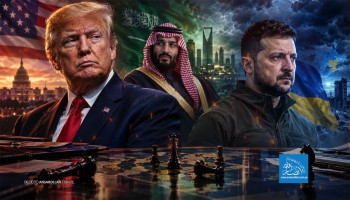
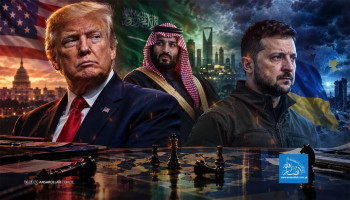
In a scene reminiscent of tributary eras but with astronomical numbers, U.S. President Trump’s visit to Gulf capitals in May 2025 resulted in unprecedented “spoils” totaling $5.1 trillion. Critics call this a systematic extraction of the region’s wealth to revive a struggling U.S. economy, marking a new era of absolute dependency.
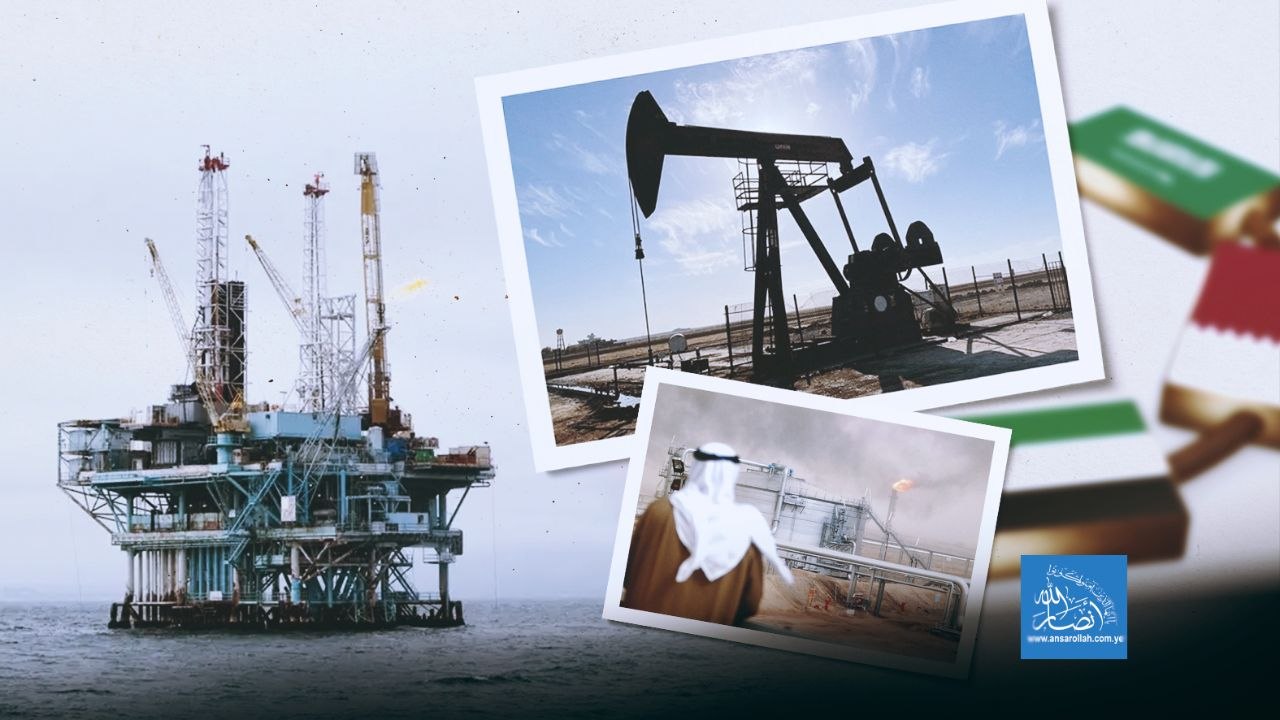
The irony, analysts note, is most visible in Saudi Arabia — the leading contributor to these sums — where citizens endure harsher taxes, rising inflation, and soaring sovereign debt reaching $391 billion by September 2025. As the Ministry of Finance forecasts a budget deficit and turns to Wall Street banks for loans, oil revenues are redirected toward U.S. Treasuries, subsidizing American welfare at Arab expense.
Economist Salim al-Ja‘dabi describes these economic strategies as “suicidal,” citing international reports indicating 3.3 million Gulf citizens have fallen into poverty. He argues that Gulf regimes are not only relinquishing political sovereignty but endangering social security while channeling wealth into U.S. and Israeli-aligned corporations.
Al-Ja‘dabi highlights that Trump’s delegation included not just business figures but what he calls a “financial-military formation” representing “global Zionism.” Figures such as Larry Fink of BlackRock were present — leaders of institutions that, according to al-Ja‘dabi, play central roles in supporting the Israeli enemy.
He asserts that Gulf money now feeds the Jewish Community Foundation, Vanguard, BlackRock, and other funds that finance Israel’s war machine. He notes that Gulf governments willingly signed multibillion-dollar deals with tech and military companies openly aligned with Israeli interests, including Qualcomm — whose growth is tied to the occupation’s wireless communications ecosystem and in which Vanguard and BlackRock hold controlling shares exceeding $32 billion.
He adds that Amazon and Elon Musk’s X networks — whose owner publicly expressed a spiritual connection to Judaism after visiting Auschwitz — are also integrated into AI alliances led by the same Zionist-aligned institutions.
In statements to Ansar Allah’s media, al-Ja‘dabi argues this interlocking system transforms Gulf regimes from spectators of regional violence into “hidden financiers” purchasing the bullets that kill Palestinians, Lebanese, and Yemenis. Each dollar paid to Raytheon, General Atomics, or Boeing under the guise of defense or technological development ultimately enriches investors who support settlement and Judaization projects.
“Yemen Phobia”: Buying Illusions to Escape the Coming Storm
Al-Ja‘dabi says that behind the glittering deals lies a grim military and political reality troubling Washington, Tel Aviv, and normalization capitals alike: fear of Yemen.
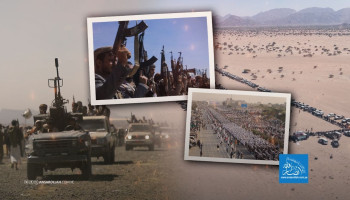
He says the nature of recent Saudi, Qatari, and Emirati military purchases — exceeding $142 billion for Saudi Arabia alone, including air defense systems, missile shields, and navy and air force upgrades — indicates a desperate attempt to build a protective wall against Yemen’s expanding military capabilities.
According to al-Ja‘dabi, U.S. and Israeli officials acknowledge that Yemen’s armed forces have shattered traditional rules of engagement, with drones and missiles posing an existential threat. Ironically, Gulf states are buying the same weapons that failed decisively in Yemen: Qatar and the UAE have acquired MQ-9 drones and counter-UAV systems identical to those repeatedly shot down in Yemen, as well as naval platforms unable to protect Israeli shipping from Yemen’s Red Sea blockade.
He adds that Criminal Netanyahu’s push — via U.S. pressure — for Gulf defense agreements and integrated air-defense systems is an admission that Israel can no longer defend itself alone against precise Yemeni strikes. Instead of becoming shields for the region, these systems are turning Gulf states into “mine sweepers,” absorbing Yemen’s power on behalf of the U.S. and the Israeli enemy.
He argues that the magnitude of these deals, described as “the largest defense sales agreement in history,” reflects deep fear within U.S.-Israeli decision-making circles and confirms that Yemen has imposed a new deterrence equation that no amount of spending can overcome.
When a King Borrows Money to Pay the Tribute
In what analysts call an unprecedented historical paradox, Gulf capitals opened their treasuries during Trump’s May 2025 tour, sending him back to Washington with $5.1 trillion in declared investments.
Saudi Arabia led with $2.3 trillion, followed by Qatar with $1.2 trillion, and the UAE with $200 billion in new commitments atop a previous $1.4 trillion pledge.
Behind this extravagance, however, lie severe economic contradictions: while signing trillion-dollar checks, Saudi Arabia announced that its 2025 budget deficit had doubled to 245 billion riyals, raising the deficit-to-GDP ratio from 2.3% to 5.3%.
Official data show Saudi debt soaring from $17 billion in 2015 to $391 billion by September 2025 — a 23-fold increase. Bloomberg reports that Riyadh borrowed $20 billion from Wall Street banks early in the year and seeks an additional $10 billion loan to fund stalled projects, even as it hands trillions to the same economic lobbies.
Citizens bear the brunt: inflation at 2.2%, a tripled VAT burdening households by more than 300%, and ESCWA data showing 3.3 million Gulf residents living in poverty. Saudi Arabia registered the highest poverty rate among Gulf citizens at 13.6% in 2021, with expectations of further growth.
Instead of lifting impoverished Muslim-majority nations — many of which rank among the world’s poorest — Gulf wealth finances Western comfort and purchases American Treasury bonds, with Saudi holdings reaching $131 billion.
The Mechanics of Subservience: The “Milking Tour” in Numbers
Saudi Station
Beyond defense deals, Saudi Arabia tied its technological future to Silicon Valley. Firms such as Data Volt pledged $20 billion in U.S. data-center investments, while Saudi Arabia committed to $14.2 billion in GE Vernova turbines and $4.8 billion in Boeing aircraft — all framed within “Vision 2030,” increasingly funded by ordinary citizens to support American strategic objectives.
Qatar Station
Qatar signed a historic $96 billion aircraft deal rescuing struggling Boeing and creating 154,000 American jobs. Qatar continues heavy investment in Texas energy infrastructure, surpassing $18 billion in LNG and petrochemical projects supporting U.S. energy security.
UAE Station
Abu Dhabi deepened its role as an advanced outpost for U.S. interests with $200 billion in new deals, including an Emirates Global Aluminium smelter in Texas and $60 billion in oil partnerships with American firms. Most alarming to critics is the integration of UAE telecommunications provider e& with Qualcomm to establish data and monitoring centers — placing regional data under American-Israeli oversight.