Ansarollah Website Official Report
Published: Jumada II 9, 1447 AH
As the first rainstorm of the season hit the Gaza Strip, Palestinian officials and humanitarian organizations warned that conditions in the territory had deteriorated into starvation, slow death, and an unprecedented humanitarian catastrophe. According to statements from Gaza’s Government Media Office, the storm has exacerbated the war crimes of genocide and widespread destruction carried out by the Zionist entity, leaving hundreds of thousands of displaced people exposed to freezing temperatures after floods swept through their fragile tents.
The office stated that the worsening situation is inseparable from the suspicious global silence, which Palestinians interpret as a “green light” for the Israeli entity’s continued closure of border crossings and its insistence on pursuing policies of killing and abuse.
Escalating Humanitarian Collapse
The Government Media Office in Gaza said that the Zionist entity is causing a disastrous shelter crisis, doubling what it called an unprecedented humanitarian emergency. Hundreds of thousands of displaced families now face the winter without protection. The office described this as the most dangerous humanitarian catastrophe since the beginning of the genocide, as basic necessities have disappeared amid the Zionist entity’s deliberate worsening of civilian suffering.
According to the office, more than 288,000 Palestinian families are now living through severe hardship due to extreme weather and the absence of essential living requirements. With the first winter storm, tens of thousands of tents housing displaced populations were flooded — a development Palestinian authorities say exposes the failure of guarantor states and the international community to provide adequate shelter.
The office warned that 300,000 tents and mobile homes are urgently needed, but the Zionist entity continues to block the entry of tents, tarpaulins, and plastic coverings, keeps crossings closed, delays implementation of the ceasefire agreement, and evades humanitarian protocols — measures it says amount to “new forms of genocide through deepening the humanitarian catastrophe.”
Officials say the Israeli entity is preventing the entry of essential winter items, including tarps, insulating plastic sheets, safe heating equipment, flooring to prevent tents from becoming mud basins, mobile sanitation units, and lighting or alternative energy supplies.
Economic Collapse and Engineered Starvation
As hunger and disease continue to claim lives amid collapsing aid networks, international media have highlighted a sharp decline in donations since the ceasefire announcement. The Guardian reported a severe drop in Gaza-bound contributions, noting that the world appears to be treating the ceasefire “as if it ended the need for humanitarian assistance,” even as winter increases risks.
In Le Temps, Lourlene Lasser — Doctors Without Borders’ Head of Humanitarian Affairs in Gaza — stressed that “death continues despite the agreement,” adding that civilians are dying from hunger, illness, cold, and despair after months of destructive war. She described Palestinian daily life as “a living hell,” defined by shortages of food and deteriorated medical care.
The UN Conference on Trade and Development (UNCTAD) warned of an unprecedented economic collapse in Gaza and the occupied West Bank, stating that the war has erased decades of development and pushed Gaza into complete destruction. Palestinian GDP per capita has fallen back to 2003 levels, erasing 22 years of development — placing the crisis among the world’s ten worst economic collapses since 1960. Reconstruction, the report said, will require more than $70 billion and may take decades.
Luxury Goods Allowed In, Essentials Blocked
Palestinian economic sources, cited by Shehab News Agency, say the Israeli entity continues enforcing a strict economic regime that restricts basic essentials — such as gas, diesel, tents, and fuel — while allowing large quantities of luxury items, including modern smartphones, chocolate, and instant noodles.
Experts quoted in the report describe this policy as “deliberate engineering of starvation.” Supermarkets are reportedly full of energy drinks and chocolate, while core necessities such as poultry, meat, medicine, and infant formula are scarce.
Although an agreement stipulates the entry of 600 trucks per day, experts noted that only one-quarter to one-third of that number is currently allowed in. This shortfall has caused sharp price increases and severe shortages across nearly all essential goods.
Merchants report that approval processes for basic supplies are slow, often ending in rejection, while luxury goods pass immediately, contributing to a destabilized market, prolonged deprivation, and what they describe as deliberate economic pressure aimed at sustaining hunger.
UN Agencies: Conditions “Worse Than Bad”
UN relief agencies say families in Gaza are enduring rapidly worsening humanitarian conditions as winter arrives. More than two million Palestinians are now crowded into less than half of Gaza’s territory, with temporary shelters offering little protection. Heavy rain has already flooded thousands of tents, posing an immediate risk to families and children.
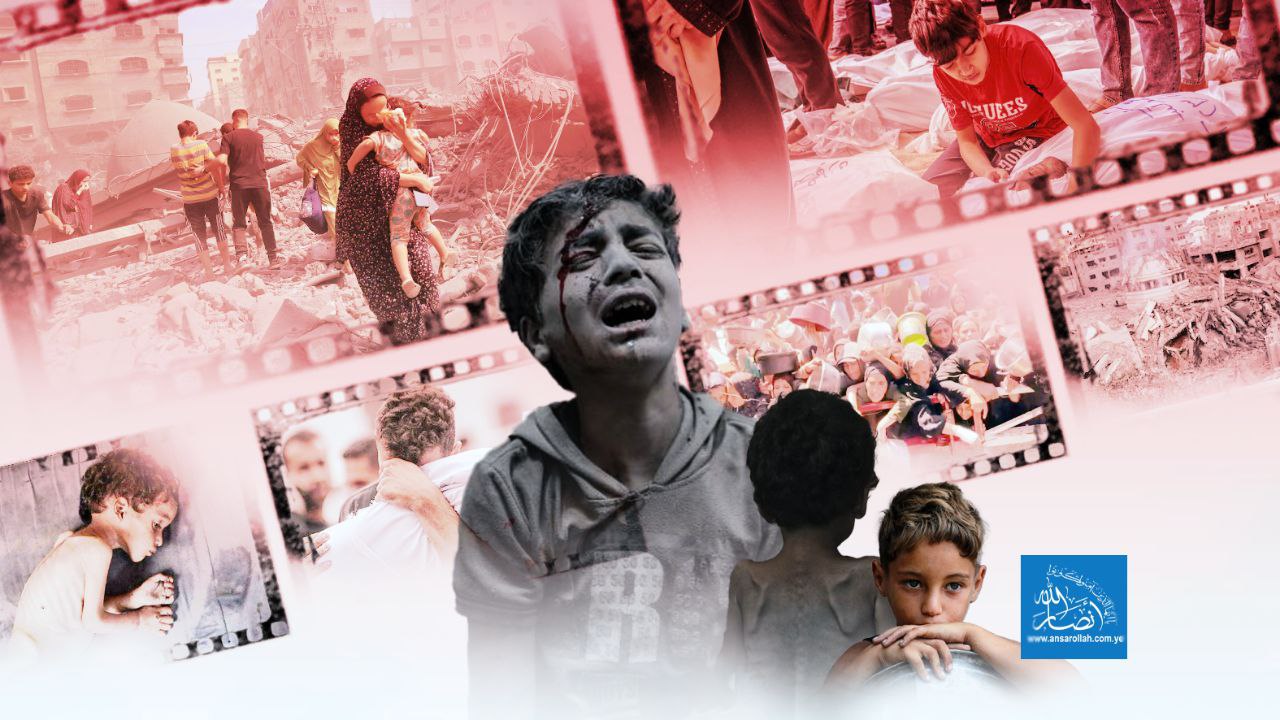
The most devastating aspect, relief workers say, is visible on children’s bodies. According to field documentation and recent UN reports, morgues have begun receiving new victims who did not die from shrapnel, but from cold and malnutrition.
The story of seven-month-old Saad, whose body weighed just 2.7 kilograms when he died in a cold tent after his malnourished mother could no longer breastfeed him, is cited by officials as a symbol of global failure. UNICEF also documented the case of six-year-old twins Yahya and Nabila, who are facing winter with open wounds and fragile bones, lying on bare ground while awaiting a plastic tarp that “may or may not come.”
Women are bearing what NGOs describe as the heaviest psychological toll. “Alaa,” who gave birth in a field hospital under bombardment, described how her labor cries blended with explosions as she delivered her newborn, “Mohammed,” into a world without milk or blankets.
“Noor Abdel Latif,” a mother of three, said she stays awake through long winter nights to check her children’s breathing, fearing they may freeze to death. She described life as “a fierce daily battle against slow death.” Another mother, “Amal,” from the West Bank, said the psychological terror has led some to “wish for collective death with their children to end the suffering.”
Systematic Obstruction of Aid
The UN’s spokesperson Stéphane Dujarric reiterated warnings that "Israel" is restricting or preventing humanitarian convoys from entering Gaza — measures the UN says obstruct lifesaving operations and dangerously deepen the crisis.
The UN Office for the Coordination of Humanitarian Affairs (OCHA) reported that Israeli authorities rejected 8 out of 15 humanitarian missions requiring coordination and prevented the remaining seven from moving.
Over 40 international humanitarian organizations, including Doctors Without Borders, Oxfam, and the Norwegian Refugee Council, said "Israel" is deliberately obstructing aid delivery. According to The Financial Times, Israel rejected 99 aid-entry requests during the first 12 days of the ceasefire and imposed a new registration system for NGOs, leaving tens of millions of dollars’ worth of aid stuck outside Gaza.
UNICEF emphasized the need for predictable access, unobstructed supply lines, and significantly increased resources, noting that only a “very small fraction” of Gaza’s needs have been allowed in.
A “Systematic Death”
These firsthand accounts confirm that the Israeli entity is applying a policy of “death over time,” citing Israel’s refusal to allow in winter clothing or fuel, while permitting “trivial” goods but blocking medicine and food. Health workers have also become victims, including a nurse reportedly found frozen to death inside his tent in the Mawasi area.
Officials in Gaza concluded that the situation now exceeds a humanitarian crisis, describing it as a slow and systematic mass execution carried out with planning by Israeli military leaders amid international complicity and Arab–Islamic abandonment, as the world watches the victim take her final breaths.