Ansarollah Website Official Report
Published: 19th of Jumada Al Akhira 1447
Throughout modern history, events and evidence have consistently suggested that American protection is reserved exclusively for the Israeli entity. Those who dreamed, gambled, and dedicated their lives to serving U.S. interests ultimately found themselves discarded into the dustbin of history. Whether rulers, state leaders, political operatives, economic elites, social figures, or even ordinary people, their fate tended to be worse than that of major collaborators once Washington no longer needed them.
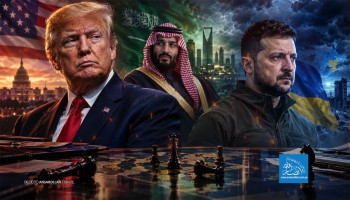
The United States has a long-standing practice of abandoning its allies once it finds a more suitable alternative to execute its geopolitical agendas. It suggests that many rulers continue serving Washington without learning from the downfall of their predecessors. When one leader is betrayed, another rushes to present himself as a “candidate agent,” hoping the U.S. will act as the umbrella enabling him to seize power. But eventually, each discovers that betrayal awaits them as well. Sometimes Washington refuses even to receive them, having already exhausted their usefulness and shifted investment toward a new substitute.
The article cites former Georgian President Eduard Shevardnadze, who said: “I gave the Americans everything they asked for—more, even. I played an essential role in the collapse of the Soviet Union, brought their generals to train and command our army, and yet they betrayed me and orchestrated a coup against me. The U.S. ambassador was with me, and just an hour later, I saw him among the protesters outside Parliament. I still do not know why they did that.”
Several world leaders suffered a similar fate: Pakistan’s Pervez Musharraf, Iran’s Shah Mohammad Reza Pahlavi, Philippine President Ferdinand Marcos, Panama’s Manuel Noriega, Indonesia’s Suharto, Chile’s Augusto Pinochet, Cuba’s Fulgencio Batista, Congo’s Mobutu Sese Seko, Pakistan’s Benazir Bhutto, Haiti’s Jean-Bertrand Aristide, Kyrgyzstan’s Askar Akayev, Iraq’s Saddam Hussein, Sudan’s Jaafar al-Nimeiri, among many others.
Examples of Abandoned Allies
Recounting the case of Panama’s Manuel Noriega, who was captured by U.S. forces, extradited to Washington, imprisoned on charges such as drug trafficking and fraud, and eventually died without American humanitarian consideration.
Ferdinand Marcos, a long-time U.S. loyalist, fled the Philippines with his family amid massive protests against his rule. Despite years of obedience to Washington, he was left with no protection.
Indonesia’s Suharto—one of America’s strongest allies—was toppled after public anger over World Bank policies that burdened the Indonesian economy. When the people revolted, American media labeled him a dictator and corrupt leader, according to published accounts.
In the Arab world, the Tunisian president—once hailed as a pillar of U.S. and French strategic interests—fled under cover of darkness. Instead of support, President Barack Obama praised the Tunisian people for removing a tyrant, while France and Italy refused to receive him and expelled his relatives.
Vietnam: A Lesson in Abandonment
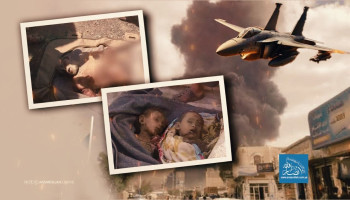
In 1964, the U.S. declared war in Vietnam, backing its South Vietnamese allies with a massive military deployment. By 1968, half a million U.S. troops were on the ground. Despite overwhelming force, Washington failed to defeat the Vietnamese resistance, resorting to severe bombardment and civilian massacres, yet without achieving victory.
During the 1968 Vietnamese New Year, North Vietnamese forces and Viet Cong fighters launched the sweeping Tet Offensive, striking over 90 strategic sites and inflicting heavy losses on American forces. Although it did not secure a decisive military victory for the attackers, it devastated U.S. morale and public support for the war.
President Richard Nixon’s subsequent “Vietnamization” strategy paved the way for withdrawal. By 1973, a ceasefire agreement was reached in Paris. It was later violated as Viet Cong forces resumed attacks, overwhelming South Vietnamese defenses despite their numerical and technological advantages.
By spring 1975, the Viet Cong captured Saigon after the southern forces collapsed. The South Vietnamese president resigned, accusing Washington of betrayal, as Americans and their collaborators fled the city in chaotic scenes.
There is one particularly dark episode: Washington allegedly refused to evacuate many of its Vietnamese collaborators, pushing them away from aircraft and ships—a pattern the U.S. has repeatedly shown in other conflicts. Yet mercenaries around the world continued failing to learn this lesson, believing in American protection.
What About America’s Tools in Yemen?
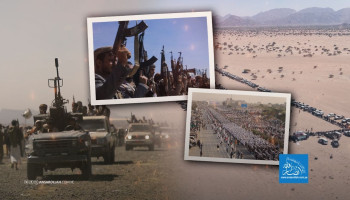
U.S.-aligned forces in Yemen—whether Saudi, Emirati, or mercenary groups lost in the sands of paid allegiance—represent yet another chapter in Washington’s long record of abandonment. History is clear: every group that trusted in U.S. protection eventually found itself without shelter.
Any ruler who aligned their will with Washington ended up exiled, killed, or stranded at airport gates seeking a final escape. Politicians who rose under American sponsorship, ultimately fell from the “ladder of protection” at the very moment they believed they had reached the top. Many mercenaries, imagined the U.S. dollar as an impenetrable shield, only to discover that they were disposable once geopolitical winds shifted.
In Yemen, these U.S. proxies fail to see that they are marching toward the same fate as their predecessors. Saudi Arabia, the UAE, and their allied fighters are depicted as temporary tools used only as long as the American project requires. Once their role is exhausted, they too will be discarded.
The central equation, is consistent: “Washington does not know allies—only functions.” When the function ends, so does the ally.
Yemen—through its cause and dignity—remains the fixed constant in a landscape where faces change, tools fall, and collaborators repeat the historical cycle of downfall. Those who chose subservience and traded land for the illusion of power, will not escape a fate familiar to mercenaries across history: a trajectory that begins with dependency, ends with collapse, and is written without honor.