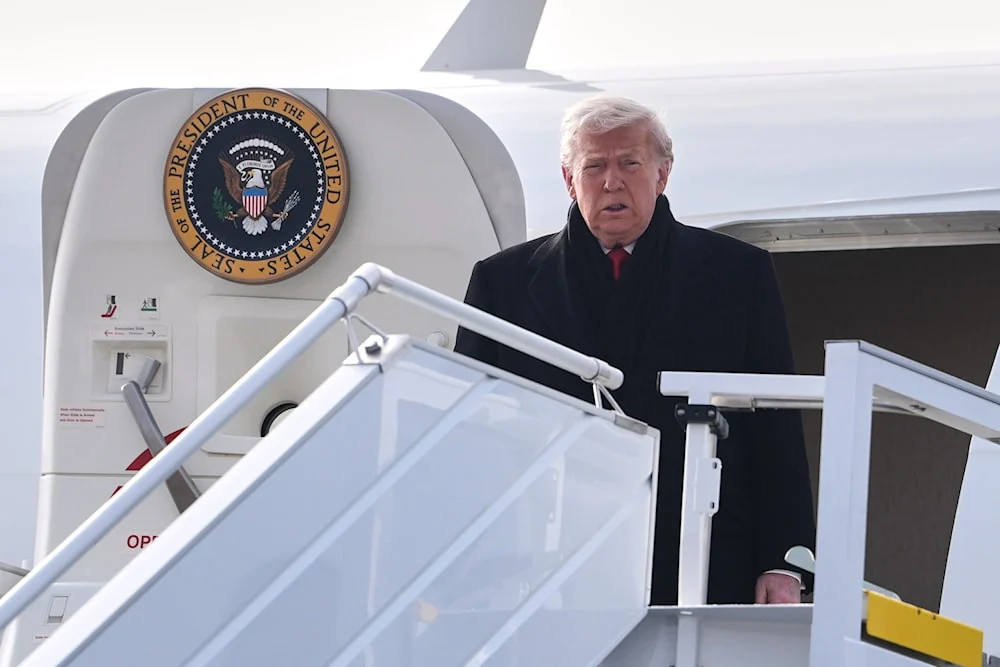
A new national poll indicates that more than seven in 10 Americans believe the United States is “out of control” under President Donald Trump’s leadership, underscoring widespread dissatisfaction with domestic governance and foreign policy direction.
According to the Economist/YouGov survey, 71% of US adults described the country as “out of control,” while just 18% said it was “under control” and 11% remained unsure. The web-based poll of 1,722 adult citizens was conducted January 16-19 and carries a margin of error of ±3.2 percentage points.
The sentiment was consistent across key demographic groups, with 70% of white respondents, 79% of Black respondents, and 70% of Hispanic respondents saying the nation was “out of control.” Age group breakdowns showed similar trends, about 70% of 18- to 29-year-olds and 74% of those 65 and older agreed.
Even within the Republican Party, opinions were mixed: half of GOP respondents said the country was “out of control,” while 38% said it was “under control,” and 13% were undecided. Voters who supported former Vice President Kamala Harris in the 2024 election were far more likely, 91%, to see the country as out of control, compared with 50% of Trump voters.
Political ideology also shaped responses: 94% of liberals said the country was out of control, compared with 71% of both moderates and conservatives.
Broad disapproval of Trump's foreign policy
The out-of-control sentiment aligns with other recent polling showing significant public unease about US military actions abroad. A separate AP-NORC poll conducted January 8–11 found that 56% of Americans believe President Trump has “gone too far” in using US forces internationally, particularly after the US military’s capture of Venezuelan President Nicolás Maduro. The poll, of 1,203 adults using NORC’s probability-based AmeriSpeak Panel, has a margin of error of ±3.9 percentage points.
Majorities also expressed disapproval of Trump’s handling of foreign policy overall and his management of the Venezuela situation. While about 57% disapproved of his Venezuela policy, 61% disapproved of his broader foreign policy approach, both figures aligning with his general job approval ratings. Republicans remained strongly supportive of Trump’s actions abroad, with 71% saying his decisions were “about right.”
In another Quinnipiac University survey of 1,133 registered voters conducted January 8–12, 70% of respondents said presidents should obtain congressional approval before taking military action, a view that reflects growing caution toward unilateral intervention. That survey also found broad resistance to potential US operations in countries such as Iran, Mexico, and Colombia without explicit congressional consent, with a margin of error of ±3.7 percentage points.
US plunges to chaos under Trump
The United States is facing mounting turbulence at home and abroad as President Donald Trump intensifies confrontational policies. On January 20, 2026, Trump renewed controversial threats regarding Greenland, provoking diplomatic backlash from European allies and reigniting concerns over Washington’s disregard for international norms.
Domestically, immigration enforcement has triggered widespread unrest. In mid-January 2026, large-scale ICE raids across several states sparked protests, legal challenges, and federal investigations, particularly in Minnesota, where tensions escalated between state authorities and the federal government.
The aggressive rhetoric surrounding immigration has further inflamed public anger. Demonstrations erupted following deadly incidents linked to ICE operations, with Trump warning of a “day of reckoning” on January 13, 2026, language that critics say has deepened divisions and fueled instability.
Beyond immigration and Greenland, foreign policy anxieties continue to grow. Throughout January 2026, the administration escalated threats toward Iran, prompting fears of military confrontation and reinforcing perceptions of a chaotic U.S. posture as Trump marked the first anniversary of his return to office.
Source:Websites