Published: 16 Ramadan 1447 AH
The unfolding confrontation is a war without a defined ceiling or clearly articulated American objectives. It has become increasingly evident that Iran’s nuclear program is not the true concern of its adversaries; rather, what troubles them is the country’s political system and its unique and promising Islamic model.
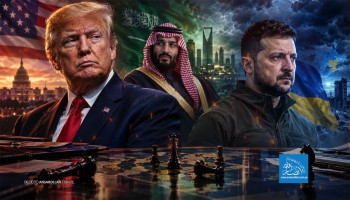
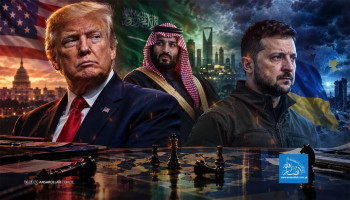
During a recent press conference, U.S. Secretary of Defense Pete Hegseth and Chairman of the Joint Chiefs of Staff General Dan Caine appeared to reveal more than intended. Their remarks, marked by unanswered questions and vague explanations, exposed the fragility of the military campaign despite the massive force mobilized. After the United States had already become entangled in “quagmires east and west, north and south,” it has embarked on another risky venture—this time with an explicit admission that the goal is not “nation-building” or “spreading democracy,” but rather “fighting to win,” in Hegseth’s own words.
Iran’s Military Capabilities: The Missile Deterrent
Iran’s powerful responses over the past days have demonstrated the growing strength of its military capabilities, transforming them into decisive strategic pressure tools—militarily effective and politically influential—in the ongoing confrontation.
At the forefront of these capabilities is Iran’s missile arsenal, the largest and most diverse in the Middle East and among the most advanced missile systems developed in the world over the past two decades. American Central Command commander General Kenneth McKenzie previously estimated that Iran possesses “more than 3,000 ballistic missiles.” This figure does not include Iran’s ground-launched cruise missile capabilities.
This arsenal provides the Islamic Republic of Iran with an unprecedented ability to strike a wide range of targets across the region. As a result, the interests of America, along with its allies and partners involved in hostilities against Iran, are exposed to the reach of this diverse and advanced missile force.
At the same time, Iran retains a strategic deterrent against "Israel". In response, the Israeli entity has in recent years undertaken an accelerated program to modernize its defensive capabilities, developing one of the world’s most complex multi-layered air defense systems. Notably, Israel has relied on cooperation with numerous Western countries to develop these systems, including the Arrow-4 interceptor, which now serves as a spearhead in confronting Iranian and Yemeni missile threats following the previous round of conflict.
Key Developments in Iran’s Missile Capabilities
-
Range: Missiles with ranges reaching 2,000–2,500 kilometers, capable of striking Israel and U.S. bases across the Gulf.
-
Accuracy: Significant improvements in precision with systems such as the Fateh-313, Zolfaghar, and Dezful, reportedly achieving accuracy within 10–30 meters.
-
Solid Fuel Technology: Transition from liquid-fuel missiles to solid-fuel systems, reducing launch preparation time while improving mobility and survivability. This technological advancement has also brought Iran closer to the group of nations possessing hypersonic missile technologies.
-
Missile Cities: Western intelligence assessments suggest that Iran operates at least five underground “missile cities” located across different provinces—facilities designed to conceal and protect large missile inventories.
Deterrence Through Assured Punishment
Recent developments suggest that Iran is “fighting to win,” but also striking to establish boundaries. The missile attacks targeting Al-Udeid Air Base in Qatar, Ali Al-Salem Air Base in Kuwait, Al-Dhafra Air Base in the United Arab Emirates, and the headquarters of the U.S. Fifth Fleet in Bahrain went beyond symbolic retaliation.
Instead, they conveyed a tactical message: American protection is no longer capable of protecting even itself, let alone Washington’s partners in the region. This reality became apparent within the first hours of Iran’s powerful response.
The situation has reportedly triggered criticism within Gulf political circles toward the U.S. administration, which some accused of prioritizing the defense of "Israel" while abandoning regional partners to face the consequences.
In this context, multiple Western reports indicate that several Gulf capitals have begun approaching European states to request assistance in strengthening air defense systems. This shift reflects growing doubts about Washington’s security commitments, despite the fact that Gulf states ultimately bear the consequences of allowing American forces to use their territories for operations against Iran.
Iranian officials have made their position clear, calling on Gulf states to close U.S. bases on their soil if they wish to avoid being targeted by Iranian missiles and drones.
The Strait of Hormuz: Geography as a Strategic Weapon
Western intelligence estimates suggest that Iran still possesses significant military reserves capable of sustaining a prolonged confrontation. Iranian officials themselves have hinted that their capabilities include numerous qualitative surprises.
Among Iran’s most powerful strategic tools is the Strait of Hormuz. Tehran can employ control over this critical maritime chokepoint as a powerful economic pressure lever.
During the second day of confrontation, developments reportedly disrupted liquefied natural gas production at Ras Laffan in Qatar and halted operations at Saudi Arabia’s Ras Tanura refinery. Approximately 150 vessels became stranded in the strait after insurance companies suspended war-risk coverage.
According to maritime insurance analysts, areas of the Persian Gulf may now be classified as higher insurance risk zones. War-risk premiums have surged sharply, and some insurers have reportedly moved to cancel existing policies in order to reissue them at far higher rates.
Early Global Economic Repercussions
-
Global oil prices surged by more than 8 percent.
-
Gold prices climbed to $5,384 per ounce.
-
450 flights were canceled in Germany, leaving around 30,000 tourists stranded.
-
The European Union convened an emergency meeting to secure gas supplies.
-
Iran’s Strategic Approach to Managing the Conflict
Indicators from the unfolding confrontation suggest that Iran is conducting its defensive operations with caution and strategic calculation. Tehran appears adept at distributing and employing its strengths according to a broader strategic vision—one that reflects the same patience and endurance that have characterized its political negotiations in the past.
Such an approach could give Iran the upper hand in a long-term conflict, particularly if its adversaries prove unable to sustain an open-ended war lacking clear objectives or defined outcomes.
Notably, the martyrdom of Sayyid Khamenei— as the result of a Zionist-American treacherous operation—has, according to some interpretations, produced unexpected advantages for Iran’s internal cohesion and future capacity for confrontation, compared to a scenario in which the leader had died under different circumstances.
The Collapse of the Illusion of American Protection
Gulf states now find themselves in what observers describe as a “shock zone,” caught between fears of broader war and mounting pressure from Washington.
For decades, Gulf governments invested trillions of dollars in American military bases under the assumption that they provided a protective shield. Yet within hours of the conflict’s escalation, those same bases appeared unable to guarantee security.
European countries—including Britain and Italy—have disclosed requests from Saudi Arabia and the United Arab Emirates seeking assistance in strengthening their air defenses. Meanwhile, Saudi Arabia, the UAE, and Qatar reportedly activated diplomatic hotlines with both Beijing and Moscow.
Unanswered Questions From Washington
The U.S. press conference left numerous unanswered questions regarding the campaign against Iran.
Hegseth avoided giving a direct response when asked whether American troops had entered Iranian territory. Instead, he stated: “There are no American troops on the ground in Iran, but we will not discuss the details of what we will or will not do.”
This ambiguity reflects a lack of clarity in Washington’s strategy and may also indicate surprise at Iran’s firm response. It raises the possibility that U.S. hopes of destabilizing Iran, changing its political system, or pushing the country into internal chaos have not materialized.
Hegseth also declined to specify the duration of the campaign. While referencing remarks by Trump suggesting the operation could last “four to five weeks,” the defense secretary emphasized that “the president has full authority to speak about the timeline… the schedule could move forward or be delayed.”
He likewise sidestepped detailed questions about Iranian capabilities, repeating only that the mission is to “destroy its missiles, navy, and long-range capabilities.”
General Dan Caine acknowledged the scale of the challenge, stating: “This is not an operation that will be carried out overnight. We expect additional losses.”
Iran and a Strategic Turning Point
What is unfolding represents a major shift in the regional balance of power. Iran is demonstrating that deterrence is not merely about possessing weapons, but about the ability to transform geography, economics, and multiple pressure points into strategic instruments.
Rather than the “military stroll” imagined by some in Washington—one supposedly fought without what Hegseth called “stupid rules of engagement”—the war against Iran is revealing a new reality. Iran’s growing capabilities are not simply rhetorical threats; they are active leverage tools forcing Washington’s allies worldwide, particularly Gulf states, to reconsider their assumptions.
Within hours of the conflict’s outbreak, the American security umbrella—long perceived as a guarantee of protection—appeared to many observers as nothing more than “an umbrella full of holes.”