
A new assessment by the United Nations Development Programme (UNDP) warns of far-reaching economic repercussions across West Asia as a result of the ongoing war on Iran. According to the report, the combined GDP of Arab economies could contract by as much as 6%.
The report projects total economic losses ranging from $120 billion to $194 billion, driven by disruptions in energy flows, trade routes, and financial markets, with impacts extending well beyond the immediate war zone.
The UNDP stated that “the escalation is transforming a localized conflict into a systemic regional shock,” pointing to declining shipping volumes, rising insurance costs, and oil price volatility affecting interconnected economies.
Uneven but severe impact across region
The economic impact is expected to vary across countries but remains severe overall. Gulf economies and those in the Levant are likely to bear the heaviest burden, with output in some cases projected to decline by more than 8%.
Investment and trade activity are experiencing sharp contractions, while inflation and borrowing costs continue to rise.
Across the region, nearly 4 million people could be pushed into poverty. Surging food and energy prices are eroding household incomes, further intensifying economic pressures on vulnerable populations.
Trump wants Gulf to finance war on Iran
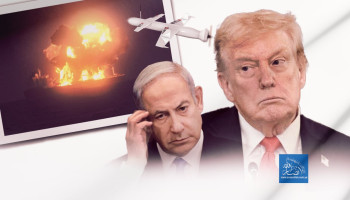
Meanwhile, as their economies choke, US President Donald Trump expressed interest in calling on Arab countries to pay for the cost of the US-Israeli war on Iran, the White House said Monday.
White House press secretary Karoline Leavitt, asked whether Arab countries would step up to help pay for the war, confirmed it was an idea Trump had, without elaborating on specifics.
The proposal echoes a model Washington deployed during the 1991 Gulf War. Under an arrangement brokered by then-Secretary of State James Baker, Gulf oil states covered the lion's share of that war's costs, with Kuwait contributing around $16 billion, Saudi Arabia $16.8 billion, and the UAE $4 billion. Whereby allies outside the US fund over 80 percent of the estimated $61.1 billion war.
The sums now circulating are of an entirely different scale. An Omani commentator told BBC Arabic that leaked reports suggest Trump has demanded Gulf states pay approximately $5 trillion to continue the war, or $2.5 trillion to stop it, claims neither US nor Gulf authorities have confirmed.
Despite losses, Gulf regimes advocate for prolonged war
Moreover, despite the mounting losses, Gulf states aligned with the United States, chiefly Saudi Arabia and the United Arab Emirates, are privately urging Trump to sustain the US military aggression on Iran, claiming Tehran has not been "sufficiently weakened" by a month of US-Israeli bombings, according to the Associated Press (AP), citing regional and Western sources.
The push comes despite earlier frustration within the Gulf over Washington’s decision to ignite the war without adequate notice, and despite warnings that US‑Israeli aggression would devastate the wider region. Now, Gulf rulers are attempting to push Trump to impose a "decisive strategic defeat" on Iran’s leadership and reshape the regional balance in their favour as US positions in the Gulf are being targeted.
According to AP, officials from Saudi Arabia, the UAE, Kuwait, and Bahrain told US interlocutors they oppose ending the aggression until Iran’s leadership is "significantly weakened" or its behavior "dramatically altered", a reflection of Gulf dependence on Washington’s security umbrella and their willingness to prolong a destructive war.
Source:Websites