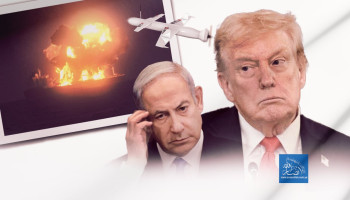

The first cracks in US-UK security cooperation are appearing as tensions between President Donald Trump and Prime Minister Keir Starmer over Iran shake working relationships between diplomats, officials, and military personnel, the Financial Times reported, citing people familiar with the situation.
Trump's recent public criticism of Starmer, deriding him as "no Winston Churchill" and a leader who has tried to "join wars after we've already won," has already had a chilling effect behind the scenes.
Diminishing access and growing friction
Some of this has been a feature since Trump returned to the White House. American officials seconded to UK government departments are increasingly being asked to leave meetings when sensitive information is discussed, in contrast to a more permissive approach previously, one source said.
A more recent element of friction is the longer time taken by the UK to approve requests for American aircraft to use British military sites, such as RAF Fairford. In the past, these requests had been "rubber-stamped" by the UK, but now they were "stickier", one source said, adding that "there's that little bit of extra tension in the system."
Starmer's reluctance to allow the US to use British bases to launch its initial offensive strikes on Iran became a flashpoint in UK-US relations.
"Starmer is getting singled out among European leaders for a particular battering by Trump over Iran," said one former senior British official. "You can see why things might get a bit tense."
A narrowing circle in Washington
British officials have also had to adjust to a White House operating through a tighter inner circle under Trump. UK diplomats say their traditional channels in Washington have narrowed, with access increasingly dependent on a small group of advisers.
"Under this administration we see our access to senior political decision makers diminishing, because the people we have access to are having their own access curtailed," said one person familiar with the exchanges.
The shift has fuelled unease in London that informal networks and institutional ties, a backbone of the special relationship, are proving less reliable in shaping policy or securing early insight into US decisions.
Some analysts believe that the historically strong links between British and American officials are now proving less of a "guardrail" to political tumult between the two nations.
The Chagos question
Olivia O'Sullivan, director of the UK in the World programme at Chatham House, cited the UK government's deal to hand sovereignty of the Chagos archipelago to Mauritius and lease back Diego Garcia, home to a crucial joint UK-US military base.
"Initially the UK government was confident that even if Trump was scathing in public, the US State Department was behind the deal. Lately it's got to the point where it is trickling down," she said.
While officials are expected to take their cue from political leadership, the fragmentation of the MAGA movement and confusion about Washington's strategic goals in Iran make it difficult for American diplomats and personnel, which in turn "poses questions for UK officials," O'Sullivan said.
Official responses
A UK government spokesperson said, "The US is our principal defence and security partner and we continue deep co-operation in the national interest. This includes the US operating from British bases as they have done for decades."
A Pentagon official said, "The US and the UK have a long-standing, strong defence relationship that has continued even through the present conflict."
Yet beneath the official reassurances, the strain is evident. The war on Iran has exposed the limits of the special relationship, forcing the UK to navigate between its historical alliance with Washington and a war that enjoys little public support. As the war drags into its fifth week with no end in sight, the cracks in this partnership may only widen.
Source:Websites