
Gas prices in the US reached a new record again, as President Donald Trump threatens to continue the war of aggression against Iran.
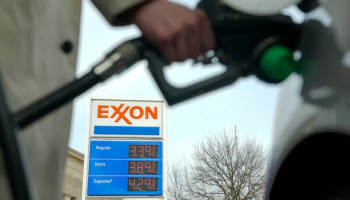
The average price of regular gas in the US hit $4.30 a gallon on Thursday, up 27 cents from a week prior, according to data from the American Automobile Association (AAA), which sets a new high since the US-Israeli aggression against Iran began.
With its average gas prices surpassing $6 a gallon as of Thursday, California stood out from the rest of the US on AAA’s map outlining the country’s fuel prices.
“The biggest driver of the high price of gasoline right now is the war,” according to Severin Borenstein, a professor of business administration and public policy at the University of California, Berkeley.
“The main reason gas costs so much is oil costs so much,” he said, adding, “Every $1 per barrel increase in the price of crude oil translates to two-and-a-half cents at the pump.”
Iran’s major response to bombing by the US and Israel has been to block shipping in the Strait of Hormuz, through which about 20 percent of the world’s oil passes. That is the biggest driver of the steeply increasing prices at the pump, he emphasized.
“The blockage of the Strait of Hormuz has raised prices in the world oil market, and that’s affecting everyone,” Borenstein said.
In terms of energy, the war has cost Americans more than 79 billion USD and counting, according to data from the Watson School of International and Public Affairs at Brown University.
The criminal US-Israeli aggression against Iran began on February 28 with airstrikes that assassinated senior Iranian officials and commanders, including the Leader of the Revolution Ayatollah Seyyed Ali Khamenei.
Iranian armed forces responded by launching daily missile and drone operations targeting locations in the Israeli-occupied territories as well as US military bases and assets across the region.
Furthermore, Iran retaliated against the strikes by closing the Strait of Hormuz, which resulted in a significant increase in oil prices and its by-products.
On April 8, forty days into the war, a Pakistan-brokered temporary ceasefire between Iran and the US took effect.
Negotiations ensued in Islamabad but stopped short of an agreement amid Washington’s maximalist demands and insistence on unreasonable positions.
Since then, Iran has categorically refused to rejoin the process unless the US lifts an illegal blockade it has imposed on Iranian vessels and ports.
Tehran has also asserted that, as long as the blockade is still in place, it has no intention of reopening the Strait of Hormuz.
Source:Websites