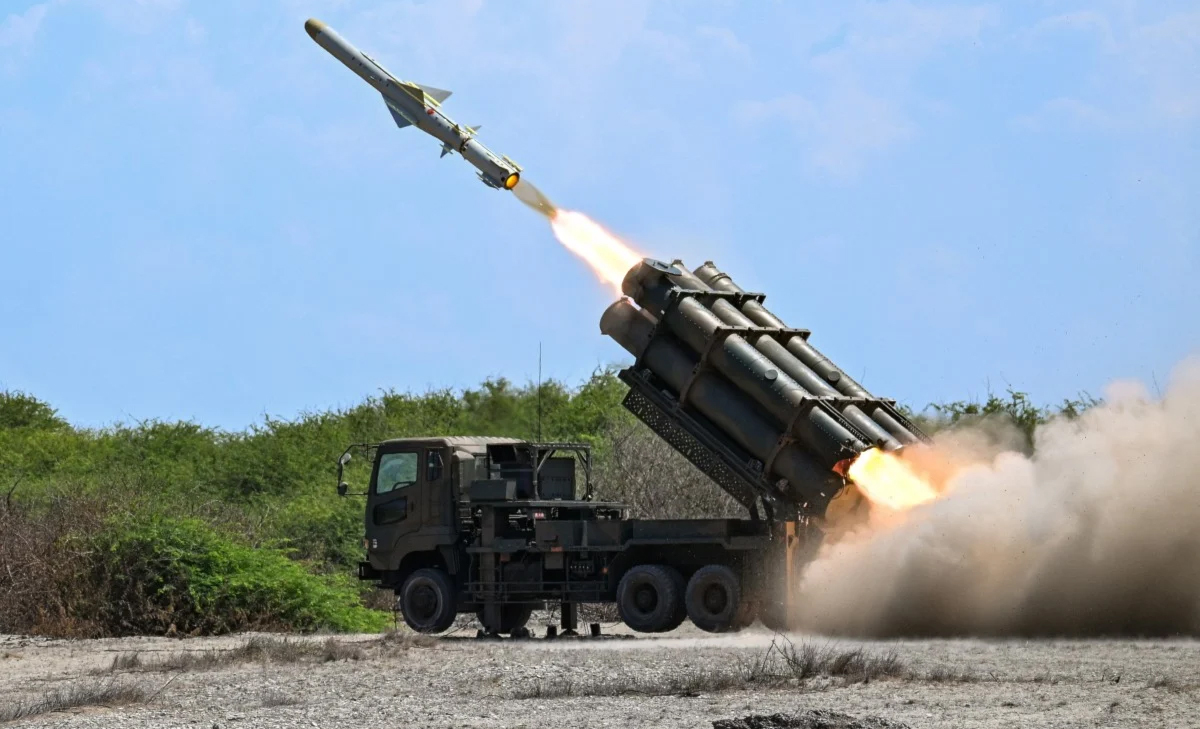
Japan launched two land-to-sea anti-ship missiles on Wednesday and sank an old war cruiser at a site located between the waters of the Philippines and Taiwan during major military exercises involving U.S. forces, prompting anger from China.
Japanese Prime Minister Sanae Takaichi has accelerated her country’s shift toward strengthening its defense capabilities, moving further away — with American support — from the pacifist approach Japan adopted after the end of World War II.
The two missiles, identified as Type-88 anti-ship missiles, were launched as part of military drills in the Philippines involving American, Australian, Philippine, and Japanese forces, in addition to units from France, New Zealand, and Canada.
In recent years, Japan has sought to acquire what it calls “counterstrike capabilities,” increasing military spending and strengthening security cooperation with regional allies, including the Philippines.
Last month, Takaichi’s government announced the easing of long-standing self-imposed restrictions on arms exports in a historic policy shift, opening the door for the sale of lethal weapons abroad as Tokyo seeks to expand its share of the growing global arms market.
Last year, Mitsubishi Heavy Industries secured a contract with the Australian Navy to sell 11 warships.
China objected to the missile launch exercise, describing it as “another example of right-wing Japanese forces accelerating the remilitarization of Japan.”
Chinese Foreign Ministry spokesperson Lin Jian said during a press conference that “Japan, the aggressor state, has not only failed to deeply reflect on its historical crimes, but has also deployed military forces abroad and launched offensive missiles under the pretext of security cooperation.”
Professor Yi Kuang Heng told Agence France-Presse that the missile test and sinking of a vessel carry “special significance, as island defense represents a shared concern for both Japan and the Philippines.”
The Japanese and Philippine defense ministers attended the launch operation in the northern province of Ilocos Norte, around 400 kilometers from Taiwan, according to an AFP correspondent at the scene.
The correspondent also noted another significant aspect of the exercises: the participation of Japan’s Amphibious Rapid Deployment Brigade in anti-landing drills alongside American, Philippine, and Canadian forces.
Heng added that the “Balikatan 2026” exercises also witnessed the first use of Japan’s ShinMaywa US-2 amphibious aircraft, designed for maritime search-and-rescue operations and medical response missions, which he described as highly important given the vast maritime shipping routes in the region.