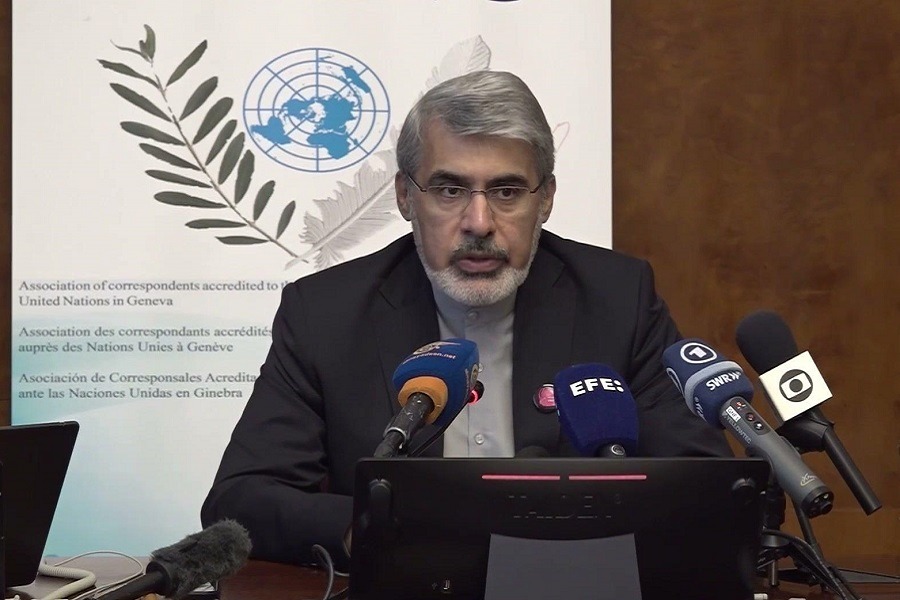
The Permanent Representative of the Islamic Republic of Iran to the United Nations Office and other international organizations in Geneva, Ambassador Ali Bahreini, has called on the Human Rights Council to "pay greater attention to the consequences of war, aggression, and unilateral coercive measures, as well as the impact of sanctions and military actions on the fundamental rights of the Iranian people."
In his address before the 62nd Session of the Human Rights Council, Bahreini specifically drew the Council's attention to two destructive phenomena: sanctions and military aggression. He emphasized that the Council, as an institution concerned with the human rights of people worldwide, must address the continuous and widespread violations of the Iranian people's human rights resulting from sanctions and repeated aggression.
The Iranian envoy pointed to the Islamabad Memorandum of Understanding, which aims to permanently end the war between Iran and the United States, stressing that the United States, as it has done in the past, failed to fulfill its commitments and violated both moral and legal standards.
He strongly condemned the recent U.S. attacks on Iran, which constitute a flagrant violation of the sovereignty of the Islamic Republic of Iran, describing these assaults as "another example of this breach of promise."
Furthermore, Bahreini emphasized that these hostile actions were taken at a time when the Islamic Republic of Iran remains committed to diplomacy and the continuation of negotiations.
"War and aggression, regardless of any justification or form, are among the greatest threats to the realization of human rights," the Ambassador added. "Armed conflicts claim lives, destroy economic and social infrastructure, and hinder the development process of nations for years, if not decades."
The Iranian representative concluded his speech by calling on the Human Rights Council to "pay closer attention to the consequences of war, military aggression, unilateral coercive measures, and double standards when examining human rights situations, moving beyond selective approaches."