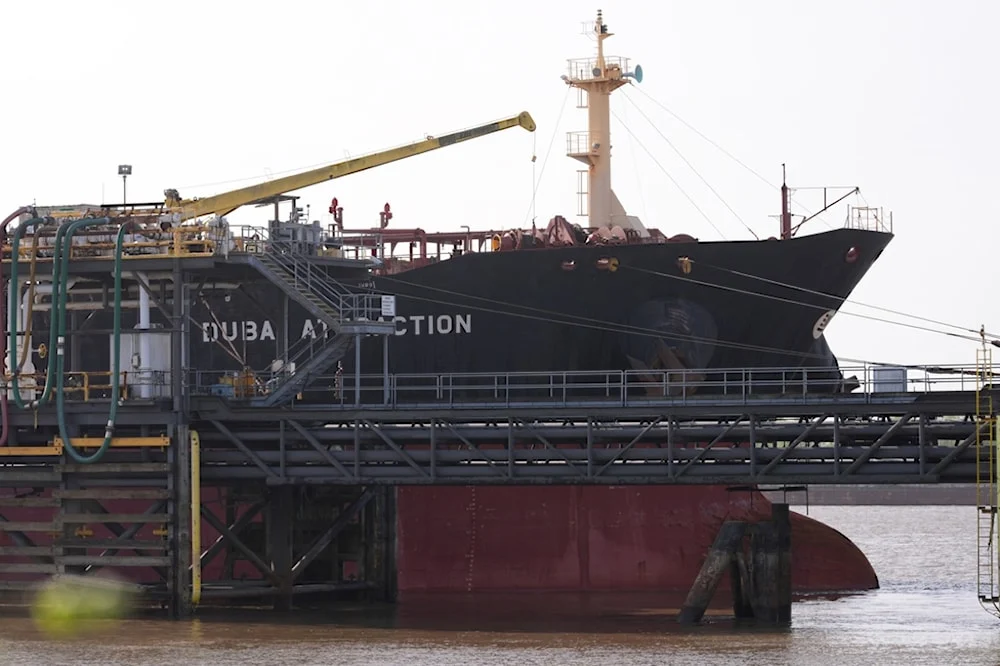
US crude oil exports fell to their lowest level in eight months in July after an Iranian-approved arrangement facilitated tanker movement through the Strait of Hormuz, restoring regional supplies and eroding Washington’s wartime export gains.
Reuters reported that shipments averaged 3.66 million barrels per day, down from a record 5.7 million bpd in May.
The shift underscores Iran’s continued strategic influence over global energy flows via the Strait of Hormuz, a critical oil transit chokepoint.
US exporters had previously benefited from disrupted Middle Eastern supply chains during the war on Iran, which pushed Asian and European buyers toward American crude.
That advantage began to reverse after a June understanding between Tehran and Washington on navigation through the Strait, which enabled stranded tankers to resume movement and brought additional regional barrels back to market.
Asian and European demand weakens
The proportion of US crude exports bound for Asia fell to approximately 40% in July, compared with 52% the previous month.
Japan and South Korea, among the largest buyers of American crude, both reduced their purchases significantly.
Shipments to Japan fell by 67% from their May peak to 324,000 bpd in July, while exports to South Korea declined by 39% to 474,000 bpd.
European purchases also weakened. US crude deliveries to the continent averaged around 1.7 million bpd in July, down from as much as 2.5 million bpd in May.
Exports drawn from the US Strategic Petroleum Reserve slowed as well, totaling just 31,000 bpd. According to Kpler data, the two cargoes were delivered to France and Peru.
Source:Websites