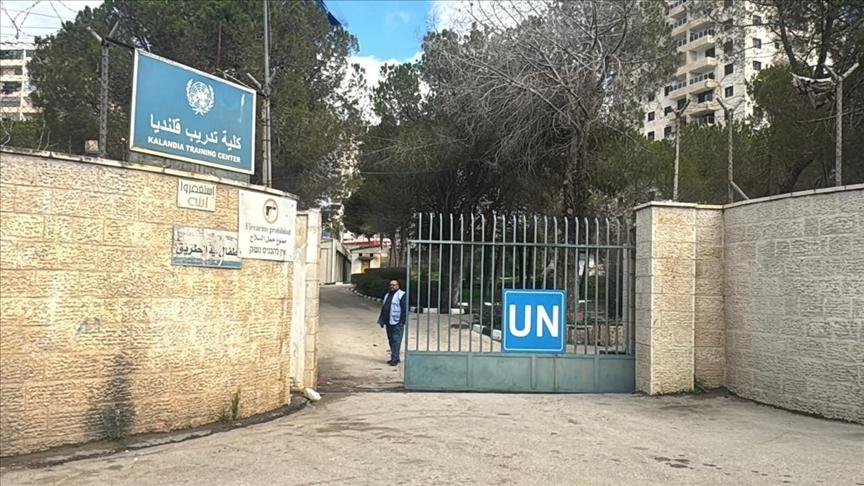
The United Nations Relief and Works Agency for Palestine Refugees (UNRWA) warned that any illegal closure or seizure of the Kalandia Training College by the Zionist enemy authorities would deprive thousands of Palestinian refugees of education and vocational training services provided by the agency under its UN General Assembly mandate.
The warnings came during a briefing via video conference ("Zoom") with UNRWA's Director of West Bank Affairs, Roland Friedrich, as part of a field tour organized by the college on Tuesday for several journalists to highlight the college's reality and the ongoing Zionist threats targeting it.
Friedrich affirmed that the Kalandia Training College is the first and oldest vocational institute established by UNRWA more than seven decades ago, pointing out that it has graduated thousands of Palestinian refugees who joined local and regional labor markets.
He explained that the college is a United Nations facility protected by privileges and immunities guaranteed under international law, emphasizing that any unauthorized entry by Zionist enemy forces into its premises constitutes a violation of the Convention on the Privileges and Immunities of the United Nations.
He added that the college annually receives hundreds of Palestinian refugee students aged between 15 and 19 from various areas of the occupied West Bank, providing them with free education and vocational training programs amid the difficult socio-economic conditions facing refugees.
He noted that the college has been facing ongoing Israeli threats of closure and seizure of its buildings for months, stating that Zionist enemy forces have stormed the facility five times since the beginning of this year amid escalating measures aimed at its evacuation.
These developments come at a time when Zionist measures against UNRWA continue, following the enemy parliament's passage of two laws on October 28, 2024. The first law bans the agency's activities within areas classified by the usurping Zionist entity as under "Zionist sovereignty," while the second prohibits any official communication with the agency.