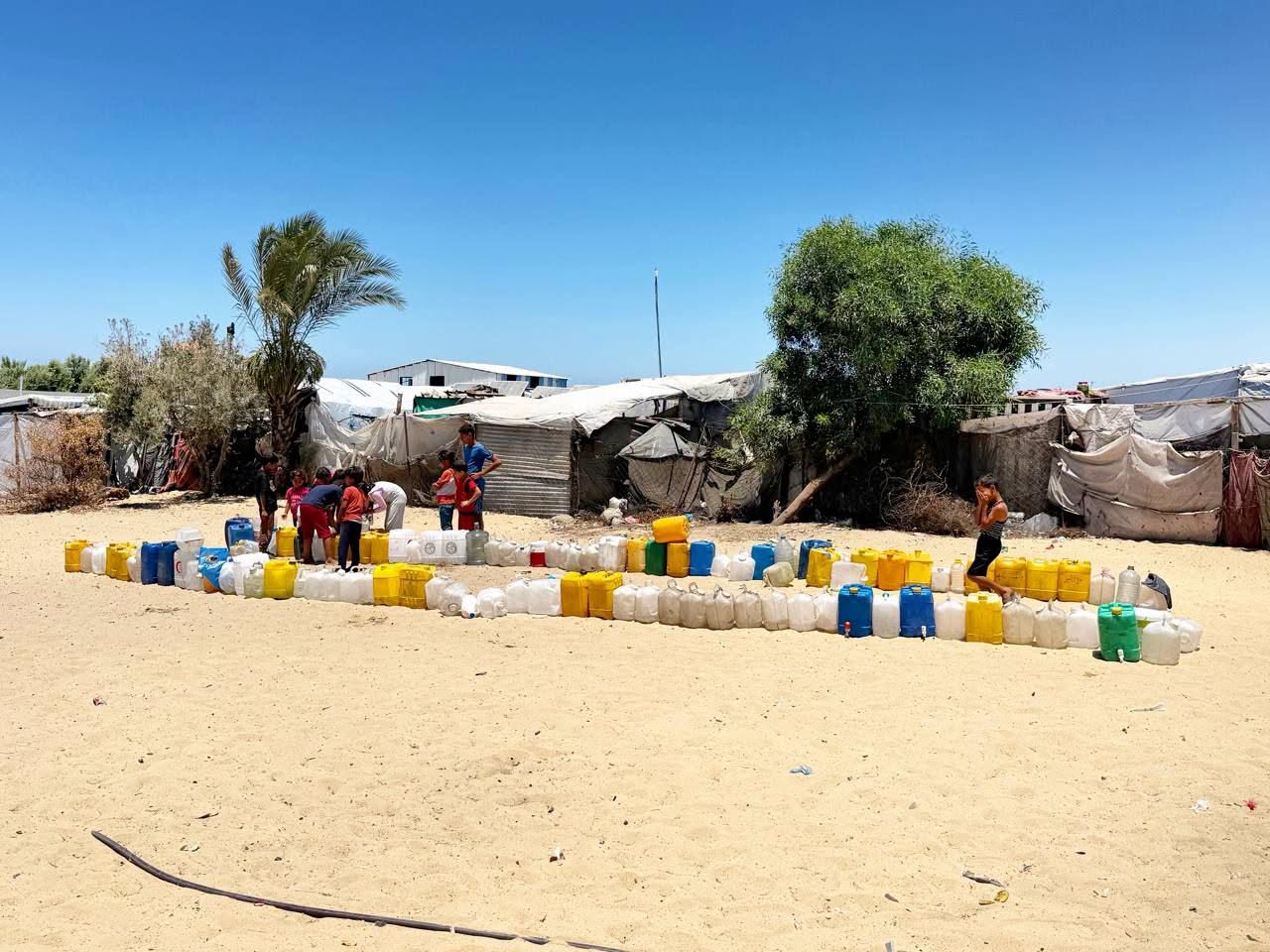
The water pumping system at Well 19 in the Mawasi Khan Younis area, south of the Gaza Strip, has come to a standstill following the failure of its operating generator. This breakdown has cut off the water supply to 27 displacement camps housing around 6,000 families, amounting to approximately 30,000 people.
The Rafah Municipality announced on Saturday that the generator broke down alongside a lack of necessary spare parts for its repair due to the Zionist blockade, which prevents setting a timeline for resuming the water supply.
The municipality appealed to relief and international organizations, as well as humanitarian agencies, for urgent intervention to provide the spare parts, power sources, and fuel required to reactivate the water system.
It explained that this crisis falls within the ongoing challenges facing the water sector in displacement areas, noting that 16 wells are technically ready for operation but remain halted due to the absence of energy sources.
Data from the municipality indicated that these 16 wells are capable of providing water to roughly 170,000 people, but operating them requires four electrical generators and power sources to ensure their regular functioning.
The municipality demanded that international organizations, primarily UNICEF and the International Committee of the Red Cross (ICRC), intervene to provide equipment and technical materials, as well as open safe corridors to bring in the essential supplies needed for the water sector.
Neighboring areas have witnessed similar crises, as desalinated water was cut off from about 2,500 families in the Regional Block camps south of Rafah last July due to gunfire targeting distribution crews and water transport pipelines.
According to previous statements by the Mayor of Rafah, Ahmed Al-Sofi, fuel shortages forced the municipality to stop supplying fuel to 80 private and agricultural wells, causing water production in the Strip to drop by more than 60% compared to pre-escalation levels.
Local reports warned that the continued shortage of equipment and spare parts could force displaced persons to use unsafe drinking water, exacerbating health and environmental risks and increasing the likelihood of disease outbreaks within overcrowded camps.
More than 75% of the population faces severe water insecurity, while most families survive on less than 6 liters per person daily. This amount is less than half of the minimum survival threshold in emergency situations, estimated at 15 liters, and represents only a small fraction of the amount available prior to the conflict, which stood at around 85 liters per person per day.