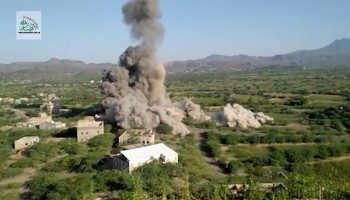
The Ministry of Finance disclosed initial estimates detailing the scope of humanitarian, economic, and living damages and losses inflicted on Yemen due to the continuation of the Saudi-American aggression, blockade, and looting of sovereign wealth over a period of 12 years. The ministry emphasized that the consequences of these policies have surpassed the extent of destruction caused to facilities and infrastructure, reflecting directly on the lives of millions of Yemenis, their sources of income, and their ability to secure basic necessities.
In a statement regarding the damages resulting from the ongoing aggression and siege, the ministry clarified that the bill for overdue state employees' salaries owed by the coalition countries up until the end of 2025 reached approximately 10 trillion rials, equivalent to $18.7 billion, as a result of the continued aggression, siege, and looting of sovereign resources.
It pointed out that salaries used to represent the primary source of income for nearly 1 million families across various governorates, and that their continued suspension directly impacted the livelihoods of around 7 million people, exacerbating economic and living conditions year after year.
Regarding the labor market, the Ministry of Finance reported that approximately 1.2 million direct job opportunities and around 3 million indirect job opportunities in the business sector were lost over 12 years due to the ongoing aggression, blockade, and looting of sovereign wealth. It noted that these opportunities could have benefited about 25 million people across various governorates, including occupied governorates.
The ministry confirmed that the domestic public debt rose to about 8 trillion rials, equivalent to $15 billion, which negatively impacted banks' capacity to finance industrial, agricultural, and service projects, as well as the import of raw materials, contributing to weakening economic activity and increasing pressure on the markets.
In the development and infrastructure sector, the ministry mentioned that the continued aggression and blockade led to the inability to execute approximately 40,000 development, service, and infrastructure projects across various governorates, with an estimated cost of 4 trillion rials, or $7.5 billion.
It explained that among the stalled projects were roughly 10,000 schools and 7,000 hospitals and health centers—projects that, if implemented, would have provided basic services to around 40 million people across various governorates, including occupied governorates, and contributed to improving educational and health services.
It added that the failure to execute these projects resulted in the loss of about 2.4 million temporary job opportunities over 12 years, averaging roughly 200,000 opportunities annually, which deepened the unemployment crisis and worsened the living conditions of families.
It also indicated that the government's indebtedness for stalled development and service projects reached approximately 200 billion rials, equivalent to $370 million, which were projects that could have benefited about 5 million people across various governorates.
Regarding trade and import movement, the ministry estimated the cost of delaying and obstructing the arrival of ships at seaports in Hodeidah, Aden, and Mukalla, along with the resulting fines, at approximately $30 billion over 12 years of blockade, explaining that these costs reflected on citizens through higher prices of raw materials, food supplies, and various imported goods.
It demonstrated that the Gross Domestic Product (GDP) contracted by about 40%, while the inflation rate reached approximately 30%, and the poverty rate rose to about 85%, noting that the same percentage of Yemeni families are now living below the poverty line across various regions, both liberated and occupied.
The Ministry of Finance stressed that the continuation of the blockade and the looting of sovereign wealth deprives Yemen of about 4 million job opportunities for families across various governorates, including occupied governorates. It explained that these opportunities could have provided a sustainable source of income for about 4 million families within a single year if the blockade were lifted, looted wealth restored, and foreign intervention stopped.
The ministry estimated the value of lost revenues from crude oil due to the ongoing blockade and looting of sovereign wealth at approximately $130 billion, considering that this amount could have contributed to moving Yemen into the list of the fastest-growing countries in the world without the need for external aid.
The ministry underscored that the figures included in the statement are initial estimates reflecting part of the magnitude of damages and losses suffered by the Yemeni people, confirming that their repercussions are still ongoing. It added that the limited assistance or projects provided by Saudi entities in some occupied areas do not, according to the statement, amount to even one percent of the size of the financial and economic damages and losses sustained by Yemen over 12 years.
It noted that lifting the blockade, returning looted sovereign wealth, and stopping foreign interventions would, according to its estimates, reduce the poverty rate in Yemen to about 30% within a single year across various governorates, including occupied governorates that are also suffering from poverty, hunger, and service deterioration.
The Ministry of Finance affirmed that the Republic of Yemen retains its right to demand compensation for the losses and damages incurred as a result of the ongoing aggression and siege, whether those mentioned in the statement or other damages and losses.
The ministry called on the Saudi regime to take the initiative to compensate for the damages and losses and to lift the blockade on the Yemeni people in accordance with the roadmap agreed upon in 2023, considering that the continuation of a policy of denial and disregard does not alter the scale of losses revealed by the figures in the statement.
Beyond the language of numbers, the ministry confirmed that the effects of 12 years of aggression and blockade were not limited to economic and financial indicators, but extended to various details of daily life for millions of Yemenis, transforming economic losses into continuous human suffering.
According to the statement, these figures reflect the reality of families that lost their income sources, others struggling to secure their basic needs, and children facing a harsher future amid an economy exhausted by years of war and blockade, and a country that continues to face major challenges on the path to recovery and restoring its economic and developmental capacities.