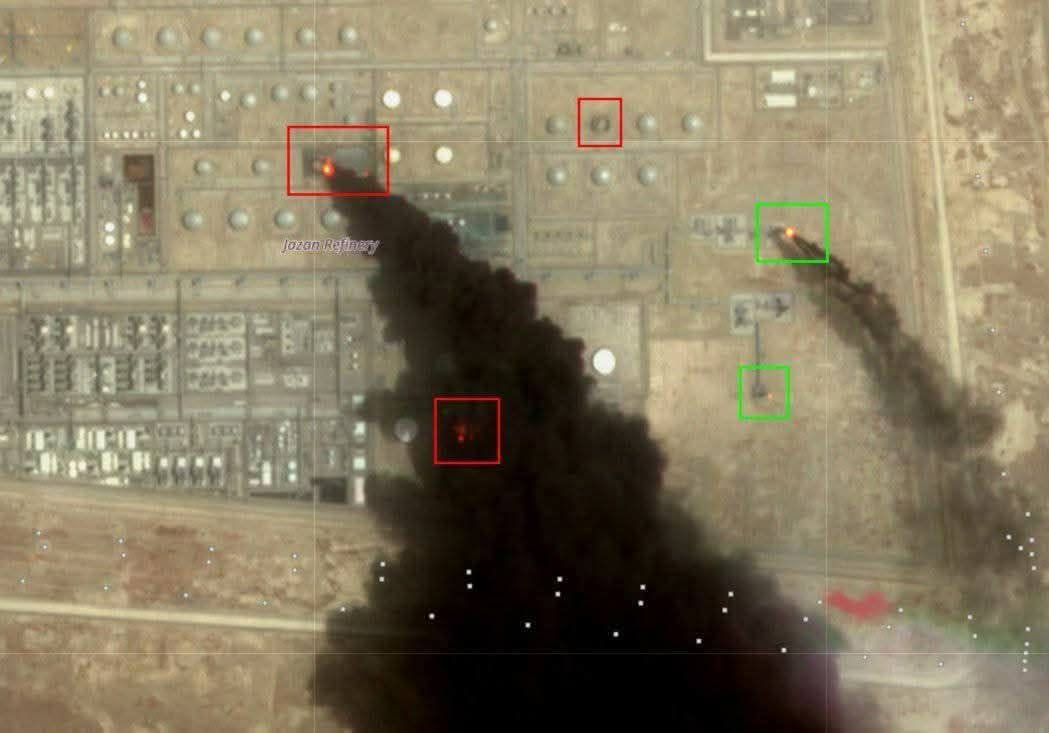
The repercussions of Yemeni military operations deep inside Saudi territory continue to unfold, revealing the extent of severe damage inflicted on Saudi oil facilities. In the latest developments, oil analytics firm Industrial Info Resources (IIR) stated on Monday in a note seen by Reuters that Saudi Aramco has postponed the restart of its 400,000-barrel-per-day (bpd) Jizan oil refinery to August 30, following two attacks by the Yemeni Armed Forces since late July.
According to economic experts, a prolonged shutdown of the refinery could heighten pressure on global fuel markets, which are already feeling the strain of Middle Eastern refinery outages following the outbreak of the war in Iran, as well as Ukrainian strikes on Russian refineries. This supply crunch could potentially boost refining margins.
The Yemeni Armed Forces announced on Sunday the execution of a new operation targeting the Jizan refinery. An earlier notice from IIR, also reviewed by Reuters, indicated that the facility had been offline since July 27 following a previous Yemeni attack. Operations at the refinery were previously scheduled to resume on August 15.
Saudi Aramco has not yet responded to requests for comment.
Last month, the Yemeni Armed Forces declared a naval blockade against Saudi Arabia in the Red Sea under the principle of "a blockade for a blockade."
On Sunday, the Saudi Ministry of Energy stated that Saudi Aramco's industrial security firefighting teams extinguished a fire that broke out early that morning at one of the company's refinery facilities in Jizan. The ministry provided no further details regarding the refinery's operations.
Data from IIR indicates that the July 27 attack damaged the refinery's Integrated Gasification Combined Cycle (IGCC) complex and storage tank areas. Additionally, the refinery's 80,000 bpd catalytic reformer unit has been unexpectedly shut down since May 27 due to operational issues. Catalytic reformers process naphtha into high-octane components used for gasoline blending while also generating hydrogen essential for other refining units.
Meanwhile, Kpler data showed that Saudi Arabia's average fuel exports, including liquefied petroleum gas (LPG), reached roughly 1.32 million barrels per day in July—up from 1.16 million bpd in June—though remaining roughly 30 percent below levels recorded before the outbreak of the Iran war in late February.
The leader, Abdul-Malik Badruldeen al-Houthi, emphasized that continued Saudi aggression and blockade would be met with further escalation and economic pressure, confirming that the equation of "a blockade for a blockade" has become an inevitable and irreversible choice until Yemenis fully achieve their legitimate rights.