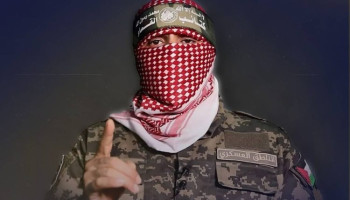
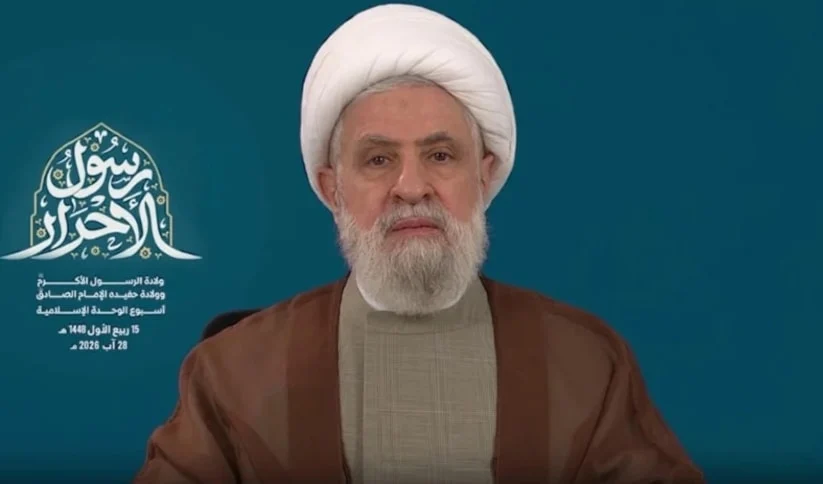
Any retreat by the Ummah in the face of its enemy would ultimately lead to its annihilation, Hezbollah Secretary-General Sheikh Naim Qassem warned, saying the enemy operates without mercy and seeks to establish itself as the “master of the world.”
Speaking on the occasion of Islamic Unity Week, Sheikh Qassem said that steadfastness, regardless of its cost, would help restore the standing of the Resistance, strengthen its ability to achieve its objectives, undermine the enemy’s project, and kill its momentum.
Iran's steadfastness will ultimately bring down the enemy’s scheme
Turning to Iran, Hezbollah Secretary-General said the Iranian people’s steadfastness was a key factor in the failure of “Israel” and the United States in their three wars against the Islamic Republic.
He stressed that steadfastness would thwart the enemies’ schemes and prevent them from achieving their objectives, even at the cost of heavy sacrifices.
“These great sacrifices and the outpouring of blood are the natural path, alongside unity, toward defeating the enemies’ scheme,” Sheikh Qassem stressed.
The Lebanese Resistance leader stressed that no matter how severe the sanctions become or what measures the United States and “Israel” take, steadfastness will ultimately bring down the enemy’s scheme.
Islamic unity embodied through Hezbollah, Amal Movement
Sheikh Qassem went on to say that the Islamic unity championed by the martyred transnational leader, Sayyed Ali Khamenei, played a central role in reviving the Palestinian cause.
“The support for Palestine came through blood, weapons, money, confrontation, and a shared hostility toward Israel and Washington,” he stressed, describing these forms of support as a genuine expression of unity.
Sheikh Qassem said that “disagreements among Muslims must not open an internal front and make us forget our primary enemy.”
Furthermore, he said the United States is now acting as an “enemy of peoples,” seeking to “strike at the roots of the Islamic project and the rights of people” in the region.
In Lebanon, Sheikh Qassem said Islamic unity had been embodied through Hezbollah, the Amal Movement, and political forces opposed to “Israel” that seek and support liberation.
Muslim unity key to defeating 'Zionist, US enemies': Sayyed Khamenei
Earlier today, the leader of the Islamic Revolution and the Islamic Republic of Iran, Sayyed Mojtaba Khamenei, said that "the Zionists and Americans are enemies of all Muslims around the world," stressing that the lesson missing today is the need to confront enemies and defend ourselves and one another.
In a message marking Unity Week, Sayyed Khamenei called on Muslims to reflect deeply on the developments unfolding around them, saying that what happened to the Palestinians would not have occurred had Muslims stood united.
"We must deeply reflect on what is happening around us; had Muslims stood united, what happened to the Palestinians would not have occurred," he emphasized.
He also urged the rulers of Islamic countries, particularly those in West Asia and the Gulf, to accurately identify the enemies’ plans and cooperate on the path of righteousness.
Iran's leader stressed that unity is a fundamental prerequisite for confronting the enemies of the Islamic Ummah and the Islamic message, warning against those who sow division among Muslims.
"Those who sow division among Muslims are aiding the enemies," he stressed.
'We are witnessing the prospects for Muslims’ victory over their enemies'
He noted that the Islamic message has endured difficult circumstances from the early days of Islam to the present, emphasizing that Muslims have played significant roles throughout history. The Iranian leader added that “we are witnessing with our own eyes” the prospects for Muslims’ victory over their enemies.
The two leaders' message was delivered during the closing session of the International Islamic Unity Conference, hosted by the Islamic Republic of Iran for its 40th edition. The conference was held this year under the theme “Islamic Unity in the Thought of the Martyred Imam,” with around 600 participants from inside and outside Iran representing 40 countries, including Iraq, Pakistan, Türkiye, Lebanon, Afghanistan, and the Gulf states.
The conference was held amid the ongoing war on Iran, with speakers emphasizing Islamic solidarity, cooperation, sovereignty, and the need for greater coordination among Muslim countries in the face of regional and global challenges.
Source:Websites