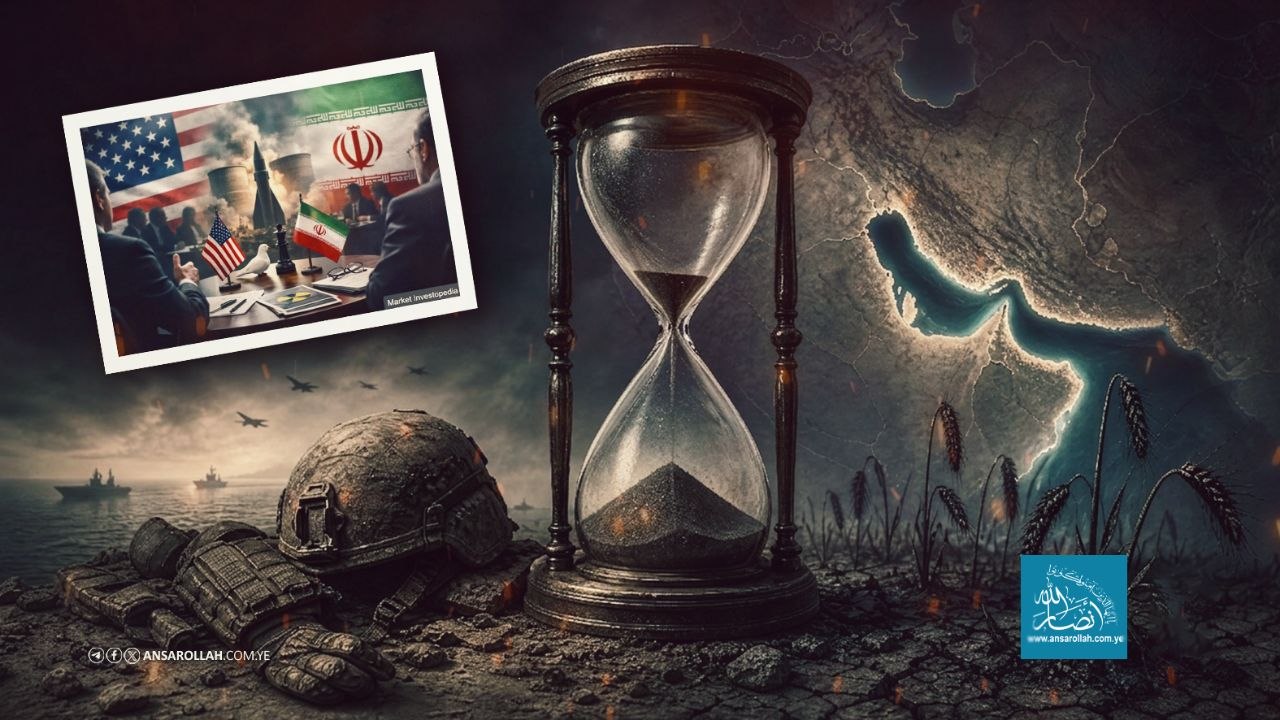
Two hundred days after Washington sounded the war drums against Iran, the United States finds itself mired in a deepening quagmire. Far from the quick triumph promised by neoconservative circles in Washington, Iranian geography—with its strategic seas and choke points—has turned into a black hole consuming U.S. budgets, munitions, naval fleets, and, most critically, the remnants of American deterrence.
Now entering its seventh month, the aggression reflects a Trump administration wrestling with decaying illusions of power accumulated over decades, rather than managing a effective military engagement.
Realty Shatters Washington’s Narrative
Despite a sustained campaign by the U.S. media apparatus to project control and guarantee navigation, stark realities on the ground have unraveled the narrative. In a damning interview with CBS, Arsenio Domínguez, Secretary-General of the International Maritime Organization (IMO), flatly rejected Washington’s claims, stating unequivocally that the Strait of Hormuz remains closed and that U.S. forces are unable to secure safe passage for commercial cargo.
The operational reality highlights a severe logistical and humanitarian crisis. According to the IMO chief, approximately 6,000 seafarers aboard 400 vessels remain stranded. Global supply chains face unprecedented paralysis, with daily transit through the strait plunging from 130 ships to just 15 by August. The critical waterway has effectively been rendered a no-go zone under Iranian sovereignty.
Domestic Fractures: "Trump's Blatant Lies"
Military setbacks have ignited political infighting on Capitol Hill. Senate Democratic Leader Chuck Schumer launched a blistering attack on the White House, accusing the Trump administration of peddling "blatant lies" to mask a mounting disaster.
"Trump ignited a war that destabilized global markets and sent fuel prices soaring," Schumer remarked, noting the domestic political fallout. "The reality is that Iran has held the strait hostage for six months, while the White House sells the public illusions of victory."
Foreign Affairs characterized the policy as a failure, pointing out that the "maximum pressure" campaign—originally pitched as leverage for a new nuclear deal—has devolved into symbolic destruction. Despite imposing over 3,000 sanctions classifications, Washington's economic toolkit has failed to leverage concessions against Iran’s defensive posture.
Dwindling Options
In an effort to cover for military paralysis, Washington launched what it dubbed "Operation Economic Pariah." However, Western media outlets reacted with skepticism. The New Republic noted that deploying Treasury officials with aggressive rhetoric merely signaled a lack of viable alternatives, while Responsible Statecraft observed that aggressive posture could not break Iranian resolve.
Analysts at the Atlantic Council highlighted a widening gap between U.S. rhetoric and capability, describing the resort to familiar sanction packages as a clear signal of desperation after military force failed to deliver a swift victory.
From Hormuz to Tampa
On the battlefield, the campaign has turned into a costly war of attrition. Official Pentagon figures cite 774 casualties—a heavy price for an ill-calculated gamble. Air assets have fared no better, with 45 MQ-9 Reaper drones shot down by Iranian air defenses.
In a symbolic setback to U.S. regional posture, the Fifth Fleet initiated a strategic relocation of its headquarters from Manama, Bahrain, to Tampa, Florida, following sustained Iranian strikes. The withdrawal underscores how forward bases have become vulnerable to precision strike capabilities. Meanwhile, crew members aboard the aircraft carrier USS Abraham Lincoln face severe physical and psychological strain amid one of the longest deployments since the Vietnam War.
Allies Pay the Price
The fallout extends far beyond the Middle East. The Washington Post revealed that excessive U.S. munition consumption in the region has alarmed Asian allies. Taiwan and Japan received notices from the Pentagon regarding potential delays in Patriot and Tomahawk missile deliveries due to depleted stockpiles. Furthermore, the redirection of over 30 warships from the Pacific to the Middle East has drawn sharp criticism from U.S. Indo-Pacific Command, which warned that efforts to deter Beijing are being compromised by the campaign in the Gulf.
Iran’s Strategy of Resilient Defense
Conversely, Tehran has maintained a strategy combining integrated defense and economic resilience. The Iranian government reaffirmed its stance, emphasizing measures to counter sanctions, curb inflation, support domestic production, and reduce reliance on the U.S. dollar.
Tehran's position is backed by internal cohesion. The Iranian Cabinet expressed full alignment with Supreme Leader Ayatollah Seyed Mojtaba Hosseini Khamenei and President Masoud Pezeshkian, framing political unity as key to confronting U.S.-Israeli escalation. Tehran continues to manage the confrontation while Washington grapples with an estimated $1.15 trillion war expenditure that has yet to reopen the strait.
The End of Unipolar Authority
Western assessments increasingly reach a singular conclusion: Washington’s strategy has hit a dead end. A policy that seemed sustainable while costs were low collapsed as domestic gasoline prices surged past $4 a gallon and military casualties mounted.
In a comprehensive review of a 47-year failed approach, Washington today is not merely confronting Iran; it is facing the end of its ability to project power across the seas—a decline that began in the Red Sea during a major historical engagement with Yemeni forces. Today, American naval assets no longer "secure navigation" so much as they represent exhausted fleets crewed by demoralized personnel—as highlighted by the USS Abraham Lincoln—with commanders retreating toward Florida, while a watching world increasingly realizes that the American punch has become far weaker than its fierce rhetoric.