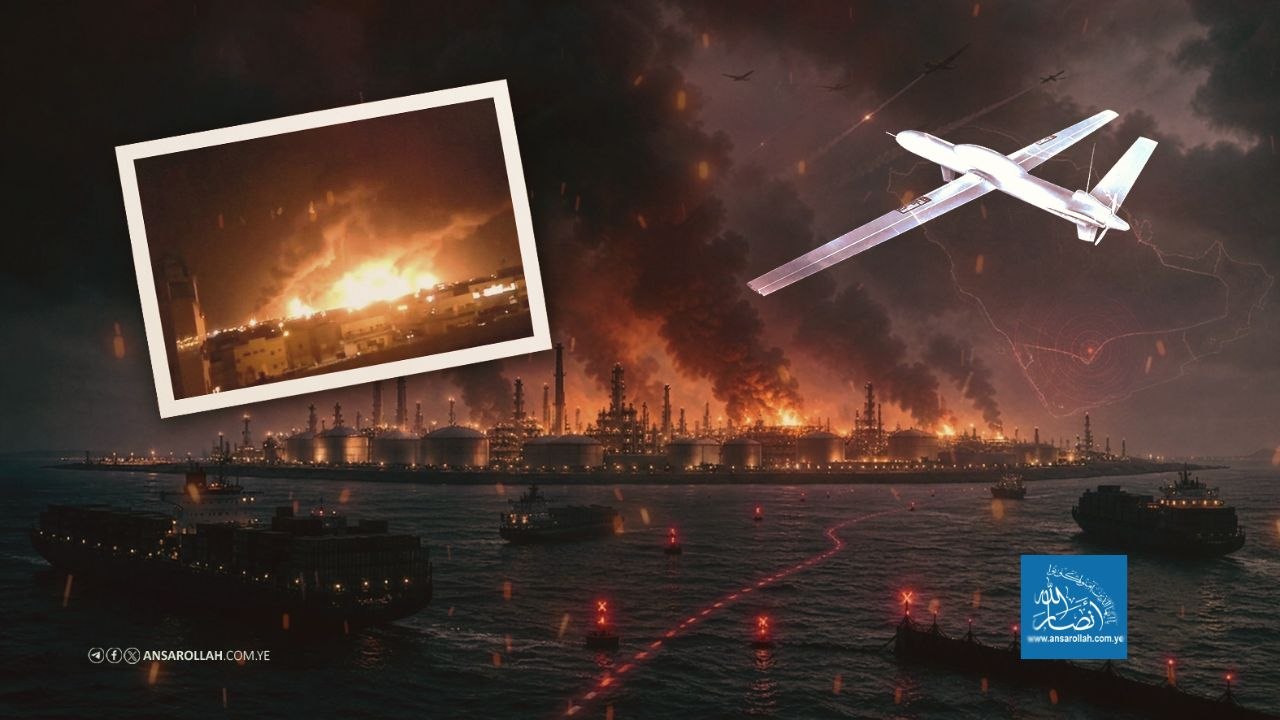
Reuters quoted Kpler, a company specializing in tracking global maritime shipping and commodity movements, as saying that diesel shipments from the Jizan refinery fell to zero this August, confirming that “the Yemenis’ blockade and attacks on the Jizan refinery contributed to a reduction in Saudi diesel exports.”
The agency also quoted international trade sources as saying that “lower operating rates at Aramco production sites led to a further decline in Saudi diesel exports,” explaining that “African buyers have turned to seeking alternative diesel sources following the decline in shipments arriving from Saudi Arabia and other countries,” thereby removing the Kingdom from its position atop the throne of supplying countries around the world with crude oil and its derivatives.
While Kpler expected Saudi exports to Africa to resume next month, international reports rule this out in light of the continued Yemeni blockade and concentrated operations targeting Saudi oil facilities in response to the ongoing blockade of Yemen, as well as the aggressive violations and abuses that the Saudi regime continues to carry out.
In a related context, reports by Kpler and Vortexa indicate that Iran tightening its grip on the Strait of Hormuz, alongside the Yemeni blockade, could push other countries in Asia into the export market toward the African continent. This means that Saudi Arabia is heading toward losing its international standing in oil exports, while this decline would result in Riyadh losing enormous economic revenues that constitute the fundamental, principal, and largest share of its economic resources on which it depends.
Reuters also quoted Alex Yap, a senior oil products analyst at Energy Aspects, as saying: “If Saudi oil tankers continue to avoid sailing through the Bab al-Mandab due to threats from the Yemenis, East African countries will continue to need to rely primarily on Asia to meet their needs, and Europe will not give up any additional supplies amid the sharp negative price differentials currently between East and West.” This further reinforces the reality of the end of Saudi Arabia’s dominance over oil supplies around the world.
Alongside the zero figure for Saudi diesel exports to Africa, Yemeni operations targeting oil facilities deep inside the Kingdom represent an obstacle hindering Saudi oil exports to various countries around the world. This was confirmed by data from a number of London exchanges and Kpler, with information reported by Reuters indicating that Saudi exports have fallen to their lowest levels in nine years.
These data and reports come amid an almost complete paralysis in the movement of Saudi oil tankers, particularly after all the alternative routes Riyadh resorted to in an attempt to adapt to the Yemeni equation failed. The Yemeni Armed Forces thwarted Saudi attempts at circumvention through targeted operations against oil tankers in the northern Red Sea immediately after they departed from Yanbu port, before entering the Suez Canal in the hope of reaching Europe or returning to Asia via the Cape of Good Hope after a long and costly sea voyage that was unsuccessful at the same time.
With these facts, Yemen leaves the Saudi regime with only one option: lifting the blockade, halting the aggression against the Yemeni people, and restoring their rights and resources.