Ansarollah Website | Report: Wadee Al-Absi
A acute sense of helplessness continues to dominate the U.S. administration in its latest criminal phase against the Islamic Republic of Iran. This dynamic frequently drives Washington to escalate against civilians and infrastructure, betting on a "stroke of luck" to secure room for maneuver and save face, however tarnished.
Throughout the current escalation, Iran has maintained a painful level of retaliation. Operations by the Iranian Army and the Islamic Revolutionary Guard Corps (IRGC) under Operation "Disciplining the Aggressor" underscore Tehran’s ongoing push to break the hold of U.S. arrogance. These operations deepen Washington's strategic failure, demonstrating that the U.S. military arsenal cannot achieve a breakthrough in a reckless aggression driven by the Zionist lobby’s influence over U.S. decision-making.
Selecting Targets and Killing "Like the Devil"
Observers view this as one of the most complex geopolitical and historical moments in the region's recent history. U.S. military conduct continues to push the Middle East and the global energy system toward widespread chaos. Iran’s comprehensive response—executed through successive waves of "Disciplining the Aggressor" Operation—signals that Tehran has moved beyond absorbing strikes and defensive maneuvering, shifting instead toward enforcing rules of engagement and establishing direct, painful deterrence. Meanwhile, Washington faces unprecedented internal political and military divisions over the failed campaign, alongside broad international and regional opposition to the administration’s escalation.
The latest U.S. escalation offers nothing new regarding its goal of breaking Iranian resolve to regain control over the Strait of Hormuz—a primary concern for Washington and the international community. Instead, U.S. actions highlight strategic bankruptcy and an inability to neutralize Iran’s core capabilities. By targeting infrastructure and civilian assets—such as a fish processing plant, a fishermen’s pier, and port authority towers in Sirik, Qeshm, and Hormozgan, as well as the power grid and a residential area hosting a wedding in Bandar Kohestak that left civilians, including children, dead and dozens wounded—U.S. forces demonstrate an intelligence failure to hit vital military assets. This reliance on collective punishment mirrors Israeli tactics against the Palestinian people. Iranian Foreign Ministry spokesperson Esmaeil Baghaei characterized these acts as overt "state terrorism" and a flagrant violation of international law, while Iranian Parliament Speaker Mohammad Bagher Ghalibaf remarked that a force that targets and kills like the devil is the very embodiment of evil.
Erosion of U.S. Strategy and the Patriot Myth
Concurrently, operations carried out by the IRGC Aerospace Force, Ground Forces, and the Iranian Army have reinforced to the U.S. military the costly reality on the ground. Iranian ballistic missiles and unmanned aerial vehicles (UAVs) have demonstrated an ability to penetrate advanced air defense systems across the region. Visual evidence and operational reports confirm successful strikes against high-priority coordinates, including aircraft hangars at Muwaffaq Salti Air Base in Jordan, the U.S. Marine Corps base in the Gulf of Aqaba, and the command quarters of the commander at Ali Al Salem Air Base in Kuwait, alongside the destruction of its drone launch platforms. Additional strikes targeted U.S. bases and troop concentrations in Bahrain and Erbil, disabled naval radars in the UAE and Bahrain, and resulted in the downing of an advanced MQ-9 drone over the city of Khomein.
These continuous strikes highlight the erosion of U.S. force protection across its overseas bases and expose vulnerabilities in Western air defense systems. Military estimates from Western publications, such as Military Watch Magazine, indicate that a single Iranian missile barrage can deplete over 10% of the U.S. strategic stockpile of Patriot interceptor missiles. This dynamic turns the conflict into a severe war of attrition for the U.S. arsenal, which already suffers from slow production lines and high unit costs compared to the lower economic and manufacturing costs of Iranian missiles and drones.
Oil Exports for All, or No Exports at All
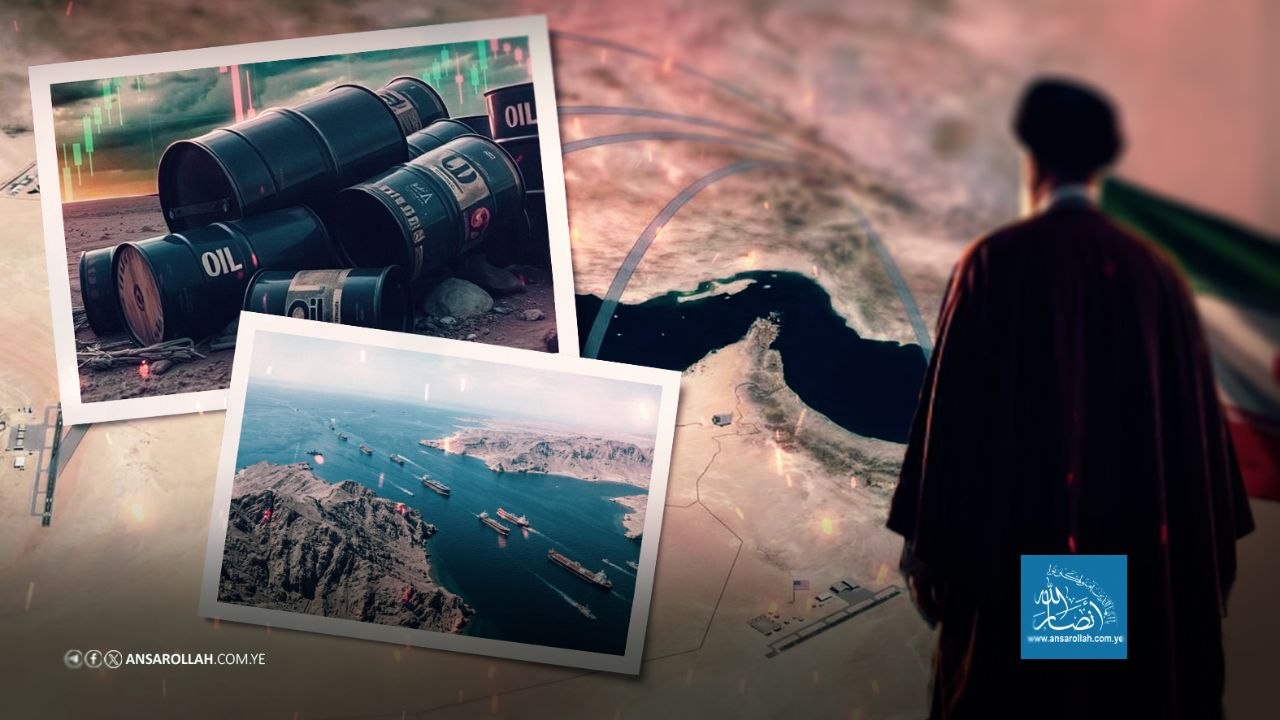
Iranian deterrence extends beyond military targets to encompass key energy supply routes through the Strait of Hormuz. Declarations by Iranian leadership, including Ghalibaf's assertion that full control of the strait rests with Iranian armed forces, signal Tehran's leverage over international energy markets and counter U.S. claims regarding maritime control. In response to U.S. attempts to route vessels through southern channels of the strait to reassure shipping companies and enforce the blockade, Iran’s actions on the water challenged these assurances. Tehran further declared that the strait will not open to commercial navigation until a comprehensive memorandum of understanding is fully implemented—one that guarantees Iran's rights and permits unrestricted oil exports.
The equation established by Iran's political leadership remains straightforward: either all nations are permitted to export oil under signed agreements, or no oil will pass through the Gulf. This firm posture has driven up global energy prices and heightened volatility across international financial markets over the ongoing maritime standoff.
No Strategic Objective, No Exit Strategy
U.S. escalation has drawn sharp criticism and broad opposition from within the U.S. political and military establishment. Reports leaked from the Pentagon reveal objections submitted by senior military commanders across the Army, Navy, and Air Force to Defense Secretary Pete Hegseth. These military assessments warn that continuing large-scale operations against Iran over an extended period represents an uncalculated risk that strains U.S. military capabilities and compromises global readiness, leaving vital U.S. interests vulnerable elsewhere. Internal memos also highlight severe strain on the U.S. Navy, noting a drop in destroyer operational readiness alongside extended deployments for ground forces and Patriot missile units beyond standard operational thresholds.
Domestically, the Trump administration’s offensive posture faces growing backlash from members of the U.S. Congress and the American public. Lawmakers and strategists argue that the administration has committed the country to an open-ended war of attrition lacking clear strategic goals or a defined exit strategy. As congressional midterm elections approach, calls are intensifying within Washington to curb war powers and restrict foreign military ventures that drive up domestic fuel prices, fuel inflation, and cost taxpayers billions of dollars without delivering tangible political outcomes. Public opinion polls similarly reflect widespread opposition to a prolonged conflict that risks entangling the country in a broader regional war.
Framework of Respecting Iranian Rights
On the international stage, Washington faces deepening diplomatic isolation due to its unilateral approach. While Resistance Axis movements and regional allies—led by Yemen through its Foreign Ministry and human rights bodies—have declared full support for Iran’s right to self-defense, major international powers have issued firm warnings to Washington. The Shanghai Cooperation Organization (SCO) reaffirmed its support for Iranian sovereignty and warned of the risks U.S. aggression poses to global security. Similarly, nations across Asia, Africa, and Latin America have called for an immediate end to hostilities, rejecting unilateral sanctions and coercive policies.
Regional states hosting U.S. military bases also find themselves in a precarious geopolitical position. The continued use of their territory and airspace for offensive operations compromises their declared sovereignty and exposes them to direct response from Iranian forces. This dynamic prompted regional actors, including Pakistan, to engage in high-level diplomatic efforts following military visits to Tehran, seeking pathways to de-escalate tensions and restore stability in the Strait of Hormuz based on respect for Iranian rights.
In parallel, Iranian military statements have aimed to reassure neighboring populations. A notable address from the IRGC to the Kuwaiti people emphasized historical ties and clarified that strikes on U.S. bases target the American military presence rather than neighboring states.
U.S. Facing a Strategic Collapse
The current political and military landscape indicates a shift away from unilateral U.S. dominance in the region. Through its political leadership and armed forces, Iran has established a regional deterrence framework that alters the balance of power. Washington now faces a choice: cease military operations, respect Iranian sovereignty, and lift the blockade, or face the continued degradation of its military posture and strategic influence across the Middle East.