
"Israel" is monitoring developments in Yemen with growing concern, an assessment by Al Mayadeen's Israeli Affairs Department has revealed.
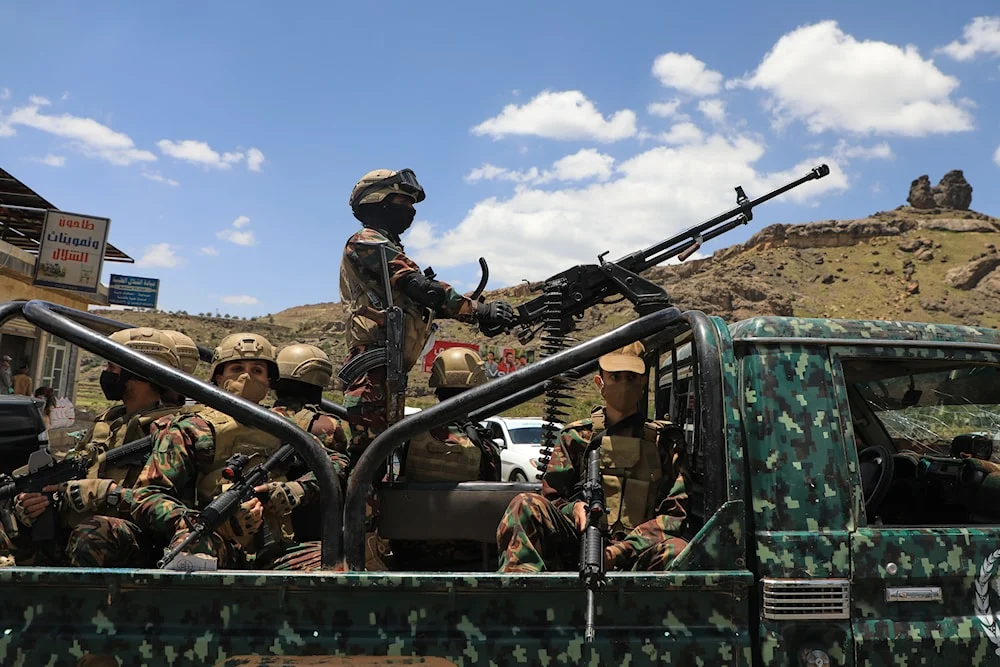
According to this reading, the Yemeni Armed Forces' movement had previously comprised a threat against ships, as part of its support for Gaza, from the depth of Yemen with missiles and drones, yet today, its forces are positioned 18 kilometers from the narrowest point of the Bab al-Mandab Strait.
Channel 12 cited an Israeli source as saying that the Yemeni forces "are now able to see ships with the naked eye and target them with explosive-laden boats or anti-armor weapons," describing the situation as "worse than Hormuz."
The Bab al-Mandab Strait holds additional significance, as approximately 20 percent of global container traffic and six million barrels of oil pass through it daily, and it serves as the southern gateway to the Suez Canal. Israeli media therefore argue that control over the eastern bank of the strait grants the YAF a direct ability to threaten the maritime trade route between Asia and Europe.
Between maritime threat and the risk of being drawn in
"Israel" has been tracking Yemeni developments intelligence-wise since the fall of al-Mokha, according to Al Mayadeen's Israeli Affairs Department. Chief of Staff Eyal Zamir and Navy Commander Eyal Harel issued messages emphasizing that "distance no longer provides immunity" and that "the long arm reaches everywhere."
The Israeli discourse, however, reflects broader concern over economic dependence on maritime navigation, given that 98% of "Israel's" imports arrive by sea and that the sea has become, according to the security establishment, a "central battlefield". Israeli media have also reported preparations amid concerns about maritime traffic to the Israeli port of Eilat.
Nevertheless, Tel Aviv does not appear to be heading toward direct military action. Acknowledging that the development is "concerning", it emphasizes that it will not intervene unless directly attacked.
This reveals a dual dilemma: refraining from taking action allows the navigation threat to expand, while taking action could be interpreted as Israeli involvement alongside Saudi Arabia against the Axis of Resistance, embarrassing Riyadh and opening a new front that Tel Aviv does not wish to bear the cost of.
At the same time, "Israel" continues preparations on its northern front, based on the assessment that the primary confrontation remains with Iran, therefore treating Yemen as part of a broader threat network rather than an independent arena in the regional war.
Source:Websites