
Ansar Allah website - Report -9 Rabi' al-Thani 1448 AH
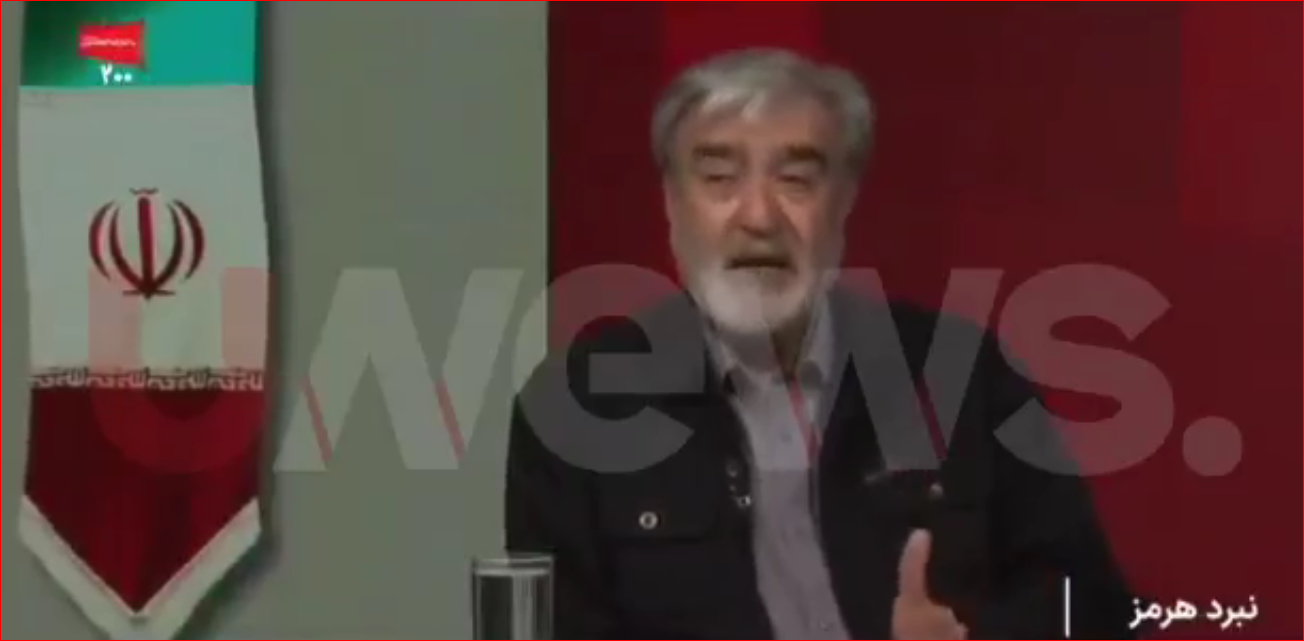
Iranian Parliament’s National Security and Foreign Policy Committee Chairman Ebrahim Azizi said that, by moving beyond the US negotiation and pressure cycle, his country had succeeded in making its threats credible and actionable, considering that recent developments had redefined Iran’s defense and security environment beyond its geographical borders.
In televised remarks, Azizi said that, prior to entering the confrontation, the United States had pursued a strategy based on “negotiation, pressure and creating crises,” aimed at pushing Iran to back down on the issues of missiles, its nuclear program and regional affairs, considering that this approach had ended in a vicious cycle.
He explained that Washington usually begins by attempting to negotiate and reach an agreement as the least costly course, before moving to exert pressure and create crises if it fails to achieve its objectives.
Azizi continued, saying that the ultimate goal of this strategy was to force Iran to surrender and divide it, ultimately leading to the overthrow of the regime.
The chairman of the National Security Committee considered one of the most prominent outcomes of the recent developments to be making the threats of the Islamic Republic of Iran credible, saying that these threats were no longer merely declared positions and that the opposing side had practically recognized Iran’s ability to carry them out.
Azizi pointed to the decline in the US military presence in the region, noting that 9,000 American troops had left the region and that the number of US warships in the Gulf had fallen from 130 vessels to zero.
He said that Iran had clearly stated that an expansion of the confrontation would lead to its extension into a regional scope, adding that Tehran had affirmed that it would target the source of the threat if it came under attack, considering this a reflection of the operational capability of Iranian deterrence.
In another context, Azizi said that one of the most prominent outcomes of the confrontation was the redefinition of the defense and security environment of the Islamic Republic of Iran, explaining that the country’s security environment was no longer confined to its geographical borders, and that any point from which a threat to Iranian interests originated had come to be defined as falling within the country’s defense and security environment.
The chairman of the National Security Committee concluded by saying that Iran was pursuing, in confronting risks, an approach combining response, prevention and deterrence, considering that the changes in the balance of the regional security environment represented a direct result of what he called the “epic of the Iranian people” during the recent confrontation.