Ansar Allah website - Report -10 Rabi' al-Thani 1448 AH
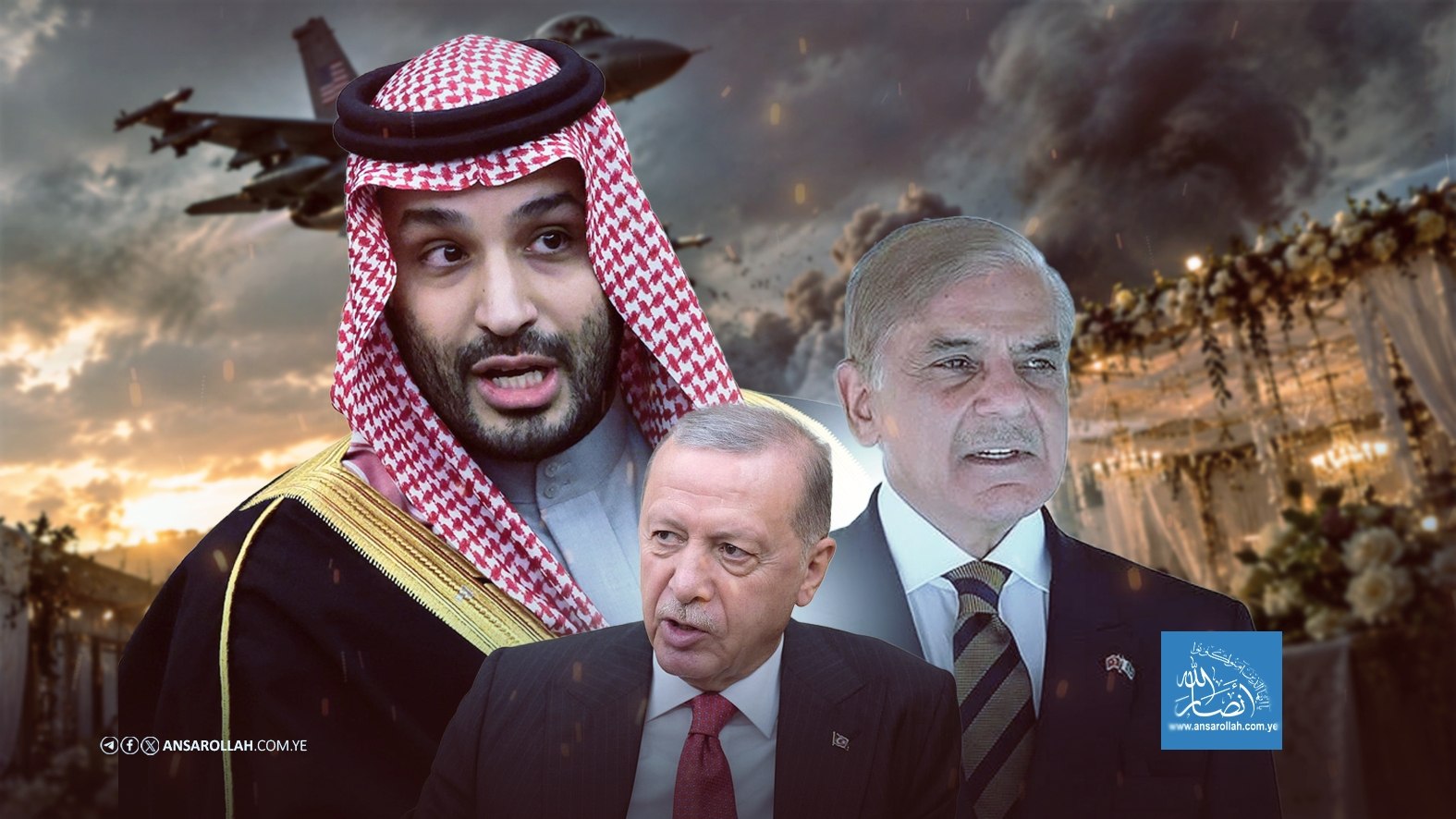
In an important speech marking the anniversary of the September 21 Revolution, the Leader al-Sayyid Abdul-Malik Badruddin al-Houthi issued direct and candid advice to the Turkish and Pakistani regimes not to become involved in the Saudi aggression against Yemen. The position came at an extremely delicate moment, as Turkey and Pakistan had reached an advanced stage of involvement in the Yemeni file, prompting the Leader to offer his advice before it was too late.
The Leader does not speak from a position of weakness or supplication, but from a position of strength grounded in confidence in Allah and in the determination of the Yemeni people. He addressed two major regional states in the tone of a sincere adviser who wishes them well and warns them of the consequences of becoming involved in the aggression against the Yemeni people who have endured twelve years of suffocating blockade and brutal aggression.
Why Are Turkey and Pakistan Entering Now?
The answer to this question reveals the reality of the crisis facing the Saudi regime. After twelve years of aggression, after spending hundreds of billions of dollars on its war machine, and after exhausting all available military options, Riyadh has found itself in an unprecedented predicament after failing to achieve any of the objectives of its aggression. On the contrary, the Yemeni armed forces have grown stronger and more effective and have become capable of transferring the battle deep into Saudi territory.
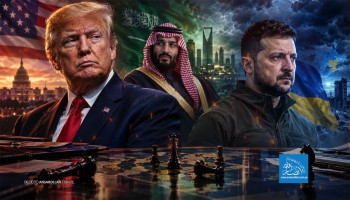
In this context, Saudi Arabia has been left with only one option: calling on others to become entangled in the quagmire of its aggression. And because the Americans and Israelis are occupied on other fronts, only Turkey and Pakistan remain. But can Turkey and Pakistan achieve what America, Britain and “Israel” together have failed to achieve?
The Leader al-Sayyid Abdul-Malik Badruddin al-Houthi explained in his latest speech that the Saudi enemy wants to bring in the Turkish and Pakistani sides, appealing to them day and night to participate with it in the sin and aggression against our dear people. The Leader revealed that Saudi airstrikes had reached 760 raids as of the previous day, asking: “If Pakistan and Turkey were subjected to this number of raids, would that not become a major problem?” This question carries a clear message: if Saudi Arabia bombed Yemen with 760 raids and was unable to subjugate it, how could Turkey and Pakistan do what Saudi Arabia itself has failed to do? And how could they justify doing so in the first place?
The Leader advised the Turkish and Pakistani sides not to become entangled for political and material gains from the Saudi enemy. Yemen is not asking for the impossible; rather, it is demanding its legitimate right, recognized by Islamic law and man-made laws.
Why Will Turkey and Pakistan Be Unable to Achieve Anything for Saudi Arabia?
Saudi Arabia has tried every military solution and failed. Over twelve years, Saudi Arabia tried everything: intensive aerial bombardment, land and naval blockades, military mobilization, support for mercenaries, and the recruitment of American and Zionist experts. Despite all of this, it was unable to subjugate the Yemeni people. How, then, can Turkey and Pakistan do what Saudi Arabia, with all its capabilities, has failed to accomplish?
Another point is that America, Britain and “Israel” failed during the Yemeni battle to support Gaza. During that battle, America, Britain, “Israel” and several other countries formed an alliance against Yemen, launched hundreds of airstrikes, carried out extensive military operations and mobilized their naval fleets. Despite all of this, they were unable to eliminate Yemen’s military capabilities. On the contrary, those capabilities became more developed and effective. If this is the case with the strongest powers, then what of Turkey and Pakistan?
On the other hand, Yemen possesses will, determination and deep-rooted faith that have translated into a major military force with influence and effectiveness acknowledged by friend and foe alike. Yemeni ballistic missiles and drones are capable of reaching sensitive targets deep inside Saudi territory, and have gone beyond that to strike targets in the Red Sea and beyond. Recent operations have demonstrated that the Yemeni armed forces are capable of imposing a complete blockade on Saudi maritime navigation and targeting Saudi vessels along the Red Sea.
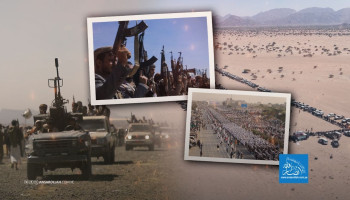
In addition, the Yemeni people stand firmly with their Leader. The Yemeni people, leadership and people alike, decided at the beginning of the new Hijri year 1448 AH to enter the battle to break the blockade and lift the aggression. They came out in their millions in mass demonstrations known as the “Friday of Warning and Mobilization,” affirming their determination to support the armed forces in operations to break the blockade. This people has proven that it cannot be defeated by blockade or subdued by aggression.
What Turkey and Pakistan Should Do: Mediation, Not Entanglement
The priority for these two states, as the Leader emphasized, should be to serve as mediators for good, with their focus directed toward proposing peaceful solutions. Yemen is not asking for the impossible; rather, it is demanding its legitimate right, recognized by all divine laws and man-made laws. These rights include stopping the aggression, lifting the blockade, allowing the Yemeni people to benefit from their oil and gas resources, and ending the Saudi occupation of Yemeni territory.
Turkey and Pakistan must learn from Saudi Arabia’s lesson. Saudi Arabia, which placed its hopes in a military solution, found itself compelled to seek negotiations. Turkey and Pakistan are called upon to learn from this lesson. The Yemeni people cannot be subdued, particularly given Turkey’s bitter experience in the mountains of Yemen, which swallowed the ranks of the Ottoman Turkish army.
The Strategic Context: Why Now?
At the beginning of the Hijri year 1448 AH, the Yemeni people, leadership and people alike, made a decisive decision to enter the battle to break the blockade and lift the aggression. This decision was not improvised; rather, it came as the culmination of years of patience and suffering under a comprehensive blockade described as the longest and harshest in modern history.
Before the military operations began, the Leader advised the Saudi regime to respond to Yemen’s legitimate demands. Riyadh, however, did not heed the advice or take it seriously. Instead, it continued its escalation and placed its hopes in military force to subjugate the Yemeni people.
This led the armed forces to impose a complete blockade on Saudi maritime navigation. The Yemeni armed forces began their practical measures on July 20, 2026, as a first step to pressure the Saudi regime. The armed forces succeeded in targeting ten Saudi vessels and forcing hundreds of ships to divert around the Cape of Good Hope, imposing a complete blockade on Saudi navigation in the southern and northern Red Sea after carrying out operations against Saudi vessels at the port of Yanbu.
This was followed by strikes deep inside Saudi territory. During the recent period, the Yemeni armed forces carried out dozens of military operations against sensitive positions of the Saudi enemy in Yanbu, where the main oil refineries are located; Riyadh, the capital and center of political decision-making; the Jizan Aramco oil refinery; Najran; and the Khamis Mushait air base, the largest Saudi air base.
These operations had major effects on the Saudi economy. Saudi Arabia was forced to halt pumping through the Jizan refinery, which produced more than 400,000 barrels per day, and to halt the East-West Pipeline after several military operations directly targeted it, resulting in the loss of millions of barrels of oil each day.
Operation “And Allah Is Stronger in Might and More Severe in Punishment”: Liberating the Western Coast
As part of the operations to eliminate Saudi Arabia’s cards, the armed forces moved to strike the Saudi mobilizations. As soon as the fronts on the western coast became active, the armed forces carried out a major military operation called “And Allah Is Stronger in Might and More Severe in Punishment,” from September 3 to 9 of this month.
The operation resulted in the expulsion of mercenaries of the Saudi enemy from six districts in Hudaydah and Taiz, the liberation of an area estimated at 5,400 square kilometers, the removal from service of seven military divisions and 38 brigades, and the cleansing of the western coast up to Bab al-Mandab.
This move eliminated the most important Saudi cards on the western coast and drove Riyadh into a frenzy as it found itself losing control, through its mercenaries, over the most important strategic waterways in the Red Sea.
Humanitarian and Legal Dimensions: Exposed War Crimes
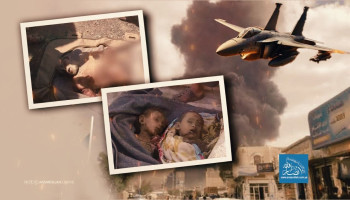
The Leader pointed out that the Saudi enemy “moved to carry out hundreds of airstrikes and missile bombardments against several governorates in our country, and in its bombardment it targets civilian objects, as it also bombs bridges and public towers, and targeted the central prison in Al-Jawf, killing among them women and children who were visitors.”
Here, the Leader raises a legitimate question: “Who can justify for the Saudi enemy its targeting of the prison in Al-Jawf? Is this not an exposed crime? And has anyone condemned it?”
The Leader also spoke about the damage caused by the blockade to our people, which has accumulated alongside the enemy’s targeting of the currency and all economic sectors, reaching a tragic and catastrophic situation that cannot be ignored. The crisis has reached the point where the enemy prevents our people from obtaining essential food. Can we wait for something worse?
The Leader revealed that delegations from the Saudi and British enemy were traveling to Djibouti to tighten measures that would increase the suffering of our people through economic restrictions.
The Leader raises an important question: “What people would accept what the Saudi enemy is doing and allow their own people to remain without salaries for more than 11 years?!”
This daily tragedy experienced by millions of Yemenis finds no echo in international forums, while campaigns are waged against Yemen merely for defending itself.
Whoever Sympathizes with the Oppressor Is the Loser
The Leader warned that whoever sympathizes with the oppressor and acts in his positions far removed from the teachings of Islam is a loser and bears all the consequences morally, legally and humanely. He pointed out that what is appropriate for governments is to take an honorable position alongside the Palestinian people, not alongside the Saudi regime, the partner of the American, British and Israeli forces conspiring against the nation.
What Yemen is demanding is a legitimate right. “Yemenis are fair-minded people, and they do not come with impossible conditions.” Their demands are legitimate rights for their people: an end to the aggression, an end to the blockade, freedom and independence, the ability to benefit from their oil and gas resources, and freedom of movement, trade and travel.
These demands are neither new nor excessive; rather, they are fundamental rights for every people that seeks to live with dignity.
Yemen’s Battle: Lessons and Reflections
The battle in Yemen today constitutes a unique model in contemporary history: a besieged and impoverished people, whose country is subjected to the fiercest aggression in the region, has managed, after twelve years, to reverse the equation and impose its will on the strongest armies in the region, backed by the major powers.
This victory came as a result of a deeply rooted faith in the justice of the cause, wise leadership that knew how to manage the battle, a cohesive people that neither weakened nor surrendered, armed forces that developed their capabilities despite the blockade, and strategic planning that transferred the battle deep into enemy territory.
Today, Yemen stands on the threshold of a new phase. Saudi Arabia, which placed its hopes in a military solution, has found itself compelled to seek negotiations. Turkey and Pakistan are called upon to learn from Saudi Arabia’s lesson. The people of faith and wisdom cannot be subdued, and the priority for the two countries should be to act as mediators for peace, not partners in aggression.
The most important message remains that truth prevails, and the ultimate outcome belongs to the righteous.