The National Human Rights Authority’s branch in Taiz Governorate condemned the series of airstrikes carried out by Saudi-American enemy aircraft, targeting civilian objects, infrastructure, and the basic necessities of life in a number of the governorate’s districts.
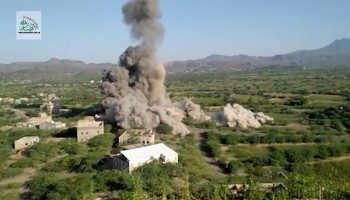
In a statement issued by the Authority’s branch, it explained that the enemy’s airstrikes focused on populated areas and vital facilities, targeting a citizen’s home in Al-Taiziyah District, followed by four airstrikes on the Mafraq Mawiyah area. The attacks caused extensive material damage and spread fear and panic among local residents.
The statement pointed out that the enemy escalated its attacks in Haifan District by carrying out two airstrikes on Azlat Al-ahkom. The first targeted the “Al-Akboush” water project, which supplies hundreds of families, while the second struck the telecommunications network, in an attempt to paralyze communications and disrupt essential services for citizens.
It affirmed that the deliberate targeting of citizens’ homes, drinking-water projects, and telecommunications networks constitutes a fully-fledged war crime and a flagrant violation of the rules and principles of international humanitarian law, particularly Articles 53 and 54 of the Fourth Geneva Convention, which prohibit the destruction of civilian property and criminalize attacks on essential resources, as well as Articles 54 and 56 of Additional Protocol I, which guarantee the protection of objects indispensable to the survival of the civilian population.
The branch of the Authority held the aggression coalition fully criminally and legally responsible for these crimes and all other violations committed against the people of Taiz, calling on the United Nations, the Security Council, and relevant human rights and international organizations to assume their legal and humanitarian responsibilities in monitoring and documenting these incidents, and to exert pressure to keep vital facilities and densely populated residential neighborhoods outside the scope of military targeting.