Ansar Allah website - Report -18 Rabi' al-Thani 1448 AH
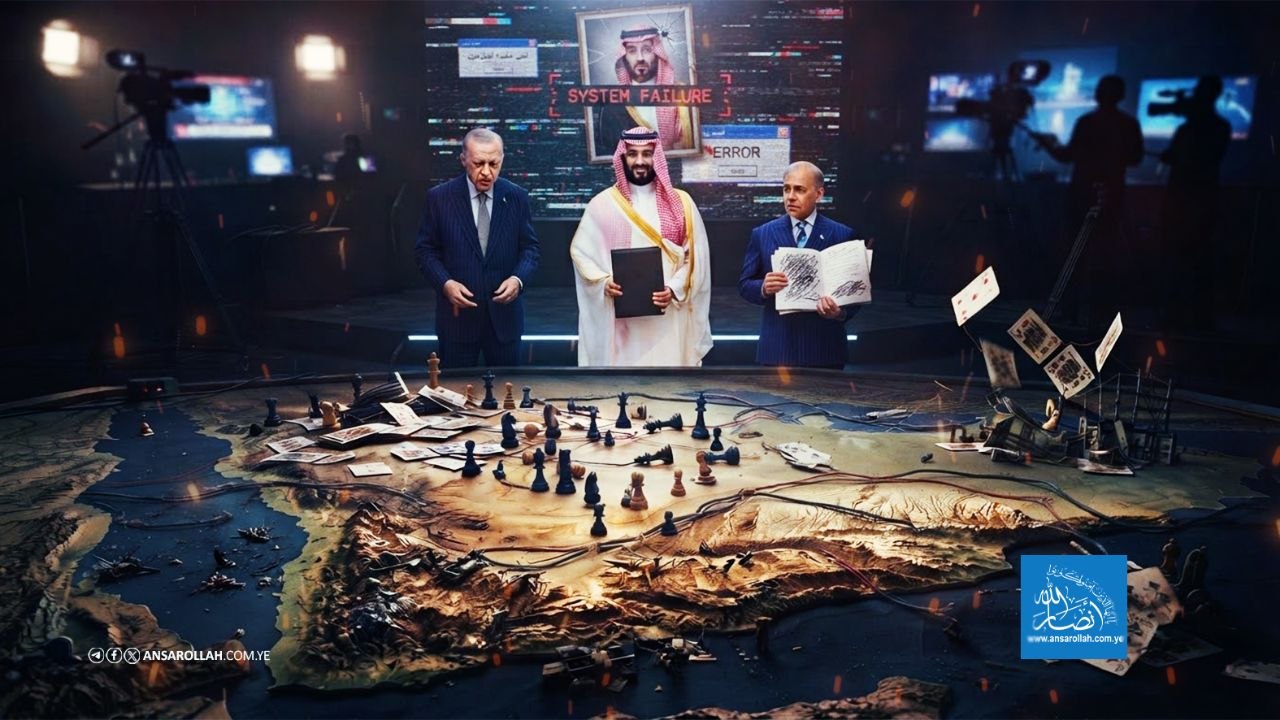
The Saudi enemy is seeking to rally new international alliances as part of its ongoing escalation against Yemen, following more than a decade of aggression that began with 12 alliances and ended with it standing alone. With the trilateral “defense” alliance between Türkiye, Pakistan, and Saudi Arabia faltering, Riyadh is turning toward inciting the Arab and Islamic world by promoting the narrative that Mecca has been targeted, in an attempt to shift the confrontation into the religious sphere. However, targeting a people whom the Noble Prophet described as a people of wisdom and faith places this propaganda against Yemen’s positions in support of Gaza and in defense of the holy sites. Will the Saudi enemy succeed in pushing through its false narrative? And what is the Arab and Islamic position toward this misleading propaganda?
Politicians in Iraq believe that the Saudi enemy’s resort to fabricating lies and accusing Yemenis of targeting Mecca reflects the enemy’s bankruptcy and its attempt to evade confronting the consequences of ten years of brutal Saudi aggression and siege against Yemen.
Iraqi political activist Dr. Muntadhar Al-Shara’ says that dragging the issue of the Holy Mecca into the Saudi aggression against Yemen comes within a cunning effort to stir Islamic emotions and divert attention from the dimensions and circumstances of the unjust aggression against Yemen. He stresses the need to verify any claims concerning holy sites and not accept them merely because they were issued by an official body.
In an interview with Ansar Allah’s website, Al-Shara’ links this narrative to the economic and political pressures facing Saudi Arabia as a result of Yemen’s equation of “siege for siege,” noting that exploiting holy sites does not represent a solution to the Yemeni crisis and will not exempt the Saudi enemy from the consequences of a just war.
He draws upon the position of Yemeni scholars who rejected the claim that Mecca had been targeted and called for investigation, verification, and distinction between military and civilian targets and holy sites, warning against exploiting the Two Holy Mosques in political and media conflicts.
Al-Shara’ stresses that the resistance’s discourse is aimed at rejecting hegemony, occupation, and foreign intervention, and does not target holy sites or civilians. He asks: “Where is the evidence? Where is the investigation? And who benefits from turning Mecca into a title in a political and media battle?”

For his part, political activist Muntadhar Al-Kinani believes that, over the past years, the Saudi regime has relied on employing religious discourse to promote its projects and positions, presenting itself as though it were the sole representative of the concept of “There is no god but Allah.”
In an interview with Ansar Allah’s website, Al-Kinani recalls the experience of Afghanistan, pointing to a Saudi role in promoting fighters through the use of the term “mujahideen,” the establishment of the Taliban regime, and the employment of sheikhs and preachers to mobilize young people. He considers that the same approach extended to the files of Syria, Iraq, and others, with the aim of achieving Saudi and Zionist interests at the expense of the countries of the region.
Al-Kinani cites Sayyid Abdul-Malik Badruddin al-Houthi’s description of Saudi Crown Prince Mohammed bin Salman, who promotes moral permissiveness under the name of openness and hosts numerous artists and atheists in Saudi Arabia during what are known as entertainment seasons, despite it being the land of the Two Holy Mosques. He says this demonstrates the contradiction between Saudi religious discourse and political practice.
He stresses that the Saudi enemy is no longer capable of influencing Arab and Islamic peoples by fabricating and promoting lies, pointing to the decline of some narratives that accused Shiites of not worshipping Allah or facing the Qibla, alongside growing awareness of the reality of sectarian diversity in the Islamic world.
Al-Kinani concludes that this awareness has contributed to exposing the Saudi regime’s practice of employing religion in political propaganda, stressing that Ansar Allah in Yemen “before anyone else, are the people most concerned with Islam.”

Political activist Dr. Jaafar Al-Mawla agrees with Al-Kinani and Al-Shara’ that the Saudi enemy’s resort to fabricating misleading propaganda embodies the Saudi enemy’s predicament and bankruptcy in its aggression against Yemen.
In an interview with Ansar Allah’s website, Al-Mawla says that the Saudi enemy’s attempts to employ religion come after its resounding failure to achieve its aggressive objectives, which it pursued through its military and economic power and various other methods of aggression. He stresses that the Saudi enemy is attempting to portray Yemenis as targeting Mecca, but statements by the official spokesman of the Yemeni Armed Forces expose these misleading claims, as the forces focus in their military operations on targeting the enemy’s military and vital installations in order to pressure it, compel it to submit to peace, and fulfill the requirements of peace.
Al-Mawla concludes that the attempt to take shelter behind religious geography in order to protect military and political installations will not achieve its objective, considering that the contradiction between Saudi religious discourse and its policies contributes to the erosion of the narrative presented by the Kingdom regarding the holy sites.

As for Egypt of Arabism and culture, its people stress that Yemenis’ honorable and bright history in supporting the Islamic religion and defending its holy sites refutes Saudi Arabia’s claims regarding the targeting of Mecca.
Political activist Ashraf Madi believes that the Saudi narrative concerning the alleged targeting of Mecca by Yemenis calls for recalling historical episodes connected to the Holy Kaaba. He points to the siege of Mecca during the Umayyad era, which involved the use of catapults, damage to parts of the Kaaba, and the burning of its covering, in addition to the incident involving the Qarmatians and their theft of the Black Stone.
In an interview with Ansar Allah’s website, Madi stresses that these events reveal the political and religious importance of the Hijaz, where the Grand Mosque and the Prophet’s Mosque are located, noting that control over the region historically represented an influential position in the Arab and Islamic worlds.
He recalls the history of Yemenis in supporting Islam, and the role of the Aws, Khazraj, and Banu al-Najjar in supporting the Prophet Muhammad, peace and blessings be upon him and his family, stressing that Islamic history and contemporary reality refute this false narrative. He emphasizes that Islamic holy sites do not belong to any particular state, but rather to all Muslims, praising the role of Yemeni media in presenting and defending the truth.
For his part, political activist Ehab Shawqi places the Saudi narrative concerning the targeting of Mecca within a context that, he says, demonstrates the exhaustion of the Saudi enemy’s options in Yemen and its resort to leveling accusations and spreading false propaganda against Yemen. He stresses that the enemy has failed utterly to eliminate free Yemenis and their liberation project.
Shawqi believes that developments in the war on Gaza have exposed a divergence between the positions of Arab regimes and the roles of Iran, Ansar Allah, Hezbollah, and the resistance factions in supporting the Palestinian cause. He considers this to have contributed to the decline of the Saudi narrative regarding its role as a protector of Islam and the holy sites.
He considers talk of the targeting of Mecca part of an attempt to once again present Saudi Arabia as the protector of the holy sites and portray Ansar Allah as a party targeting them. He questions how consistent this narrative is with Yemen’s declared position toward Al-Quds and Gaza, noting that recent wars have contributed to exposing the scale of the American military presence in the region and strengthening public awareness of the nature of the targets that came under attack.

As for Tunisia of Arabism and nationalism, political activist Mohammed Soltani says that Saudi accusations regarding Yemen’s alleged targeting of Mecca come within an attempt to cover up the failure to subjugate Yemenis, stressing Yemen’s commitment to safeguarding Islamic holy sites.
In an interview with Ansar Allah’s website, he adds: “Saudi Arabia had announced on September 16, 2026, that it had intercepted a drone that it said had been launched toward Mecca, while the Yemeni side denied targeting the holy city.” He notes that Yemen has made supporting Gaza a priority, in contrast to the Saudi subordination to the West.
He recalls the aggression against Yemen and Riyadh’s positions toward the aggression against Gaza, pointing to the Yemeni Quranic project in confronting the (colonial project) and stressing that the former promotes confronting hegemony and consolidating Islamic unity.
He concludes that Yemeni missiles target economic and vital installations while taking into account the sanctity and unifying status of Mecca among Muslims. He criticizes the silence of Arab regimes toward Israeli violations against Al-Aqsa Mosque.

The position of the free people of the Sultanate of Oman is no different from those of the free people in Tunisia, Egypt, and Iraq. Journalist and political activist Ahmed Al-Yahmadi stresses that the Saudi enemy’s resort to deceptive and false propaganda methods reveals the weakness of the Saudi argument and invalidates its flimsy justification for aggression against Yemen.
In an interview with Ansar Allah’s website, Al-Yahmadi asks: “Is the Kaaba the qibla of the people of the Kingdom alone, or the qibla of all Muslims?” He considers that Ansar Allah, as Muslims, cannot target their own qibla, placing the Saudi narrative before the standard of reason and logic, which, he says, it cannot withstand.
He points out that the use of such tricks was common during earlier historical periods, but the spread of knowledge, technology, and artificial intelligence has made the disclosure of information faster, and consequently, passing such narratives has become more difficult.
At the conclusion of his remarks, Al-Yahmadi calls on the Saudi regime to review its policies, recalling the case of journalist Jamal Khashoggi and questioning his fate, the whereabouts of his body, and the rights of his family, as matters that warrant reflection and review.

As for the son of the Palestinian resistance and Secretary-General of the Palestinian Popular Struggle Front, Khaled Abdul Majid, he stresses the invalidity of the Saudi accusations against Yemen, emphasizing that the Saudi enemy is seeking through this fabrication to rally international alliances in order to ease the burden of the economic siege imposed on it by Yemen.
In an interview with Ansar Allah’s website, Abdul Majid links the timing of the narrative to a series of Saudi meetings and moves with regional countries and powers, including Pakistan and Türkiye, considering that they were aimed at forming an Arab, Islamic, and international position that would support Riyadh in confronting the repercussions of recent developments.
He says that Saudi media and its allies employed the narrative to attack Yemen and its role in supporting the Palestinian cause. However, “Yemeni support operations for Gaza and the targeting of Israeli positions, alongside the confrontation in the Red Sea, thwarted efforts to influence public opinion.”
He refers to information circulated by Zionist and Western media regarding an aircraft launched from Saudi Arabia over Mecca, considering that confirmation of such information would raise questions about the official narrative.

From the Levant, Lebanese resistance figure Ghina Sharif says that the promotion of the narrative of targeting Mecca is connected to the military and field capabilities demonstrated by Ansar Allah. She considers that shifting the confrontation from its political and military context into the religious sphere is intended to portray them as a threat to the holy sites.
In an interview with Ansar Allah’s website, Sharif stresses that invoking Mecca gives the narrative an emotionally influential dimension. However, verifying any claim requires evidence and an independent investigation, particularly amid the public’s ability to compare narratives through the media and social media platforms.
She warns against employing holy sites in political and military conflicts, recalling the siege of Mecca during the Umayyad era, while emphasizing that this historical period does not differ, in her view, from the Wahhabi movement today.