A press conference in Hodeidah Governorate today reviewed the repercussions of 12 years of the Saudi, American, and Zionist siege and aggression on patients with chronic diseases, kidney failure, and cancer, the damage inflicted on the health sector, and the effects of the shortage of medicines, medical supplies, fuel, and electricity on therapeutic services and the lives of patients.
The conference, organized by the Humanitarian Development Foundation in the governorate under the slogan "The Siege is a Crime of Premeditated Murder.. and Patients with Chronic Diseases and Kidney Failure in Hodeidah are at the Forefront of the Victims," was held.
At the conference, Hodeidah Governor Abdullah Atifi explained that patients with chronic diseases suffer the tragedy of the pain of illness on one hand, and the burdens of the Saudi siege and aggression, the scarcity of medicine, and the difficulty of accessing treatment on the other.
He held the Saudi enemy responsible for the restrictions that obstruct the arrival of medicines and medical supplies, noting that the continuation of these restrictions doubles the suffering of patients, especially kidney failure patients and cases requiring regular treatment.
For his part, the head of the Humanitarian Development Foundation, Muhammad Al-Rajwi, addressed the humanitarian effects of the siege and aggression on patients with chronic diseases, especially with the interruption of vital medicines and kidney dialysis supplies and solutions, and the repercussions of the electricity and fuel crises on medical services.
He held the Saudi enemy fully criminally and morally responsible for the deaths and serious complications that have affected and continue to affect patients as a result of the interruption of vital medicines and kidney dialysis supplies.
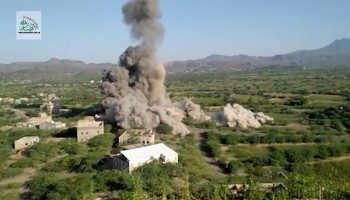
Meanwhile, the deputy director of the Health and Environment Office in the governorate, Dr. Walid Al-Imad, explained that the statistical report issued by the office documented the destruction of 36 health facilities, of which seven were completely destroyed, including a hospital and two health centers, and 29 partially destroyed, including 12 hospitals, 10 centers, and two health units.
He pointed out that an ambulance was completely destroyed and more than ten ambulances were targeted while performing their duties, and eight medical, nursing, paramedic, and ambulance driver cadres were martyred at bombing sites and lines of contact.
For his part, the spokesman for the kidney dialysis centers, Dr. Muhammad Alak, reviewed the conditions of kidney failure patients, warning of the dangers of power outages and the halt of petroleum derivatives on the continuation of services at kidney dialysis centers, intensive care units, and premature infant incubators.
In the axis of chronic diseases, tumors, and blood diseases, the conference addressed statistics related to patients and death cases, where 2,341 deaths were recorded out of a total of 7,604 kidney failure cases during the period from 2015 to 2026 CE, and 2,113 deaths among cancer patients out of a total of 6,551 cases, while sickle cell anemia cases reached four thousand cases, of which 88 patients died, and 172 thalassemia cases were recorded, of which eight patients died.
Meanwhile, the director of the Human Rights Office in the governorate, Hassan Darwish, spoke about the human rights and legal dimensions of the crimes of the siege and the documentation of slow death violations against patients with chronic diseases.
He affirmed the fall of all international laws and the inability of the UN system, which has become a partner in the siege and starvation of the Yemeni people, stressing the continuation of documentation to pursue the perpetrators of these crimes criminally and internationally.
In this context, the representative of the Social Affairs and Labor Office, Abdul Salam Al-Anabi, pointed to the harsh social and living reality experienced by the families of patients and affected groups due to the exorbitant financial burdens and the costs of continuous travel for treatment amid the repercussions of 12 years of siege.
He called for unifying community and humanitarian response efforts and strengthening protection and care programs to alleviate this tragedy.
The conference addressed, through seven main axes, the health and service reality, specialized working papers for kidney dialysis, oncology, diabetes, and blood pressure centers, in addition to reviewing the economic suffering that burdens families, the role of civil society organizations, and the legal and human rights frameworks, leading to strengthening response efforts and establishing a sustainable medicine stockpile.
At the conclusion of the conference, the head of the health sector at the Humanitarian Development Foundation, Dr. Yasser Abbas, read the closing statement, affirming that the shortage of petroleum derivatives and power outages affect the operation of kidney dialysis centers, intensive care units, and premature infant care, while the damage to water and sanitation networks has exacerbated the spread of epidemic diseases.
The conference demanded the immediate and complete lifting of the siege on Yemen's ports and airports, foremost among them the port of Hodeidah and Sanaa International Airport, allowing the entry of medicines, supplies, and medical equipment, and opening an urgent medical air bridge to transfer critical cases for treatment abroad.
It urged supporting kidney dialysis centers and providing their operational needs, securing medicines for patients with chronic diseases and cancer, reconstructing damaged health facilities, paying employees' salaries for the years of interruption, and continuing to document the health and humanitarian repercussions of the siege and aggression.
The conference was attended by executive leaders and media representatives.