The Wall Street Journal considered that the war in Yemen and the operations of the Yemeni Armed Forces have exposed shortcomings in Saudi Arabia’s military capabilities.
The newspaper noted that Riyadh possesses advanced weapons, but the Yemeni Armed Forces have proven to be a “resilient adversary,” as missile and drone attacks have pushed Riyadh into a new and perilous phase of the war in Yemen.
Yemeni Armed Forces Have Proven to Be an Exceptionally Tough Adversary
Saudi Arabia has one of the largest defense budgets in the world, and its forces are equipped with advanced fighter aircraft and air defense systems acquired from the United States and other countries, according to the newspaper.
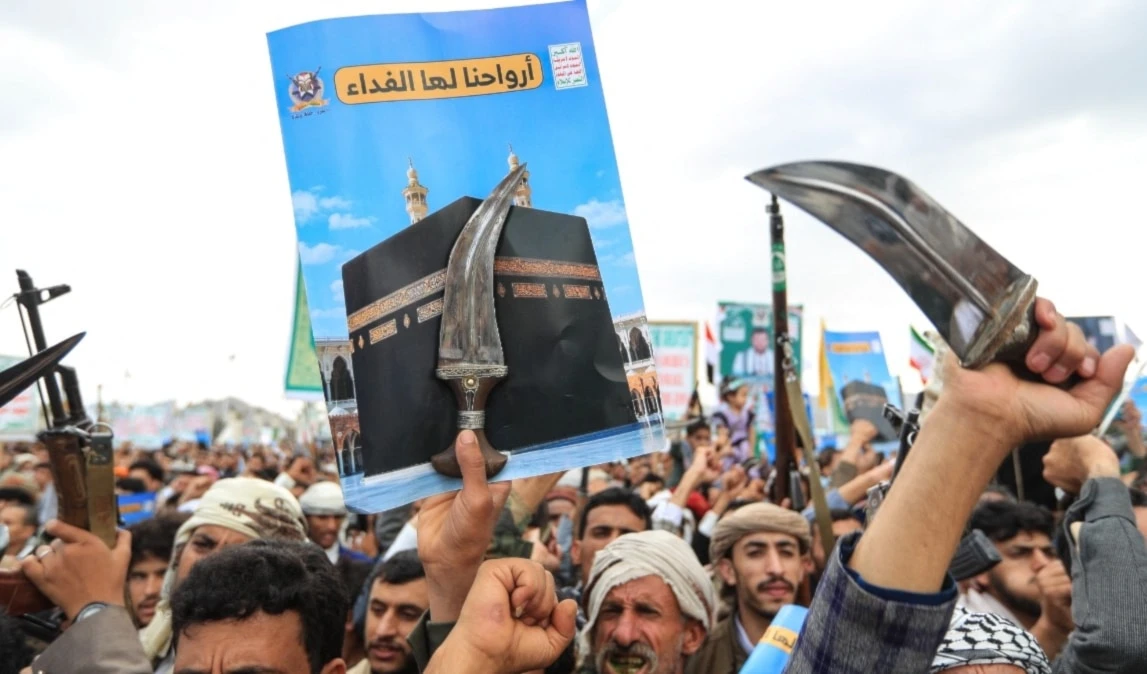
Nevertheless, analysts point out that the Yemeni Armed Forces have proven to be an adversary with “exceptional resilience,” possessing large ground forces, as well as domestic capabilities to manufacture missiles and drones. This enables them to effectively counter Saudi Arabia’s military strengths, as reported by the Wall Street Journal.
According to the newspaper, Saudi Arabia relies on rival militias loyal to the “Yemeni government” backed by Riyadh to fight ground battles, while Saudi fighter jets and attack helicopters provide air cover.
On Washington’s “Reluctant” Support for Saudi Arabia
Saudi air defense efforts are facing obstacles stemming from shortages of the interceptor missiles needed to shoot down Yemeni missiles, according to the newspaper, in addition to the reluctance of key Saudi allies, including the United States, to provide direct military support.
So far, the support provided by the United States to its Saudi ally has been limited to intelligence assistance and other forms of backing.
It is worth noting that U.S. President Donald Trump urged Saudi Arabia on Friday to accept military assistance from “Israel” in its war against Yemen.
Riyadh, which maintains extensive security ties with “Israel” behind the scenes despite the absence of formal diplomatic relations, has issued no public response to the proposal, according to the newspaper.
Riyadh Turns to Other Countries
In contrast, Riyadh has turned to Turkey, Pakistan, and European countries for assistance in the war, through the deployment of air defense units and the provision of other forms of military support inside Saudi Arabia.
For its part, Egypt announced on Sunday its readiness to provide military assistance, according to a statement by the official spokesperson for President Abdel Fattah el-Sisi.
Riyadh is also seeking to recruit foreign fighters to support its Yemeni allies, according to the newspaper. Nevertheless, sources familiar with Saudi strategy indicate that Riyadh remains open to reaching a “diplomatic solution to the conflict,” which otherwise appears difficult to contain.
The newspaper compared the capabilities of the Yemeni Armed Forces to those of Iran, which the United States has struggled to defeat, noting that “the Houthis have managed to build an arsenal of mobile missile launchers and missile manufacturing facilities buried deep underground, enabling them to withstand airstrikes.”
The Wall Street Journal quoted analysts as suggesting that Yemeni forces are capable of absorbing strikes by the Saudi-led coalition against them while continuing to launch attacks deep inside Saudi territory, targeting sites that lack strong defenses.
The analysts also argued that, with the likelihood of renewed war against Iran increasing following next month’s U.S. midterm elections, Saudi leaders face the risk of a conflict on multiple fronts, placing them under greater pressure to seek an end to the war in Yemen as quickly as possible.
In a related development, U.S. ambassador to Saudi Arabia and senior adviser at the Center for Strategic and International Studies, Michael Ratney, said: “At some point, they will have to find a way out. The Houthis have the ability to innovate and the capacity to retaliate through asymmetric methods, which could inflict significant damage.”
The Yemeni Armed Forces successfully withstood a campaign of U.S. airstrikes last year. They also managed to withstand a Saudi-led coalition that waged an aggression lasting seven years.