Ansar Allah website - Report -8 Jumada Al-Awwal 1448 AH
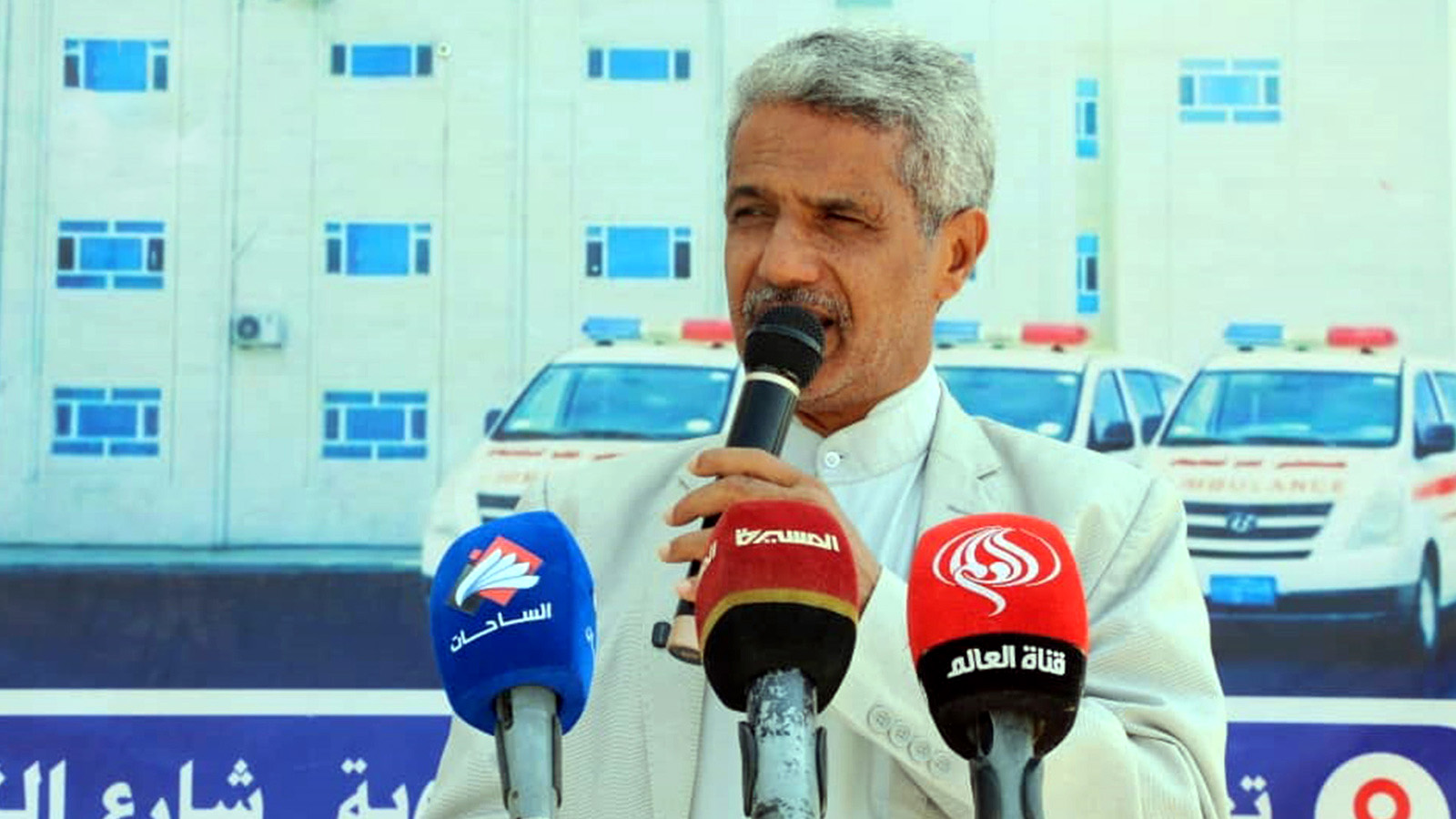
Today, the Ministry of Health and Environment held a press conference at Taiz Central Hospital in Al-Ta’ziyah District, Taiz Governorate, during which it revealed the cumulative toll of victims and repercussions of 100 days of escalation by the Saudi aggression against the Yemeni people, as well as the catastrophic consequences of the continued closure of Sana’a International Airport and the targeting of vital facilities.
The Ministry of Health’s spokesperson, Dr. Anis Al-Asbahi, presented statistics on civilian casualties since the start of the escalation wave on July 13, 2026, which the enemy launched by targeting Sana’a International Airport through provocative measures that undermined the path toward de-escalation and reducing hostilities. He affirmed that the overall toll had reached 562 killed and injured, including 155 killed and 407 wounded.
He explained that Taiz Governorate topped the list of casualties, accounting for more than 33% of total human losses, followed by the governorates of Sa’ada, Al-Jawf, and other governorates at varying rates. He noted that the aggression escalated its crimes against civilians during the period from October 16 to 18, resulting in 117 citizens being killed or injured, including 29 killed and 88 wounded in just 48 hours.
Dr. Al-Asbahi also addressed the distribution of fatalities from September 3 to October 18, noting that 41 people were killed in Taiz Governorate, 36 in Sa’ada, 20 in Al-Jawf, and 18 in Dhamar Governorate.
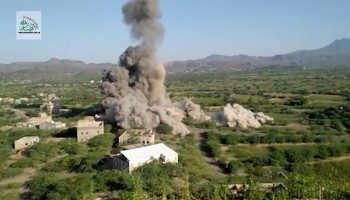
He detailed the most prominent recent massacres, drawing attention to the horrific crime committed by the aggression’s aircraft on Sunday, October 18, when it targeted the home of citizen Ali Al-Qahm in Sahar District, Sa’ada. The attack resulted in the killing of more than ten civilians and the injury of 23 others, most of them women and children. Among the victims were seven children killed and 12 children wounded, some in critical condition.
He also pointed to the crime committed by the Saudi enemy’s aircraft against fishing boats off the coast of Al-Kadha in Dhubab District, Taiz, which resulted in the killing of eight fishermen in two consecutive airstrikes. This was accompanied by the shelling of a residential home in the Al-Nashmah area of Al-Ma’afer District, which left a mother and three of her children seriously injured.
The Ministry’s spokesperson warned of an unprecedented collapse in the pharmaceutical system as a result of the suffocating blockade and the closure of Sana’a International Airport as a form of collective punishment. He affirmed that more than 1,600 types of medicines had become unavailable in the local market, while 83 major international companies had stopped supplying medicines to the country.
He revealed that more than 100 tons of vital and refrigerated medicines shipped through Djibouti had been destroyed due to improper storage and transportation difficulties. He also noted that 12 types of cancer medicines had run out, while more than 40,000 patients with thalassemia and blood disorders had been deprived of iron-chelation medicines and specialized solutions. In addition, the entry of radioactive iodine for thyroid cancer patients and tissue-typing solutions had been prevented. This has forced medical staff to change treatment protocols for hundreds of patients and has further increased daily mortality rates.
Regarding the healthcare sector’s infrastructure, Dr. Al-Asbahi affirmed that systematic targeting had affected more than 554 health facilities from 2015 until today, including 139 hospitals that had been completely destroyed. Extensive destruction had also affected dozens of health centers and ambulances, most recently an ambulance belonging to Al-Dimnah Hospital in Taiz. He noted that more than 60 members of ambulance teams had been killed while performing their humanitarian duty.
The Ministry of Health’s spokesperson denounced the international and UN silence in the face of these flagrant violations of humanitarian conventions and the rules of international humanitarian law. He considered the United Nations’ inaction and disregard for repeated communications and appeals to constitute complicity and an explicit partnership that encourages the aggression to persist in committing war crimes against civilians, service facilities, and civilian objects across various governorates.