
Ansarollah Website Official Report
Published: Rabiʻ II 1, 1447 AH
The “Arab Spring” swept through the region, leaving it exposed and vulnerable to many transformations with colonial Western overtones. The colonial plan succeeded in creating destructive chaos that confiscated the hopes and ambitions of the Arab youth who took to the streets and squares seeking a secure future. At that time, governance in Yemen had assumed the label of a “failed state,” a phrase that would be repeated by observers and analysts, revealing truths few wished to confront: reality had effectively estranged itself from the aspirations of the 26 September revolution, despite the passage of decades since its founding. The future had become unknown, at best constrained within frameworks imposed by hegemonic regional and international powers.
It was therefore unsurprising that the country descended into a spiral of chaos and lawlessness, driven by foreign hands and appetites intent on keeping Yemen within a circle of domination. The safe havens for a country's aspirations to overcome sustained backwardness became further out of reach. By 2013, the situation had reached an extreme level of collapse and narrow conflicts, while a group of ten states — before the United States began to monopolize decisions — were the ones shaping policy in ways that guaranteed their interests and left the Yemeni people mired in their struggles and worries.
When popular mobilization began to take an escalating course aimed at decisively ending this decline, the popular ground had been prepared. It became ready to present rulers with two options: either a country uncommitted to any external forces — which would mean canceling all policies imposed by that subservience — or the continuation of revolutionary escalation, culminating in revolution as the means to meet the people’s aspirations for a transformative break from that deteriorated condition.
The revolution immediately moved to strengthen the domestic front, unify the national ranks, and restore confidence, turning Yemen’s streets into a safety valve that kept the revolution from sliding into cycles of revenge or institutional dismantling. An exceptional sense of responsibility emerged, elevating the behavior of the revolutionaries in protecting security and property and in maintaining the normal functioning of institutions.
The coming of the 21 September Revolution represented a natural outcome of the yearning souls’ rejection for a truly independent country, given the decline and backwardness visible across all fields. Yemen was not unique in that state; all Arab and Islamic countries were — and remain — living under a condition of dispossession of will, sovereignty, hopes and aspirations, save for what hegemonic powers permitted. The determined outcome was that the Arab and Islamic nations remain backward, consuming what the outside world produces for it and moving only within spaces tolerated by those powers. That reality spurred the free-spirited to take serious action to forge new definitions of sovereignty and freedom of decision-making based on the nation’s cultural and civilizational heritage.
The revolution was born at the hands of the free to break out of those narrow frames in which the entire nation was being kept wandering without guidance. The revolution set forth a set of national goals that did not diverge from what the 26 September revolution stood for; rather, it laid out a practical vision to correct the course of those goals into tangible realities recognizable by the people. But the enemies of the Yemeni people had a different view: they sought with all their might to besiege the nascent revolution to abort and bury it in its cradle, driven by their appetites, fears, and conviction that the revolution’s vision of sovereignty and liberation was incompatible with the prescribed status of the country, and that its continuation would make control more difficult.
Aden Governor Tariq Salam said that repelling international ambitions was no easy task. “The revolution faced grave challenges, represented by regional and international alliances that tried with all their strength to abort this national liberation project,” he said.
“But the determination of the Yemeni people, their legendary steadfastness, and their deep awareness of the scale of the conspiracy were enough to shatter all those plans. The 21 September Revolution proved that the will of the people is stronger than all the fleets of invaders and the conspirators’ schemes.”
Action to Stem the Nation’s Bleeding
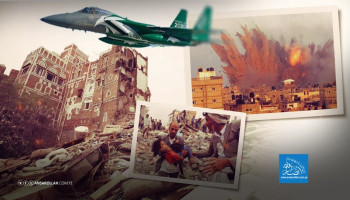
The resolute desire of the free to stop the nation’s bleeding naturally collided with the architects and drivers of a backwardness plan, who convened internationally to confront this Yemeni giant before its rebirth was completed. The matter posed risks to their interests and stripped them of a strategic card tied to Yemen’s pivotal features. The homeland therefore faced a barbaric, reckless aggression whose details revealed its hostility toward Yemen and Yemenis: open killings, destruction of infrastructure, and siege and starvation of the people. Yet none of this dissuaded the revolutionary people from their revolution, which they saw as a last refuge for creating an evolving reality capable of continuous developmental leaps.
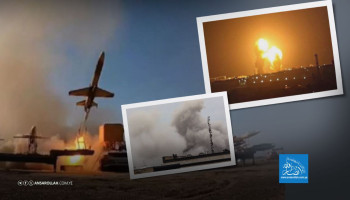
The aggression underwent phases of violence and conspiracies intended to subjugate the people to a domination plan. That, in itself, indicated the impact of the people’s decision to transform. One of the revolution’s fruits appeared in the emergence of self-confidence and in confronting a wide-scale aggression in which several countries participated directly — including the United States, Britain, Saudi Arabia, the UAE and others — while the rest colluded through silence. The confrontation produced a strong Yemen capable of defending itself and teaching enemies lessons in steadfastness and in inflicting pain upon the aggressor. Over eight years of continuous bombing supported by a suffocating siege, the enemies of the Yemeni people failed to achieve any notable gains; they instead helped sharpen Yemenis’ resolve to work at full capacity to acquire deterrent tools, set strategic options, and impose confrontation equations that ultimately led the enemy to request a truce.
The years of aggression became a practical trial in translating pride, dignity, will, and decision into defensive action for the country’s sovereignty and resources. That forced the enemies to retreat and silenced their killing machinery: painful blows delivered by the armed forces prompted the coalition states to recalculate, especially as they proved unwilling to absorb any strike that could hit their facilities. The Americans concluded the battle had outlived its usefulness in terms of time needed to finish it, and that what came next would be at the expense of the aggressor states’ security and at the cost of American interests in those countries — a price Washington was unwilling to forfeit.
The Revolution’s Bond with the Palestinian Cause
From its dawn, the revolution declared its natural bond with the nation’s cause, Palestine, and al-Aqsa Mosque, a stance feared by the United States and the Zionist entity. Such a position undermines decades of efforts to dilute the Palestinian cause, to remove it from the concerns of Arab and Islamic peoples, and to weaken states so that they lack any capability to take practical action in support of the Palestinian people.
The Yemeni people and their revolution did not disappoint American and Israeli fears. The current confrontation with the Zionist entity has shown that Yemenis do not practice hypocrisy or showmanship; rather, they act from a sincere belief in the necessity of aiding the oppressed and wronged Muslim. When the enemy — the Zionist entity — moved its military apparatus alongside the United States, relying on a distorted doctrinal methodology to exterminate Gaza’s people and target Yemen, the Yemenis acted, relying on Allah. Two years of confrontation revealed the height of truth’s voice and the downfall of the people of falsehood into disgrace.