Published: Rajab 1, 1447 AH
In Malhan, the genuine spirit of Yemeni solidarity dismantled the concepts of “sterile waiting” for conditional international aid and replaced them with "the philosophy of self-reliance." Where a sack of cement carried on a human back became a shot fired into the heart of helplessness, and a cry of independence declaring that land watered by blood can only be rebuilt by the hands of its sons.
When the people of Malhan donated the roofs of their homes to become land for their neighbors, they were not merely granting building space but offering a profound lesson in “unity of destiny.” A roof that once sheltered its owner became a bridge upon which a brother crossed toward safety, in a humanitarian image that embarrasses global systems that feed on the crises of people.
In the rugged geography of Malhan District in Al-Mahwit Governorate, the floods that swept away villages and buried “Shatt Al-Sahn” were not mere fate, but a true test of the resilience of the “internal front” in the face of the wagers of Zionist-American colonial forces lying in wait to tear apart the Yemeni social fabric. There, where wounds are healed with the salt of determination, Yemenis did not wait for international “table scraps” laden with agendas. Instead, they mobilized their civilizational reserve and the spirit of Yemeni solidarity, transforming rubble into a sovereign reconstruction workshop. Here, the language of incapacity fades in the face of the marching shoulders that carried building stones over solid peaks, sending a coded message to all who bet on breaking this people’s will. Whoever builds his home from his neighbor’s roof out of altruism cannot be defeated by any arsenal, and whoever turns calamity into a model village through self-effort has already shattered the chains of dependency and subjugation.
The story of Malhan stands as a living testimony, is a living testament to the harshness of nature at times, and to the resilience and indomitable spirit of humanity at others. As soon as the raging floods swept through its valleys and villages, turning Shatt Al-Sahn and dozens of villages and homes into mere memories beneath piles of mud and gravel, a cooperative, solidaristic spirit was unleashed, launching initiatives that transformed disaster into the spark of an unprecedented reconstruction movement—from a point of no return to an inspiring turning point.
Within relief stories emerged a complete Yemeni epic embodying the highest meanings of support, mobilization, and sustainable management. From alliances of valleys and shoulders, and the use of donkeys to transport heavy materials, to the wise decision to transform cash donations into permanent structures instead of temporary relief, and culminating in the most sublime images of altruism when citizens donated the roofs of their homes to serve as safe foundations for their neighbors.
Here in Malhan, one discovers how a feeling of regret was transformed into a fortified luxury home gifted to an orphan newcomer, and how partnership crystallized between the local community, benefactors (such as Sheikh Othman Al-Namri and Al-Hamdhi Exchange), and the development sector (Bunyan Development Foundation, the local authority, the cooperative association, and a host of development partners). Together, they completed a modern model village and constructed permanent homes for more than 63 families whose houses were damaged by the floods.
Thus begins a narrative journey through stories from the Community Initiatives Support Program for rebuilding and rehabilitating damaged homes, narrated by the program coordinator, Engineer Saleh Al-Qasimi—stories that penetrate rugged mountains, touch the purity of the people, and prove that the collective will of the Yemeni people can transform destruction into an integrated urban cooperative model, at a cost that demonstrates community effort is the most precious treasure.

“Shatt Al-Sahn”: The Authenticity of Solidarity and the Birth of a Village
Malhan District witnessed a tragic scene when floods swept through the village of Shatt Al-Sahn in the Hamdan sub-district, turning it into a completely disaster-stricken area. Homes, roads, the school, and mosques were buried, and all tangible and material property—farms, livestock, furniture—was swept away. Residents were left overnight without shelter, and even the school they tried to flee to was covered by earth and stones. The situation was catastrophic, necessitating rapid action to evacuate those affected to a safe area.
In the face of this destruction, the finest images of government-community integration and steadfast will emerged. The local authority, the Malhan Cooperative Association, development volunteers, and citizens united to search for a safe refuge. In this context, Abdulaziz Musobba, Bunyan Foundation’s governorate coordinator, succeeded in identifying a suitable area belonging to endowment (waqf) properties. The Endowments Authority responded immediately, relinquishing the land in exchange for symbolic and deferred payments, paving the way for construction.
Alongside securing the land, benefactors poured in aid: cash donations, food baskets, tents, and essential relief supplies such as mattresses, blankets, clothing, and medicines, distributed according to urgent needs.
The response did not stop at emergency relief. Ambitions expanded toward reconstruction with an integrated urban vision. The district, the cooperative association, and the Bunyan Foundation worked to pool remaining funds and plan the establishment of a residential village for the affected families in the new safe area.
Within a short period, joint efforts resulted in the construction of a model residential village consisting of 19 housing units with basic facilities in the first phase, later expanded by three additional units. Urban planning adhered to modern standards attentive to social and environmental dimensions, allocating generous surrounding space to each home. The aim was not merely shelter, but supporting sustainable livelihoods, granting homeowners interest-free loans in the form of livestock to enable future economic expansion.
This successful model was replicated across other affected villages and homes in the district, reaching a total of 32 safe sites allocated to 32 beneficiaries.
Financial figures revealed the depth of solidarity: total project cost reached approximately 42 million rials, with partners contributing around 8 million, the local community about 20 million, and Bunyan Foundation roughly 14 million—embodying a unique model of Yemen’s capacity to transform disaster into a launchpad for sustainable development.

Stars in Stories of Unfading Determination
In the heart of Malhan, where villages cling to mountain bellies like ancient tattoos, men unknown to bustling capitals emerged, yet the echo of their actions reached the heavens. The district awaited a hand to lift neglect’s dust, but the response came not from distant offices, but rather from its own sons. What began as an idea turned into powerful operations of support, mobilization, and management.
The honorable did not await official calls. Like stars shining when the moon fades, they illuminated the path themselves. Sheikh Othman Al-Namri’s initiative was the first spark, awakening solidarity among benefactors from within and beyond the area. They not only donated but descended into the field as soldiers in a major rescue effort, believing that building bridges begins with extending a hand.
The local authority did not remain a spectator, but became a primary driver. The district director and the cooperative’s administrative body recognized that true administration accelerates facilitation and nurtures initiative. They stood at the front lines, easing difficulties, legislating hope, and transforming community dreams into a concrete action plan.
This harmony between generous popular hands and supportive administration was no coincidence, but a new constitution for joint action. Each completed initiative became merely a starting point for the next, with affected homeowners remaining partners rather than passive beneficiaries, embodying pride and perseverance as they continue pushing forward to complete the “integrated program.”
Malhan’s story is a message written with the water of determination on the rock of challenge, teaching that the greatest success stories are told by those who believed in their own strength and moved for their land. It is a call to all with beating hearts: success favors those who break the wall of waiting and act, not those who stand idle awaiting others’ aid.
When Solidiatary Defeat the Silence and Ruggedness of Mountains
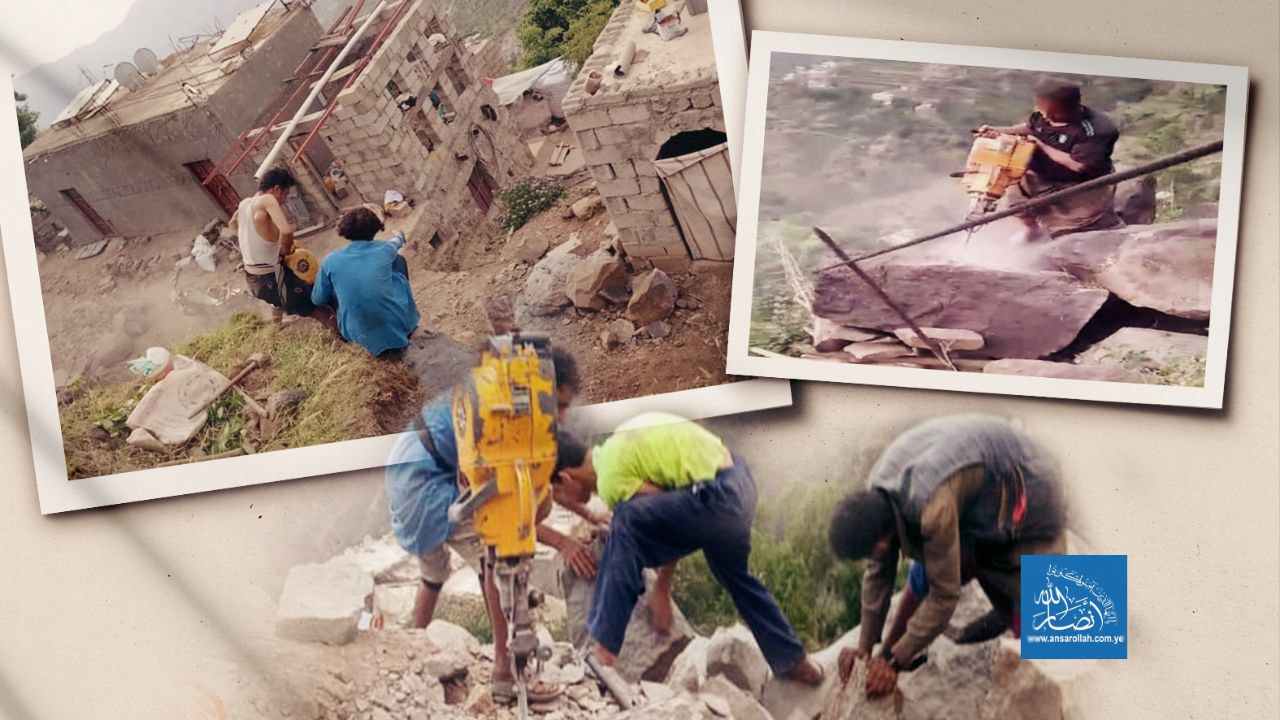
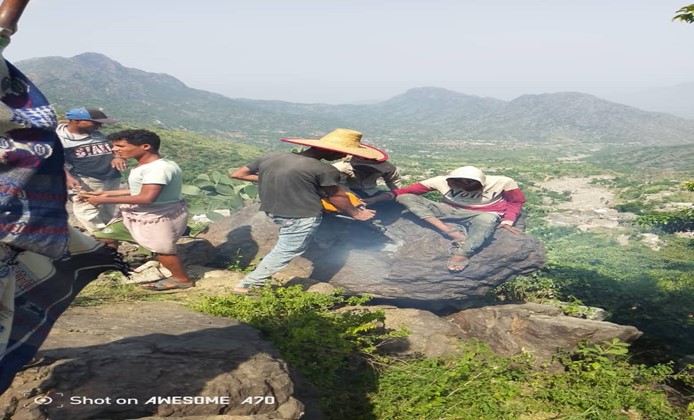
Malhan’s harsh terrain became a challenge arena responding only to those of great spirit. In valleys such as Hamim and Al-Rumman, homes swept away by floods had to be rebuilt on nearby mountain peaks. The challenge of transporting cement blocks and stones over 2.5 kilometers of impassable paths was immense. Yet solutions in Malhan are born from adversity.
Without any centralized orders, an authentic whisper rooted in Yemeni traditions of solidarity turned into a collective roar—mobilization, faz‘a, assistance. From every home came a man; each carried the dignity of his village on his back. Men, women, children, and donkeys climbed rugged paths carrying heavy cement sacks. They were not merely transporting materials, but hope, dignity, and the right to safety. Their efforts saved thousands of rials in transport costs, declaring: “Your need is our need; we will bear the cost in humanity’s account.”
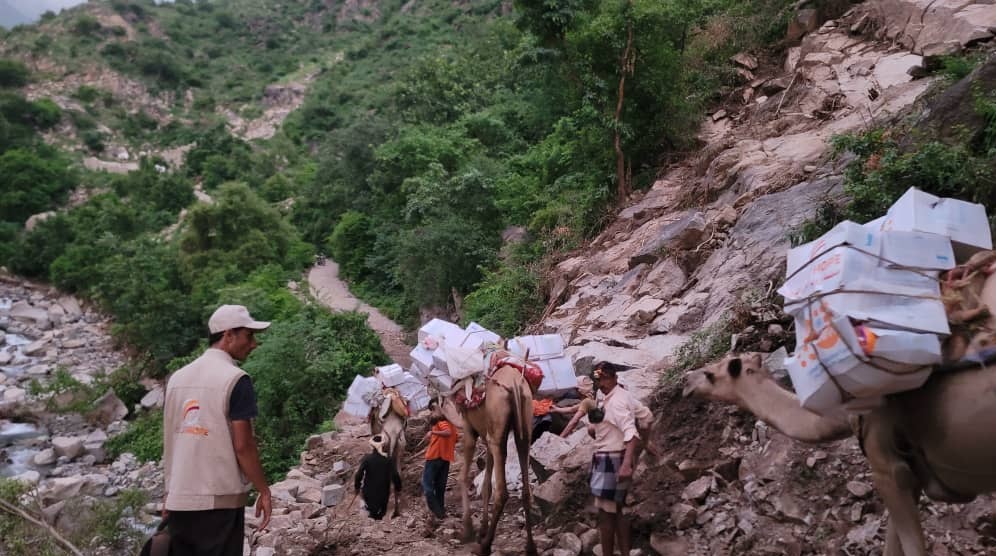
This legacy repeated across villages such as Al-Mahras, Roma, Al-Naddar, and Bani Sha‘i—a lesson redefining civilization as cooperation beyond money.
Saving Hands of Rain and Structures of Construction
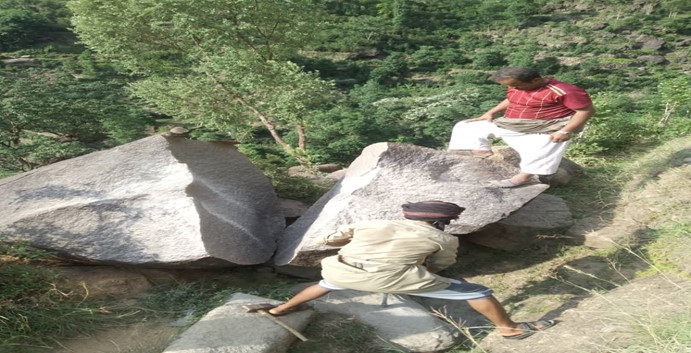
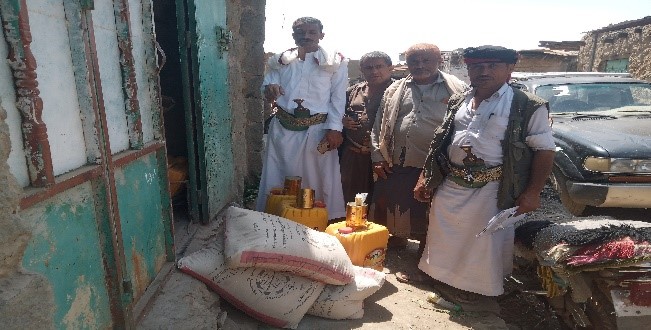
When disaster struck, humanitarian response raced ahead. Sheikh Othman Al-Namri led the first relief wave with food, tents, bedding, blankets, and gas supplies. Simultaneously, Al-Hamdhi Exchange gathered silent donations nearing 9 million rials. Wisely, funds were redirected from consumptive aid to sustainable construction, purchasing around 28,000 concrete blocks and providing wages to some affected families to sustain economic life.
Farewell to Tears, Building of Loyalty
Among relief stories, the case of Abu Imad Al-Shawari stands out. A migrant resident for ten years, he dreamed of buying land with 700,000 rials to secure his family’s future. Rejected repeatedly, he deposited the money with the village trustee. Then disaster struck, claiming his family. Only his eldest son and twelve-year-old Imad survived.
Moved by the loss, villagers transformed remorse into action, gifting Imad a 15-square-meter plot in a safe, strategic location and constructing a fortified, fully furnished home powered by solar energy, costing over three million rials, with Bunyan Foundation contributing materials. Thus, the original deposit became a structure of greater value—a testament to Malhan’s spirit.
On the Roofs and in the Hearts
Facing scarcity of safe land, Malhan residents pioneered an unprecedented initiative: donating their home roofs to affected neighbors to build atop them. With clear organization and legal deeds signed by eight donors, beneficiaries gained ownership of what they built, retaining only rainwater rights for original homeowners. This unique act condensed generosity and sacrifice into one gesture.
Malhan… A School of Resilience
What occurred in Malhan was a practical urban lesson worthy of study. Over six chapters, it proved that when the community unites with sound administration, hope can be carved from impossibility. The people of Malhan turned a natural disaster into an opportunity to create a model village supporting sustainable livelihoods. They did not merely build houses; they built resilience and dignity. Malhan teaches that sincerity, sacrifice, and unity of vision can transform the ruins of the past into the structures of the future.