Ansarollah Website Official Report
Published: 8 Shawwal 1447 AH
The Strait of Hormuz is no longer, in Iranian military doctrine, merely a waterway subject to traditional neutrality equations. Rather, it has transformed into a sovereign arena of confrontation in which Tehran imposes its own rules of engagement—an inherent sovereign right it has exercised to shatter the illusion of American coercion that Trump attempted to market as a failed pressure tool.
The failure suffered by the American adversary has confirmed a key reality: U.S. timeframes—whether framed as “48 hours” or extended beyond—no longer fall within the realm of containable threats. Instead, they have become field realities that impose a deep fracture in the structure of American strategy.
Field interactions have demonstrated the failure of the military options relied upon by the Trump administration to achieve the alleged “decisive outcome.” Writer Phil Klay, in The New York Times, argues that the American miscalculation was reflected in the lack of clarity regarding ultimate objectives, rendering military strikes merely a show of force lacking disciplined political purpose.
This structural confusion in defining “victory” has caused American ambitions to collide with the rock of on-the-ground realities, pushing Washington to search for alternative paths to compensate for its failure to break Iran’s will through hard power. Patrick Cockburn, writing in The i Paper, suggests that this failure exposed the limits of Trump himself when confronted with a real crisis. Consequently, U.S.-Israeli pressure attempts have instead acted as a detonator for a comprehensive deterrence system that strategically links the striking capabilities of Iran’s Revolutionary Guard with an economic chokehold that is now effectively encircling Western capitals.
Paralysis of Navigation and Collapse of Supply Chains
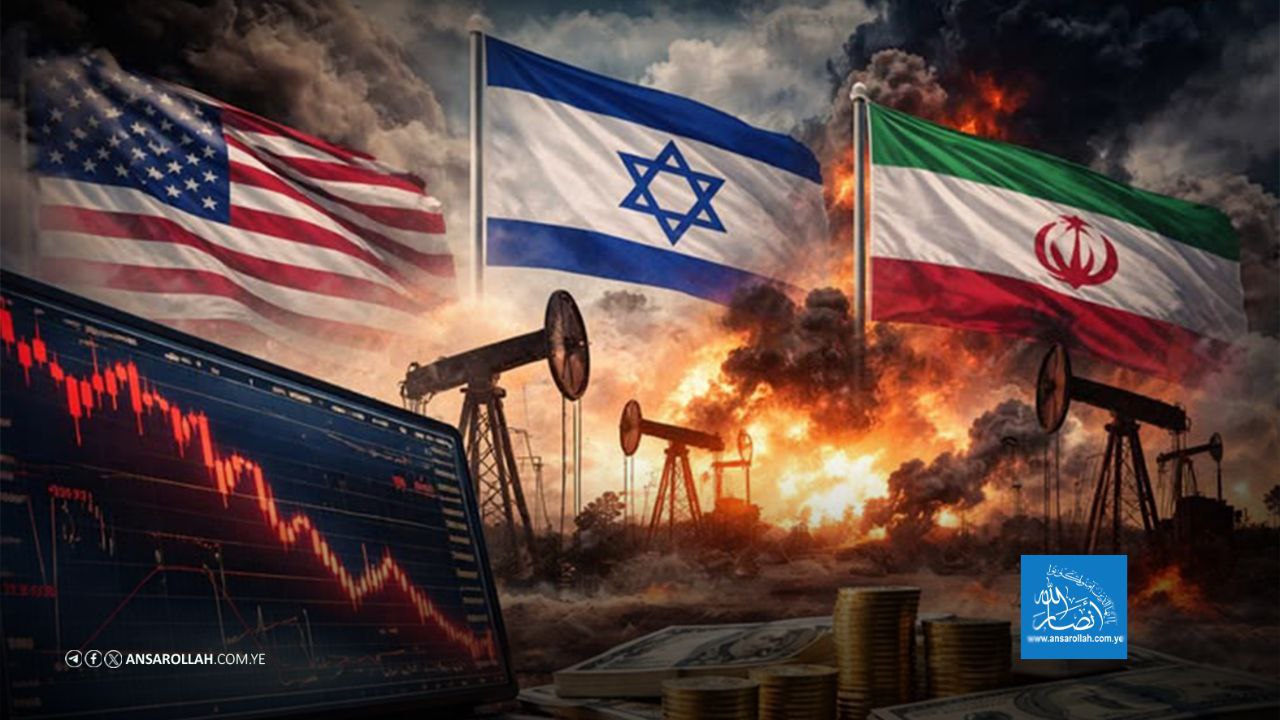
The strategic reading of the confrontation in the Strait of Hormuz extends beyond direct political discourse into the depth of geopolitical and economic realities documented by major international institutions. Reports issued by the U.S. Energy Information Administration and the International Energy Agency reveal a technical reality: any disruption in the security of maritime routes—particularly the Strait of Hormuz—would inevitably lead to a historic surge in crude oil prices exceeding $150 per barrel as an initial conservative estimate. These figures represent an economic shock capable of dismantling the stability narrative promoted by the White House.
At the same time, the severity of the energy dilemma is highlighted by the potential disruption of 25% of global liquefied natural gas supplies passing through the strait. Data from S&P Global Commodity Insights indicates that such a disruption could trigger a genuine energy catastrophe, halting major factories and collapsing heating systems and essential services in countries reliant on U.S. protection—particularly Washington’s allies in Europe and Japan. This strategic disaster places the U.S. administration in a profound dilemma, as threats to target Iranian facilities effectively become direct threats to energy security in allied capitals.
Data from Lloyd’s of London confirms that sustained high prices could plunge Western economies into stagflation, undermining already fragile recovery plans. Meanwhile, Bloomberg reports that a 10% increase in oil prices leads to an approximate 0.2% decline in global GDP. This means that a full closure of the strait would confront Western economies with an existential crisis, effectively paralyzing global capitalism at a critical historical moment. Analysts at Goldman Sachs describe this as the “economic execution” of the Western middle class.
Collapse of the Military Bet and Transformation of Strategic Doctrine
The resounding failure of U.S. and Israeli calculations regarding the balance of power demonstrates that the American administration is experiencing a historic moment of decline. The U.S. president has been unable to present a coherent explanation of the war’s purpose or its potential end, having entered it expecting a swift and low-cost victory.
According to the Middle East Institute, external threats have melted Iran’s internal contradictions into a unified framework of national dignity, making Tehran appear politically stronger and more capable of imposing a significant defeat on its adversaries. Reports in the Financial Times and The Wall Street Journal affirm that Iran has moved beyond merely absorbing blows that might have toppled major powers. Instead, it has transformed numerical indicators of power balance into a strategic weapon more effective than conventional military capabilities.
Economic projections tied to the potential closure of the Strait of Hormuz outline the contours of a structural breakdown in the global financial system, driven by what is described as coercive U.S. policies coordinated with Israel.
The Center for Strategic and International Studies emphasizes that Trump now faces an advanced model of asymmetric warfare, where energy and commodity flows become lethal tools against fleets and warships. Unable to achieve “early decisive victory,” Trump’s strategic behavior has shifted toward exploiting the Strait of Hormuz as a tool of international pressure—framing Iran’s sovereign actions as threats to energy supply chains. This narrative, at its core, aims to internationalize the conflict, mask military failure, and manufacture a political victory that offers a “face-saving exit.”
The “Last Option” Gamble and the Quagmire Dilemma
The flow of U.S. military reinforcements into the Gulf reveals an expansion in the objectives of the U.S.-Israeli project. Reports from The Washington Post indicate that the decisive battle is now centered on attempts to seize control of the Strait of Hormuz. This shift follows admissions by U.S. and Israeli security officials that the maximum objectives initially promoted—such as toppling the Iranian regime—have become unattainable.
Thus, the move toward militarizing the strait emerges as an alternative strategy aimed at depriving Tehran of its most critical geopolitical deterrent. However, all indicators point to the failure of sustained pressure on Iran.
The deployment of 3,000 U.S. Marines, supported by F-35 aircraft and armored amphibious units, reflects not strength but the depth of the operational dilemma. The Pentagon understands that any attempt to control strategic points such as Kharg Island or dominate the strait would expose U.S. naval forces to Iranian firepower.
Warnings from within the U.S. Congress stress that this escalation risks dragging Washington into an inescapable quagmire, particularly given the failure of airstrikes to end the near-total paralysis of oil tanker movement.
Strategy of Resilience and Imposing the Cost of Aggression
On the other side, Tehran is managing the confrontation through an asymmetric warfare doctrine that has proven effective in unsettling global markets and disrupting enemy calculations. Iranian leadership is betting that its ability to intensify the economic crisis for its adversaries is advancing faster than the capacity of the U.S. war machine to contain it.
Diplomatic reports confirm that Iran’s rejection of ceasefire conditions stems from confidence in its control of the initiative in the strait. The partial or total closure of the waterway is not merely a reaction, but a strategic tool to increase the cost of aggression and make it prohibitively expensive for attackers.
A Strategic Dead End
Overall strategic and field assessments conclude that the U.S.-Israeli aggression against Iran has reached a dead end. What began as an ambition to crush the “Axis of Resistance” has turned into a desperate attempt to secure a maritime passage whose sovereignty has become a symbol of American decline and the failure of Trump’s military options.
The U.S. resort to the Strait of Hormuz card appears to be an attempt to repair its shaken deterrence image. However, realities on the ground confirm that the historical dominance of the U.S.-Israeli axis has collided with an advanced model of resistance capable of transforming the conflict into a large-scale war of attrition. This demonstrates that the era of imposed military dictates has passed, and that global stability must inevitably pass through recognition of nations’ rights and full sovereignty.
Within this framework, the Strait of Hormuz is solidifying as a national line of defense for Tehran—ensuring safe navigation for vessels belonging to non-hostile states, while excluding those affiliated with the United States, Israel, and their allies. Iran’s high readiness to close the strait exposes the fragility of Washington’s claimed ability to guarantee stability. Under these shifting numerical and field realities, the decline of U.S.-Israeli influence becomes an inevitability shaped by new balances of power.