Ansarollah Website Official Report
Saudi media theorists have long excelled at practicing the game of “distorting Arab consciousness” through a systematic strategy of misinformation based on substituting the historical enemy that devours land and fills its arsenals with nuclear warheads (Israel) with an imagined enemy: Iran.
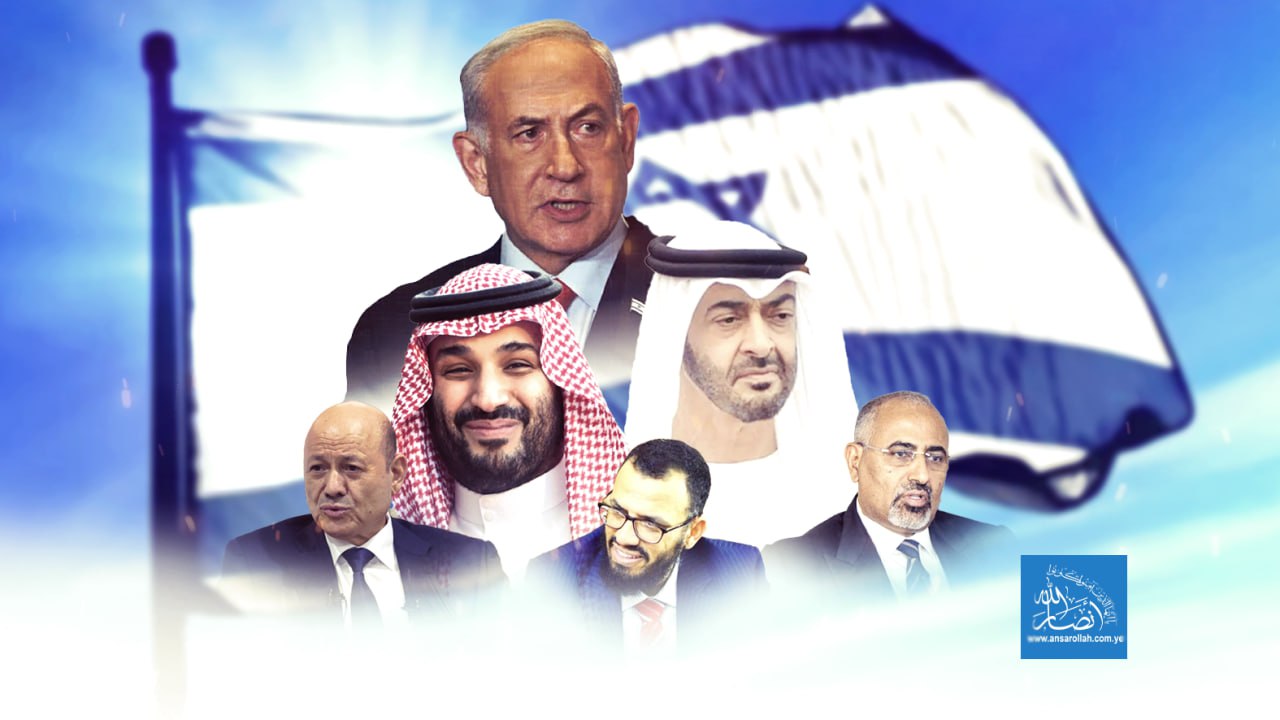
This shift primarily serves projects of normalization and the integration of “Israel” into the region; more than that, it serves the project of empowering the entity to control and dominate the region by portraying Iran as the sole threat from which salvation is possible only through alliance with the enemy.
In this context, Abdulrahman Al-Rashed—known for his proximity to decision-making circles in Riyadh—emerges as one of the most skilled players on the strings of consciousness distortion. In his latest article in Asharq Al-Awsat, he presents a blatant model of double standards, using his pen to downplay the real (Israeli) threat while magnifying the imagined (Iranian) one, leaping over the facts of history and geography.
The Saudi writer coldly turns a blind eye to the fact—one that invites astonishment—that the “Israeli entity” is the only entity in the region possessing an actual nuclear arsenal, estimated at between 90 and 200 nuclear warheads looming over the chest of the Ummah.
This is not a future project awaiting implementation; it is a material reality that actively disrupts the balance of power. Yet nowhere in the lexicon of the Saudi court is there a single demand for dismantling this weapon as a prerequisite for regional security.
In the Iranian case, however, the writer mobilizes all his efforts to portray a project still under international monitoring as an existential threat, falsely claiming that “everyone knows it is a military project,” disregarding repeated reports by the International Atomic Energy Agency confirming that no evidence has been found to support such claims.
Here lies the professional transgression: why is Saudi discourse built on assumptions in the Iranian case, while maintaining a graveyard silence in the face of the certainty of the Dimona reactor, which has been producing assured death for the Ummah for decades?
On another front—and this is part of Saudi policy, not limited to a writer like Al-Rashed—the Saudi media turns a blind eye to Israel’s overt geographical expansion through the gradual seizure of land in occupied Palestine, from the scorched Gaza Strip to the fragmented West Bank, extending to the annexation of Jerusalem and the Golan Heights, the occupation of parts of the Lebanese border strip, and vast areas of southern Syria. Thus, the contours of “Greater Israel” are drawn in Arab blood.
This is, by nature, a material expansion—a practical translation of what has long been declared about the so-called “Greater Israel” and the reshaping of the Middle East. All of this goes unseen by Saudi media.
By contrast, the same media fixates on Iranian “influence,” labeling it “interference” and “the spread of militias,” exaggerating the “danger of Iranian influence.” This automatically leads to downplaying the danger of settlement expansion, occupation, and land seizure that uproot entire peoples from their land and permanently alter the region’s demography.
It is also striking that Iran is described as a “wounded lion.” Regardless of the accuracy of this description, the article goes on to claim that the wounded lion “will remain a danger to most countries in the region once it recovers, as long as it retains its conventional weapons and military institutions directed toward external military activity.”
Does Al-Rashed truly believe that a wounded lion is more dangerous than the unrestrained beast—“Israel”—which does not need to recover in order to kill, but practices killing as a daily routine? Is it a rational entity whose behavior can be predicted? Does this paid writer not realize that Zionist military doctrine is built on “overwhelming superiority,” striking any Arab capabilities and crushing any force that might threaten its existence, while weakening regional armies to entrench its dominance?
Has Al-Rashed—and those he serves among Riyadh’s princes and rulers—not followed what the Israeli beast has done in Gaza over two years of killing, destruction, and bloodshed, crushing the bones of women and children with its massive military machine and tons of explosives and bombs? Is this an entity that can be coexisted with? How can such a danger be absent from the concerns of Arabs and their leaders?
This insistence by royal-court pens in Riyadh on replacing a fabricated Iranian bogeyman with the existential enemy standing atop the corpses of children in Gaza and Lebanon is a deliberate act of searing Arab consciousness and preparing the psychological environment to accept Zionist domination as an unavoidable fate. In reality, this logic seeks—premeditatedly and deliberately—to sell the region to a beast that recognizes no borders and is never sated with blood.
Ultimately, the truth Saudi media seeks to obscure is that the real threat to the Ummah and its future lies with the party that actually holds the keys to weapons of mass destruction and practices genocide as official policy, while the paid intellectual strives to turn the next victim into an ally of its executioner.


