Ansarollah Website Official Report
Published: 3 Ramadan 1447 AH
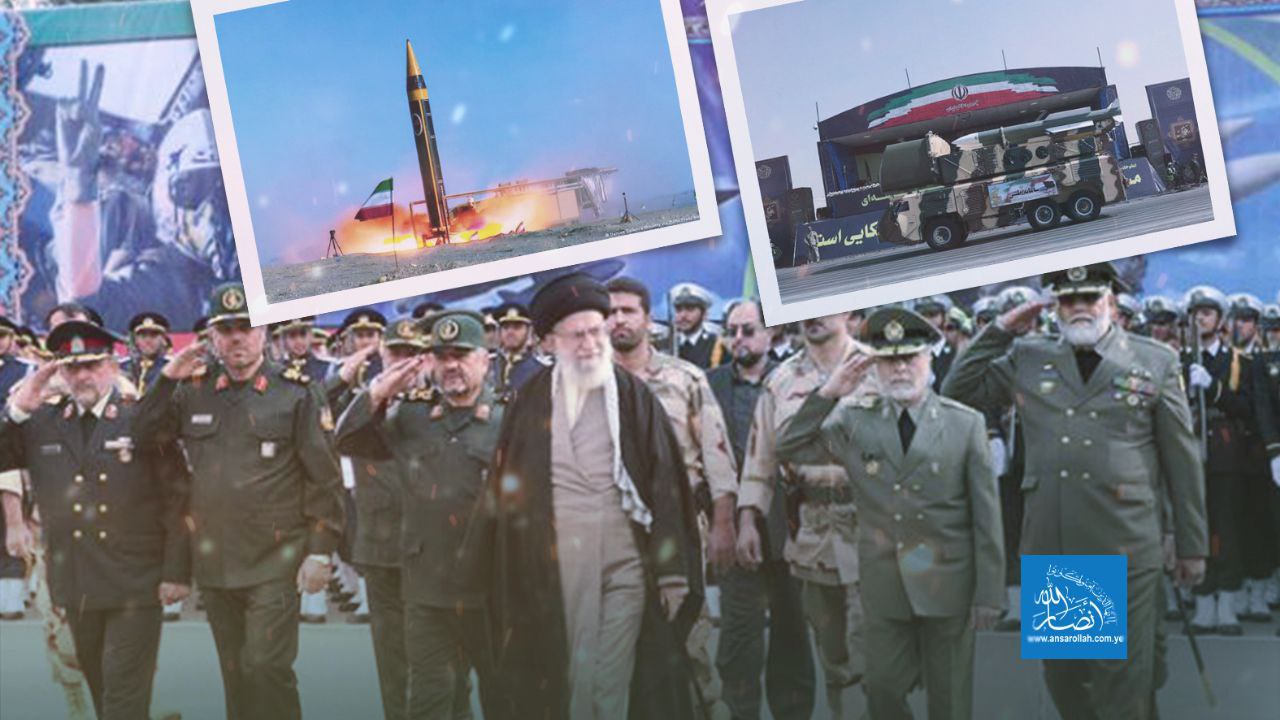
Iran continues to manage its nuclear file through a distinctive policy that combines firm diplomacy in the quiet halls of Geneva with flexible, preemptive military maneuvers in the turbulent waters of the Gulf. This dual strategy—describable as “military diplomacy”—is not aimed at soliciting solutions, but at imposing new equations that strengthen Iran’s negotiating position and safeguard its vital interests amid escalating regional and international threats.
Tehran’s approach is marked by a deliberate separation between sustaining dialogue and preparing for worst-case scenarios. While Foreign Minister Abbas Araghchi meets with the Director General of the International Atomic Energy Agency (IAEA) and his Omani counterpart to lay the legal and international groundwork, Iran’s rhetoric remains infused with a strong sense of national resolve. Tehran’s insistence that “lifting sanctions is not separate from any track,” and that pre-determining the outcome of negotiations is “foolish,” reflects entrenched strategic confidence. This posture echoes the Supreme Leader’s succinct formulation of the doctrine guiding this diplomacy: “Any country without deterrent weapons will be trampled upon.”
As attention turns to the ongoing indirect negotiation rounds in Switzerland, Iranian Foreign Minister Abbas Araghchi arrives carrying practical ideas rather than pre-packaged concessions. Tehran seeks to demonstrate that diplomacy, in its view, does not mean yielding to dictates, but negotiating a “just and fair” agreement that guarantees its rights—not one that imposes hegemonic conditions.
For its part, Washington is demanding sweeping concessions from Iran, including the transfer of its entire stockpile of enriched uranium and a halt to its ballistic missile program. However, Iran—through Deputy Foreign Minister Hamid Qanbari—has expressed readiness to offer “concessions regarding its stockpile of highly enriched uranium” in exchange for sanctions relief. This conditional openness opens the door to a potential settlement, yet underscores that Tehran will not relinquish its “right” to a peaceful nuclear industry and will fight to secure “economic benefits” from any agreement.
Military Maneuvers: The Language of Deterrence Understood by the “Powerful”
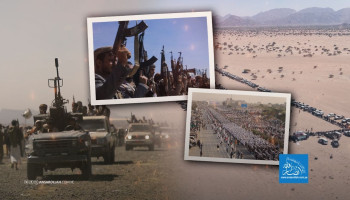
This diplomatic flexibility coincides with a display of military strength in the Strait of Hormuz—the vital artery through which 20 percent of global oil production passes. The Islamic Revolutionary Guard Corps (IRGC) conducted the “Smart Control” exercises at a timing that elevated them beyond a mere military showcase, transforming them into a practical translation of the principle of rapid and comprehensive response. During these maneuvers, Iran sought to demonstrate that it does not fear the presence of three U.S. aircraft carriers capable of launching 500 sorties per day.
Tehran’s message was delivered clearly to decision-makers in Washington and the enemy entity: any response to aggression would not be confined to Iranian borders but would extend to adversaries’ interests deep within their spheres of influence. Military commanders have emphasized that “all foreign vessels are under full intelligence surveillance,” and that “more dangerous than the aircraft carrier is the weapon capable of sinking it.” In this framing, American military numbers and technologies are set against an existential equation: either fair negotiation, or a slide into a war that cannot be easily resolved—one whose costs would be borne by the entire region, not Iran alone.
The picture grows more complex with reports suggesting Chinese support for Iran through intelligence sharing and satellite communications. Such backing would enhance Tehran’s resilience in the face of a potential attack and bolster its capacity to launch retaliatory strikes, including identifying the precise locations of U.S. air defense systems in the region. This intelligence cooperation signals that any confrontation would not involve a single party, but would unfold within a broader network of alliances reinforcing Iran’s capacity to respond.
The Militarization of Diplomacy and the Future Dilemma
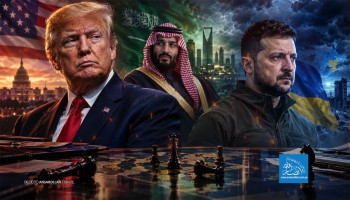
Observers argue that the administration of the American President, Trump attempted to “militarize” diplomacy by deploying massive reinforcements to corner Iran into a position of weakness. Yet the outcome appears to have been the opposite. Iran leveraged this buildup for political gain: the presence of three aircraft carriers in the region has ceased to be an exclusively American pressure card and has instead become an additional justification for Tehran to unify its domestic front and showcase the system’s flexibility in confronting threats.
Iran’s strategic outlook recognizes that the “zero hour” cited in hostile reports by the enemy entity is tied more to American domestic political considerations than to purely military capability. This awareness enables Tehran to maneuver along two parallel tracks: diplomatically exhausting its adversary through prolonged rounds of negotiations, while flexing military muscle to remind the other side that the cost of adventurism would be prohibitive.
Within this “finger-biting” equation—where war and peace appear almost equally probable—the scene remains open to three paths: a painful settlement for both sides involving mutual concessions; a limited military strike that reshapes the rules of negotiation; or a slide into a broader confrontation extending beyond the nuclear file to the overall balance of power in the Middle East, with the global economy far from immune to its consequences.
Tehran Holds the Keys to the Game
Between the logic of brinkmanship, where war and peace hang in near balance, Iran possesses cards that could tilt the equation in its favor. Its ballistic missile arsenal—estimated at thousands of missiles capable of confounding even the most advanced defense systems—alongside the ability to close the Strait of Hormuz and drive oil prices to record highs, forms a powerful protective umbrella for Iranian negotiators. In addition, Iran’s ballistic missile stockpile, estimated at around 2,000 missiles, constitutes as the greatest source of concern for the enemy entity and U.S. bases in the region.
Iran has sought to prove that it is not an easy target, and that its strategy is designed to render the “military option” a nightmare for global investment banks and Washington’s regional allies.
In the end, Tehran appears to have succeeded in imposing a new equation: dialogue in Geneva cannot be separated from respect for sovereign rights in Tehran, and peace in the region cannot be discussed without taking into account the concerns of the Islamic Republic and its national interests.
Between U.S. threats of military intervention and “very painful” consequences, and Iran’s vows to respond to any attack while affirming its possession of deterrent weapons, direct and indirect negotiations resemble a complex strategic dance conducted on the edge of the abyss.