Ansarollah Website – Report
These days, the world’s attention is fixed on the fires striking Saudi oil facilities, the targeting of ships and vital installations, and the scene of grounded aircraft over the skies of Riyadh, with flights suspended at King Khalid International Airport and other Saudi airports. News agencies race to broadcast images of the fires, screens follow the disruption of air traffic, and analysts dedicate extensive space to examining the economic and security repercussions—as if the region suddenly awoke to a war that dropped from the sky without warning, and as if what is happening in Saudi Arabia is an isolated incident detached from a long history of blood, destruction, and blockade endured by the Yemenis.
Herein lies the paradox that the world ought to pause and ponder at length: How do fires in Saudi facilities command all this attention, while the fires in Yemeni homes—ignited by Saudi airstrikes—fade from public memory? How does the suspension of flights at Riyadh Airport become an urgent international news item, while the closure of Sana'a International Airport and the resulting deprivation of thousands of patients from traveling abroad for medical treatment receives no comparable attention? And why does the suffering of the Saudi economy appear as an event demanding immediate analysis, while gazes are deliberately averted from the suffering of Yemenis over the span of 12 years?
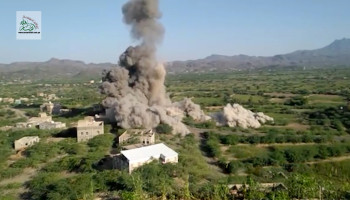
What is taking place in Saudi Arabia today cannot be read in isolation from the war waged by Riyadh against Yemen since 2015, from the airstrikes that snuffed out civilian lives, from the blockade that squeezed food, medicine, and fuel, from the destruction of infrastructure, and from the long years in which millions of Yemenites lived under the crushing weight of bombardment, poverty, hunger, and the collapse of services.
Current Yemeni military operations come within the context of responding to Saudi aggression and the tragedies it has left in its wake, and within the framework of a formula raised by the Yemenis as the slogan for their stance: "The blockade for the blockade," and responding to assault in a manner that forces the aggressor party to realize that war has a price, and that the security of others cannot be turned into a permanent privilege for a state waging war against its neighbors.
The world has grown accustomed to viewing Yemen from the angle of the silent victim: a poor country, a people facing hunger and disease, children searching for food, hospitals suffering from a shortage of medicines, and displaced persons hunting for shelter. Yet this image, for all its cruelty, remains incomplete as long as it divorces the tragedy from its causes, presenting the consequences of war without naming the party that led the military intervention and contributed to crafting that reality. The Yemeni tragedy cannot be understood solely through scenes of hunger, nor merely through the numbers of patients and displaced persons; it is also understood through the years of Saudi bombardment and blockade, the restrictions imposed by Riyadh on the movement of people and goods, and the destruction and paralysis inflicted upon civil institutions and basic services.
Civilian Massacres: A Memory That Must Not Be Erased
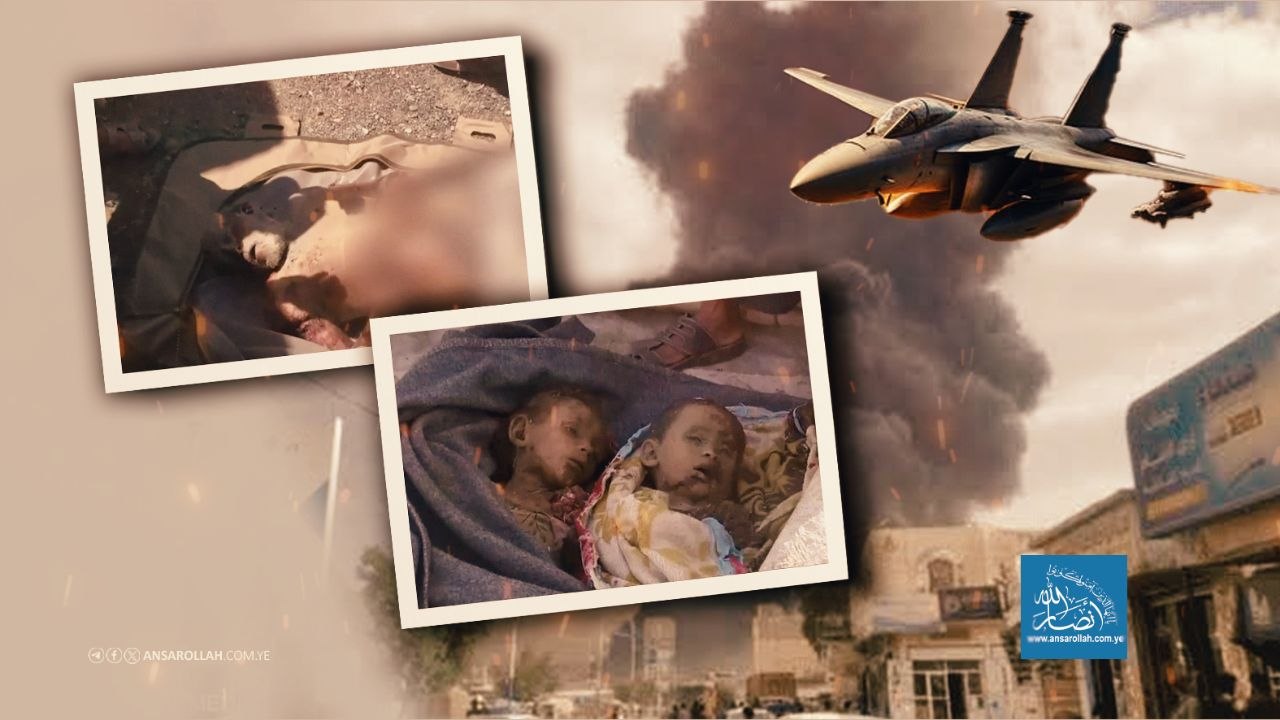
In the record of the Saudi-American aggression against Yemen are bloody milestones that left deep scars in the collective memory, among them the targeting of a student bus in Dahyan, the massacre that struck a mourning hall in the Great Hall in Sana'a, the attack on a wedding party in Sanban, alongside attacks targeting markets, homes, schools, and displaced persons camps. These realities reveal the magnitude of the danger faced by civilians in places presumed to be far removed from battlefields.
According to Ministry of Health data for the period from September 3 to October 15, 2026, the number of martyrs reached 120, while the wounded reached 307, bringing the total casualties to 427 individuals, with women and children exceeding 60 percent of the total. A large concentration of casualties was recorded in Taiz, Sa'adah, and Al-Jawf governorates. The cumulative announced death toll of victims of the Saudi aggression since March 26, 2015, has risen to 53,215 martyrs and wounded, including 16,349 martyrs.
From Airstrikes to the Collapse of the Health Sector
Throughout the years of aggression, the Yemeni health sector has been subjected to compounding Saudi blows. Saudi airstrikes targeted medical facilities, damaging hospitals, health centers, and ambulances, while the blockade resulted in import difficulties, fuel and medicine shortages, and the crippling of health institutions' capacity to sustain operations. According to data issued by the Ministry of Health, Saudi attacks affected more than 55 health sectors, completely destroyed 139 hospitals, and damaged 190 ambulances.
These figures summarize one facet of the catastrophe, yet they do not fully explain what the collapse of the medical facility means for human life. A hospital that loses diagnostic equipment, oxygen, or fuel does not simply stop at the boundary of its physical structure; it loses the ability to save the injured, operating rooms are paralyzed, emergency services decline, and treatable illnesses transform into direct threats to life. When these conditions recur in a war-weary country, obtaining treatment becomes an arduous journey starting with searching for medicine, passing through arranging transportation costs, and sometimes ending at the doorstep of a hospital incapable of rendering service. All of this suffering has been engineered by the Saudi enemy without deterrence and without any genuine intervention from the United Nations or its Security Council. Is it conceivable for the Yemeni people to remain silent in the face of this catastrophe?
Ministry of Health data indicates that more than 1,600 types of medicines are unavailable, with Saudi restrictions affecting more than 12 types of cancer medications. More than 40,000 patients suffering from thalassemia and hemolytic anemia face shortages of medicines and the solutions necessary to clear accumulated iron from their bodies, while more than 8,000 kidney failure patients require dialysis machines, medicines, and supplies essential to continue their treatment. As for cancer patients—whose number exceeds 125,000—they face medicine shortages that jeopardize their chances of securing proper treatment.
Behind each of these numbers is a human being with a family, a mother awaiting her child's recovery, and a father trying to secure a dose of medicine that may spell the difference between life and death. When a patient is denied treatment due to a medicine shortage, an inability to travel, or a paralyzed medical device simply because the Saudi willed it, remaining silent in the face of such crimes is a crime against humanity.
From here emerges Saudi responsibility for the war led by Riyadh, and for the repercussions wrought by military operations and associated restrictions on civilian lives. The destruction of civilian infrastructure, the disruption of services, and the obstruction of access to basic necessities are all issues demanding accountability and serious investigation into responsibilities, far removed from attempts to divorce humanitarian outcomes from the conditions that created them. This is what the Yemeni people are working toward at the present time.
Sana'a Airport: Years of Deprivation Versus Days of Disruption
One of the most glaring paradoxes in the current landscape is that the closure of King Khalid International Airport in Riyadh and the suspension of flights to it have become a central focus of international coverage, while Sana'a International Airport remained throughout the years of war a symbol of protracted suffering that receives no such attention.
For a cancer patient, a child in need of specialized surgery, or a sick individual unable to receive treatment locally, the airport transcends being a mere air transport facility; it is a pathway to treatment, a window that may afford a chance of survival, and a corridor for the entry of medical equipment, spare parts, and medicines requiring rapid transit. When this route is sealed or restrictions are imposed hindering its utilization, options for patients narrow, burdens on families multiply, and traveling for treatment turns into a privilege many are unable to attain.
According to data issued by the Ministry of Health, the closure of Sana'a Airport persisted for more than ten years, resulting in severe difficulties regarding patient travel and the provision of medical equipment and spare parts. Throughout this period, Yemenis lived the effects of aerial isolation in the intricate details of their daily lives, while the world dealt with movement restrictions as merely an aspect of war, without granting its humanitarian ramifications the continuous follow-up they deserve.
Yet when flights halt in Riyadh for a few days, images of grounded planes and empty runways top news broadcasts, economic losses are tallied, and the fallout of the disruption on investments, tourism, and international events is debated. Meanwhile, when a Yemeni is barred from traveling for treatment for years, their tragedy passes without a single serious glance.
The comparison here exposes a double standard in attention and raises a fundamental question concerning the value of human life in international calculations: Does the closure of multiple airports in Saudi Arabia for several days merit coverage simply because it occurs in a wealthy, economically influential country, whereas the suffering of a Yemeni transforms into a familiar spectacle that has lost its ability to provoke interest? And must the world wait for war to reach oil facilities and airports before it deigns to look at its consequences, while Yemenis have lived its impacts inside their homes, hospitals, schools, and markets for years? The regrettable thing is that the international community has not taken up the rights of the Yemeni people, while at the same time standing as an obstacle against the Yemeni people when they decided to reclaim their rights?!
Children of Yemen at the Heart of the Tragedy
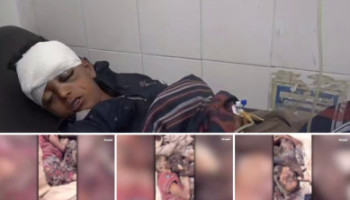
The humanitarian cost of the war appears even more devastating when it comes to children. These little ones, whose early years should be a stage for growth, learning, and security, found themselves facing malnutrition, food scarcity, the collapse of health services, the loss of breadwinners, displacement, and the fear of Saudi bombardment and missiles.
According to the Ministry of Health, about 3.6 million children under five suffer from acute malnutrition, including 1.8 million children suffering from severe acute malnutrition. Stunting rates among children under five exceed 45 percent, while more than ten million children were affected during the period spanning from 2017 to 2024.
These figures do not represent a crisis whose maker is unknown to the world; rather, everyone is well aware of it and knows that the repercussions of this crisis threaten the physical and mental development of entire generations. The child who fails to receive necessary nutrition in their early years may carry the scars of deprivation throughout life, and the child who cannot access treatment becomes more vulnerable to preventable complications. With persistent poverty, declining services, and damaged infrastructure, damages accumulate and the gap widens between children's needs and what families and institutions are able to provide.
The Ministry of Health also indicates that more than six million pregnant and nursing women face the effects of acute or moderate malnutrition, with over 1.8 million women suffering from malnutrition, while the number of women suffering from anemia exceeds one million. When maternal health is compromised, child health is likewise affected, rendering childbirth and early care far more perilous, especially in regions lacking regular health services.
The circle widens to include more than 17 million people facing food insecurity and malnutrition, and more than 24 million people in need of humanitarian assistance, according to figures revealed by the Ministry of Health. It is the image of a country whose capacity to provide the most basic requisites of life faces immense Saudi pressure, while resources dwindle, needs escalate, and humanitarian aid becomes a daily necessity for millions of families.
When these figures are cited, the question must be raised regarding their causes and the responsibilities of the parties that contributed to their creation and continuation. The poverty endured by Yemenis cannot be separated from the effects of the Saudi war, the destruction inflicted upon infrastructure, Saudi restrictions on imports and movement, and the economic turmoil that has spanned years. Saudi Arabia bears primary responsibility for the war it waged on Yemen and the grave damages inflicted upon civilians and basic services as a result.
Why Does the World See What Is Happening in Saudi Arabia While Failing to See What Preceded It in Yemen?
The problem does not lie in media outlets reporting on the attacks facing Saudi Arabia, nor in tracking their impact on air traffic, energy, and commerce—the public has a right to know what is happening. The problem arises when coverage transforms into a narrative that begins from the moment of the Yemeni response while ignoring the years of war that preceded it, or when Yemeni operations are presented as the beginning of the story while the facts that forged their context are pushed to the margins.
A news report speaking of a fire at an oil facility or a disruption at an international airport remains incomplete if isolated from the context of aggression, and analysis discussing Saudi economic and security losses must also take into account the human, health, and living losses incurred by Yemenis since 2015. As for talk of escalation, it loses an essential part of its meaning if treated as though it emerged out of a vacuum, without referencing the Saudi aggression against Yemen and the impacts of bombardment, blockade, and restrictions that have affected the lives of the population.
No Peace with a Mutilated Memory
After twelve years of Saudi aggression, Yemen stands before a heavy toll of casualties, patients, and children ravaged by the aggression's bombs and worn down by malnutrition; of hospitals whose capacity to treat has declined; of families that have lost their homes or breadwinners; and of patients unable to access medicine or travel to save their lives. This toll deserves to be at the core of international discussion, not at its margins, and deserves to be linked to the decisions, operations, and restrictions that contributed to creating it.
If the world today follows the fires of Aramco, the disruption of Saudi airports, and the threats targeting shipping lanes and vital installations, the Yemenis have the right to ask: Where was this attention when airstrikes were striking their homes, markets, and schools? And where was this sensitivity toward the disruption of daily life when patients were barred from traveling for treatment, when hospitals faced shortages of medicine and fuel, and when children lived under the weight of hunger and malnutrition?
When looking at the magnitude of Saudi criminality against the Yemeni people, Yemeni military operations deep inside Saudi territory can be understood as not coming from a vacuum, and that the Yemeni people possess the religious and moral legitimacy to exact retribution from their torturers and reclaim their rights by force of arms, for the United Nations holds no meaning and the Security Council plays no role in supporting the oppressed.