Ansarollah Website Official Report
As analysis continues into what has been described as the first major surprise of the new century—a military confrontation pitting Yemen against what is characterized as the forces of evil, namely the United States and its allies—the outcomes no longer search for diplomatic phrasing befitting a superpower such as America, nor do they hesitate to bruise its pride.
Instead, descriptions have grown increasingly blunt, dismantling the aura that once surrounded the American presence and power.
This sustained examination of what many portray as the extraordinary dimension of the confrontation has also generated growing confidence and boldness in challenging Washington’s long-standing claim to exclusivity in managing and winning the rounds of conflict it ignites from time to time.
It has opened the door to more candid characterizations of its performance in the face of Yemeni forces, and to compelling it to reckon with what is framed as a new reality—after decades marked by demonization and unrestrained arrogance.
Opening the Door to Diminishing the American Empire
The core of official statements and analytical headlines has grown increasingly receptive to language that reflects what is portrayed as the “fragile” reality of American power today—reinforcing the notion that defeating the United States requires little more than resolve and the will to confront it.
Terms such as “defeat,” “withdrawal,” and “loss of deterrence” have entered mainstream discourse. Headlines have declared that “the image of American power is shattered under Yemen’s missiles,” and that “the Yemeni army employed innovative tactics.”
American power has even been cast in positions once deemed unimaginable—portrayed as being “on trial” to preserve its prestige and restore its deterrent capacity after dispatching fleets of naval vessels with the declared aim of halting Yemen’s support operations for Gaza Strip.
Its setback at sea has been framed as a decisive strategic shift, branching into far-reaching consequences rooted in the characteristics through which Yemen is said to have demonstrated superiority—from weaponry to tactics.
This, in turn, gave rise to rare and exceptional admissions from American military leaders, who described the confrontation as “unexpected,” said it was something that “had never happened before,” and called it “a harsh experience since World War II.”
Other characterizations included references to a “failed experience,” assertions that “America is losing its deterrent power,” descriptions of an “American setback in the Red Sea,” and acknowledgments that “we were under intense pressure the entire time.”
The matter does not end there. Even institutions allied with Washington have expressed “concern,” with some warning that the world may be on the brink of “the fall of American unipolarity.”
The situation reached a sensitive turning point when the outcome of the confrontation prompted voices to accuse the U.S. military establishment of failing to accurately assess the requirements of the battle—arguing that America’s failure was “linked to a miscalculation of Yemeni capabilities.”
Yemen in a Position of Superiority
Conversely, evaluative readings have credited Yemen with capability and superiority in devising tactics and breaking from conventional patterns of warfare. A considerable body of analysis has gone so far as to suggest that the Yemeni approach could serve as a teaching model in military academies worldwide.
Commentators have spoken of forcing American aircraft carriers into retreat and humiliating highly sophisticated U.S. defense systems known for their technological precision and advanced capabilities.
International platforms have further examined what they described as Yemen’s development of projectiles that early warning systems and radar networks failed to identify or intercept.
Some assessments asserted that “the Red Sea war is not merely a confrontation with the Houthis, but with a rising system of resistance awareness, in which Yemen—despite blockade and war—is leading a fundamental shift in the balance of deterrence.”
Observers also pointed to Yemen’s unprecedented management of what was described as a land-driven war projected into the sea—an approach they said had not been witnessed in previous global conflicts.
The website Addis Standard noted that what the U.S. and European navies encountered in the Bab el-Mandeb—one of the world’s most critical maritime corridors—“is not a naval problem, but a land-based one,” arguing that the Houthis succeeded in translating their ground capabilities in areas under their control into operational impact at sea.
A Collapse That Shook American Confidence
In the Red Sea, and as a shifting reality after decades of unchallenged American control and dominance, descriptions have emerged sketching an entirely new landscape—one in which the United States is conspicuously absent. Phrases such as “the collapse of American hegemony,” “the Red Sea is no longer American,” and “Washington fails to impose its prestige in the Red Sea” have entered the discourse.
The British outlet UnHerd wrote: “When the Houthis in Yemen imposed their blockade on the Red Sea in response to the war in Gaza Strip, it appeared to be conclusive evidence of declining American influence.”
This acknowledgment of a changing balance of influence in the Red Sea marked a breach in the long-standing solidity of American self-assurance—an outlook in which defeat or retreat from the forefront of global military leadership scarcely exists.
During the presidency of Joe Biden, the White House faced a wave of anxious criticism over the United States’ standing, reflecting visible tremors in that confidence.
Washington was portrayed as unable to confront an emerging force, and Biden was accused at the time of being “weak” and excessively conciliatory—so much so that he was said to have refrained from deploying the full weight of American military power to settle the confrontation. He was further criticized for “restraining the immense capabilities of the U.S. military.”
This criticism came despite Biden being the architect of Operation Prosperity Guardian, which, according to UnHerd, “quickly turned into an embarrassing failure after most partners withdrew, while vessels linked to Israel continued to face missile attacks.”
“Trump”: The Defeated Savior
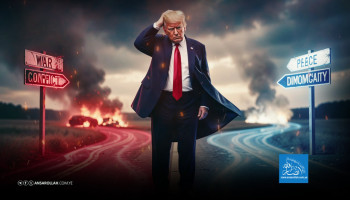
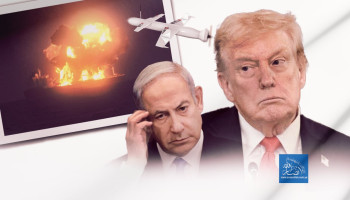
The shift in the Red Sea was not the result of negligence or a lack of effort by the Biden administration. Rather, the strongman “Trump,” in whom hopes were pinned to restore the United States’ diminished prestige, arrived brimming with intentions of decisiveness: to lift the blockade on the Israeli entity and reassert American ownership of the Red Sea. He launched what he called “Operation Rough Rider,” deploying some of the most advanced weapons in the U.S. arsenal.
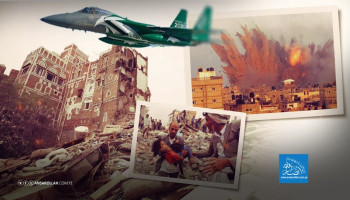
Over six weeks, he carried out sustained and intense airstrikes on Yemen, including rare and costly sorties by B-2 Spirit stealth bombers—among the most advanced and expensive aircraft in the American arsenal. Long-range AGM-158 JASSM air-to-surface missiles were also used, in addition to heavy bunker-buster bombs.
Then the world was taken aback by a resounding American withdrawal, while Yemen continued to enforce the blockade in the Red Sea and launch missiles toward the Israeli-occupied territories.
The British website UnHerd stated that “the lessons here are deeply sobering: America’s preferred option—indeed, nearly its only remaining option in warfare, air power—no longer appears cost-effective or decisive.
More concerning still is that the United States lacks realistic alternatives to this mode of combat, suggesting that its days as a dominant military power may be drawing to a close.”
The Benchmark for Defining Power Balances
Over the course of two years, the leader meticulously analyzed developments and consistently reaffirmed Yemen’s steadfast position toward its brothers in Gaza.
In time, this confidence-infused consistency became widely acknowledged, forming the basis upon which analysts built their projections and expectations. It was therefore unsurprising that observers repeatedly and almost instinctively linked stability in the Red Sea to peace in Gaza, warning that any collapse of the ceasefire in the Strip would undermine the growing return of shipping lanes to the Red Sea.
Within these dynamics, the United States appeared notably absent. It was no longer the decisive actor in determining the course of international navigation, nor was it able to override the “moral and humanitarian” red lines set by Yemen.
As a result, it ceased to represent any credible guarantee for the uninterrupted flow of maritime traffic in the event of Israeli escalation against the Palestinians—a perception that has increasingly taken hold among global shipping companies.
The U.S.-based data analytics firm S&P Global stated that “container shipping lines are now resuming services through the Red Sea amid a continued decline in attacks by the Yemeni military.” However, the company cautioned that this situation “could easily change if the Houthis resume their attacks.”
Meanwhile, a report published by Jerusalem Strategic Tribune—a platform aligned with Israeli and American perspectives—warned that America’s credibility as a guarantor of global maritime security is now undergoing a decisive test in Middle Eastern waters, and that the outcome of this test will shape international power balances in the coming decade.