The 40-day war on Iran reflects clear Iranian superiority, and the ceasefire agreement as amounts, in its entirety, to a “strategic surrender” by both the United States and the Israeli regime, Israeli daily Maariv wrote.
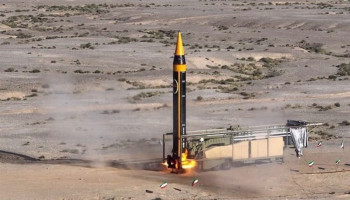
According to Maariv, the confrontation, marked by thousands of missile strikes and widespread destruction, ended with Iran achieving a decisive outcome, while Washington and Tel Aviv failed to realize their stated war objectives.
The newspaper said efforts to target Iran’s leadership, including Leader of the Islamic Revolution Ali Khamenei, “did not lead to the collapse of the regime,” noting that the political system remained intact despite the opening round of bombing. It added that Iran’s nuclear program also remained in place, underscoring the failure of attempts to force regime collapse through an initial military blow.
The report emphasized that, even after 40 days of sustained confrontation, Iran maintained its operational capabilities and continued to carry out military attacks, reinforcing its position as a central regional power.
Tehran imposed terms of the agreement
Maariv stated that Iran succeeded tactically in imposing an agreement on the United States that was “largely written according to its own conditions,” while rejecting the American framework.
The paper added that Tehran maintained fire until the final moments of the confrontation, asserting that it was Iran that “fired the last shot,” preserving momentum through to the ceasefire.
It further highlighted the Strait of Hormuz as a key leverage point, noting that Iran has effectively established itself as the dominant force over the vital maritime corridor, granting it direct influence over global shipping routes and energy flows. The report pointed to discussions about Tehran potentially imposing transit fees on vessels.
Lebanon front underscores Israeli losses
According to Maariv, “Iran and its allies appear to be the only side emerging victorious,” while both the United States and "Israel" sustained significant strategic losses and abandoned most of their war objectives.
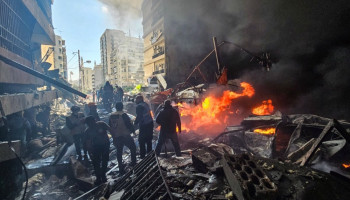
The report detailed the internal impact of the war, stating that the confrontation led to widespread disruption across Israeli-occupied territories, including the shutdown of its main airport and near-total economic paralysis over the 40-day period.
It noted that more than 5,000 buildings were damaged or destroyed as a result of sustained missile fire from Iran, Yemen, and Lebanon, alongside casualties and injuries reported across multiple fronts.
Iran declares victory after 40-day confrontation
Earlier, Iran’s Supreme National Security Council announced that the country, supported by the Resistance front across Lebanon, Iraq, Yemen, and occupied Palestine, had achieved a “great victory” during the 40-day US-Israeli aggression.
The council said US and Israeli forces had failed to meet their military objectives or impose control over Iran, emphasizing that the strikes carried out during the conflict would remain a lasting mark in history.
Meanwhile, Trump announced on his Truth Social platform a two-week suspension of military operations against Iran, conditional on Tehran agreeing to the “full, immediate, and secure” reopening of the Strait of Hormuz, a key global energy transit route.
Source:Websites