
On Tuesday night, the United States launched a direct military attack with three rounds of airstrikes targeting Iranian territory in the south, including Bandar Abbas, Qeshm, Sirik, and Jask. New York Times quoted Iranian officials as saying that the American raids targeted bases, radar installations, and artillery positions at five locations along the southern coast.
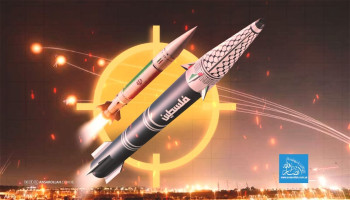
The Iranian response was swift and direct. The Iranian Revolutionary Guard Corps (IRGC) announced that it had launched extensive missile and drone strikes targeting the American bases from which the US aggression was launched. These included the headquarters of the US Fifth Fleet in Bahrain, Ali Al Salem Air Base in Kuwait, and Al-Azraq Air Base in Jordan. The IRGC confirmed the destruction of 21 vital targets within these bases, including hangars housing F-35 fighter jets. The IRGC stated that if this aggression continues, harsher responses will await the enemy
The Political and Legal Characterization of the Event
This escalation cannot be understood outside its historical and geographical context. The United States is the party that brought its forces and fleets from across the seas, traveling thousands of miles to establish its bases in the heart of the region, spreading a state of perpetual insecurity and instability. Accordingly, Iranian Foreign Minister Abbas Araqchi stated in a post on X platform: "The Strait of Hormuz is not international waters, but rather a shared waterway between Iran and Oman, thousands of miles from the American coast. The maritime borders are perfectly clear. Therefore, the American bombing of southern Iran constitutes a blatant and fully-fledged act of aggression against a sovereign state, while the Iranian missile response falls under the category of a legitimate and necessary response to curb this aggression and defend the land and dignity."
Dowing Apache ,the Collapse of the American Pretext
The United States justified its bombing of southern Iran by citing the downing of the American Apache helicopter in the Strait of Hormuz, describing the incident as an unjustified attack. However, this claim does not hold up against a realistic assessment, as the presence of an American military combat helicopter over Iranian territorial waters or on the edges of the borders has never been innocent or for leisurely outings. Moreover, the presence of these forces is fundamentally characterized by declared hostility and a continuous threat to Tehran's security, especially since it is within the framework of imposing a naval blockade on the ports of the Islamic Republic. This necessitates dealing with any breach or military movement that contributes to that blockade, and shooting down any aircraft within the scope at least, so that it becomes a legitimate and legal act to defend the airspace and break the naval blockade, regardless of the lack of official Iranian claim of responsibility for the operation.
The American Objectives: From the Strait of Hormuz to Islamabad
Targeting the Iranian air defenses near Hormuz was not merely a military response, but rather carried strategic and political objectives, foremost among them exerting pressure behind the scenes of diplomacy. This escalation coincided with a relative stalemate in Islamabad negotiations and an exchange of indirect messages between Washington and Tehran. Through force and the direct imposition of military force, the US seeks to blackmail the Iranian negotiator and decision-maker, forcing political concessions at Islamabad table.
In a related vein, the battle of controling Hormuz appears to be a prominent feature. The American bombing aims to weaken Iran's grip on the Strait of Hormuz and attempt to curtail Tehran's ability to control this vital global waterway. This is coupled with efforts to solidify the naval blockade. By disabling radars and coastal air defenses, Washington seeks to secure the movement of its naval vessels and reinforce the naval blockade it imposes on southern Iranian ports, ensuring the continuation of economic pressure.
The Interconnectedness of Arenas, the Prevention of the Invasion Equation
The recent American aggression is linked to a series of ongoing attacks perpetrated by American hegemony against the countries and peoples of the region as a whole. In this context, the Iranian response is not only a defense of Iran's political borders, but also a defense of the dignity and interests of the nation in general, aiming to break the arrogance and prevent the imposition of an equation of absolute invading the Ummah. This equation, through which Washington and the Zionist entity seek to strike whomever , whenever, and wherever they please, without any restrictions or limits, is intended to be imposed. This confrontation cannot be separated from the major field developments in the region, most notably the extensive ballistic missile strike launched by Iran three days ago deep into the Israeli entity. Iran's response against American bases confirms that the equation of unifying arenas and linking fronts remains valid and effective, and that the axis of deterrence is moving in complete harmony to confront the American and Israeli forces simultaneously, in order to redraw the balance of power and the equations of deterrence in the region.