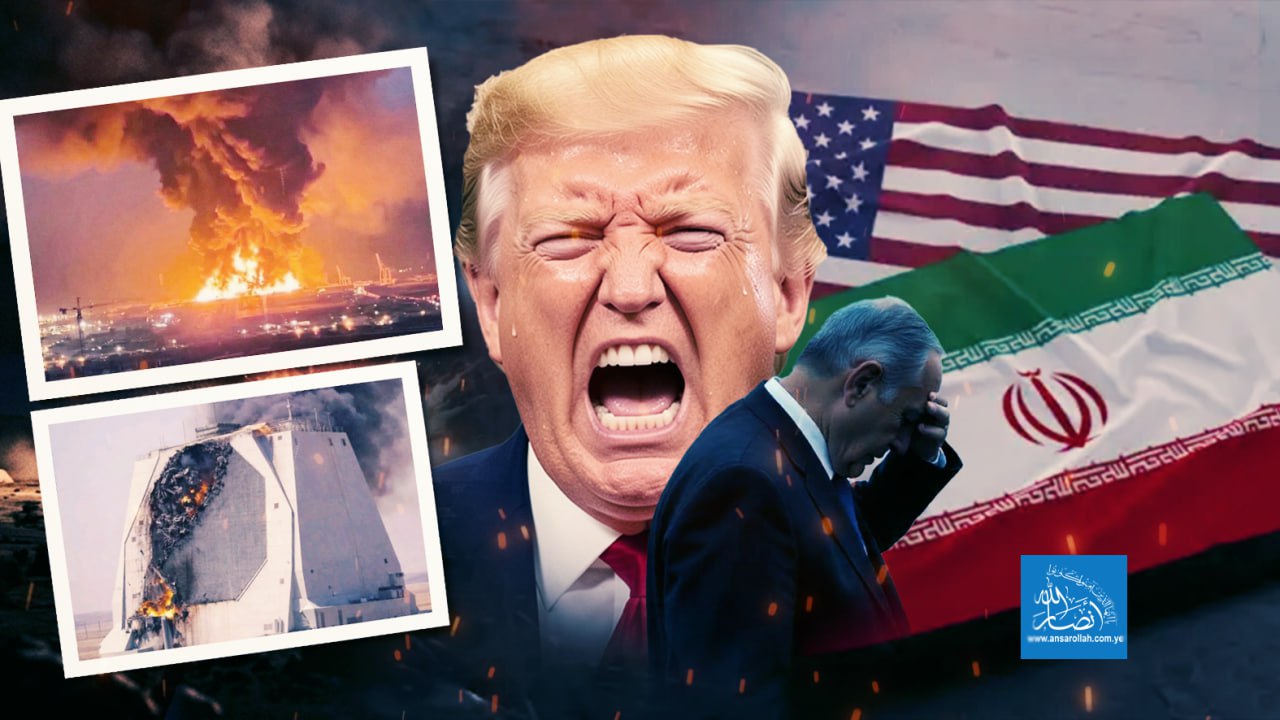
The repercussions of the crisis created by America's folly with the Islamic Republic are escalating, and the world is nearing a breaking point. The Strait of Hormuz remains closed to American arrogance, and the consequences are accumulating, foreshadowing a global crisis that will plunge nations into a catastrophic situation and years of hardship.
Simultaneously, observers predict that the tense global situation will lead to widespread chaos for regimes when their people decide to take to the streets demanding the overthrow of the government. This comes amidst a rising level of impact and emerging signs of a sharp decline in countries' strategic reserves following the halt in oil supplies due to the American-made crisis in the Strait of Hormuz. This will inevitably affect the supply of goods and consumers' ability to cope with the continuous rise in prices.
Bloomberg reports that the world lost nearly one billion barrels of oil supply in record time, with daily drawdowns of 4.8 million barrels between March 1 and April 25. The World Bank stated that global supplies fell by approximately 10 million barrels per day in March.
The crisis is not limited to oil; it also affects exports of gas, fertilizers, and raw materials essential for agriculture. Keith Boyfield, a researcher at the Centre for Economics and Policy Studies in London, emphasized that if the conflict continues for more than a month, it will exacerbate the losses to the global economy, particularly impacting supply chains and inflation.
Zionist Stubbornness Cannot Conceal the Erosion of the Entity
In Pakistan, Indonesia, Philippines, and elsewhere, authorities are facing the very real threat of running out of fuel within weeks. In Europe, jet fuel stocks in major storage hubs (such as Amsterdam and Rotterdam) have fallen to their lowest levels in six years, and in the United States, the strategic reserve has dropped to its lowest level since 1982. Meanwhile, in the Israeli occupation entity, stubbornness continues to dominate the pronouncements of the terrorist regime, while reality reveals a state of collapse and erosion of the foundations of the entity's existence on the occupied territories.
Reports indicate that the Israeli enemy entity has incurred staggering losses exceeding $12 billion, in addition to billions of dollars in civil compensation and direct damages. Thousands have been evacuated from their homes, and thousands of injuries and widespread damage to buildings and property have been recorded.
The Hebrew newspaper Yediot Aharonot reported that 100,000 businesses have closed their doors, while 200,000 people have left the country due to the war with Iran. According to the data, the budget deficit reached 100 billion shekels, while the national debt exceeded 1.32 trillion shekels.
The Israeli newspaper Maariv confirms that the entity is going through a major ordeal and a suffocating crisis as a result of the direct economic repercussions of the war on Iran and the continued closure of the Strait of Hormuz.
This situation spares no one, and the concerns have become a complex and seemingly intractable problem, given the undeniable fact that overcoming this situation will not be possible even with the end of the American aggression against Iran, as it will take years.
In its monitoring and tracking, the American website Iran War Cost states that the American ongoing war in the Middle East has already cost the US treasury more than $100 billion, though the Pentagon is being secretive and not providing precise figures. Specifically, the first six days cost the US treasury $11.3 billion, and the costs then increased to $1 billion per day, demonstrating that even major economies are not immune to the costs of open conflicts, including the US, which instigated all this chaos.
Battle Management and Holding the Leveraging
Militarily, the American enemy is entering a tunnel that threatens what remains of its deterrent and decisive capabilities. All indicators confirm that the repercussions of this round of aggression were not only economic but also devastating to the so-called superpower. The depletion of Washington's weapons stockpiles revealed, on the one hand, the absence of strategic warfare thinking among military planners in utilizing available resources in a way that would guarantee effective and long-term warfare. On the other hand, it shattered the theory of decisive war based on the concept of deterrence, which has become conventional in its American form.
Conversely, this round of war against the Islamic Republic has prepared the world to accept new realities on the ground and the emergence of an international power capable of imposing its equations with realistic and influential visions, relying not only on capabilities but also on will and steadfastness. This power has broken the American monopoly on the ability to change the course of confrontations and holding the leverage.
The British website Middle East Eye reveals that the American-Israeli war against Iran has redrawn the balance of power in the Middle East and propelled Tehran to a more advanced position in terms of regional and international influence. The Iranian Revolutionary Guard Corps asserts that "the operational planning and coordination, and the precise separation of offensive roles among our various forces, exceeded American and Israeli military assessments and changed the equation of the war." This was acknowledged by enemy media, which confirmed that the reality on the ground determined the outcome, and that Tehran emerged from the battle with a strong negotiating position, while Washington remained in a waiting game, according to the Israeli news site Ynet.
The US has not yet caught its breath
As loud as the American-Israeli wailing was, and as inflated as the illusion, the defeat of the two entities was resounding and devastating, making de-escalation a lifeline to save the United States from rapid decline after it became clear that it was not up to the task of preserving its reputation as a superpower.
While reports indicate that Washington's stockpiles of offensive and defensive weapons are depleted and that it will need years to replenish what it lost during its bullying tactics of the past two years, Iran, through the commander of the Khatam al-Anbiya Headquarters, affirms that "the armed forces are fully prepared to confront any enemy at any level." Major General Ali Abdullah, commander of the Khatam al-Anbiya Central Headquarters, states that the Iranian armed forces, with the support of the Iranian people, possess a high level of combat capability in any war imposed upon them, emphasizing that steadfastness on this path is a fundamental and irreversible choice. Meanwhile, the Islamic Army affirms its readiness "to confront any threat or aggression from the enemy in a firm and comprehensive manner." In parallel, Tehran affirms that the path of developing military equipment to meet the requirements of the times is progressing steadily, and that this development is no longer just theoretical talk, but has become clear and evident on the ground.
Guaranteeing the Rights and Interests of the Iranian People
Confident in its deterrent capabilities, the Islamic Republic presents its vision for ending the war, based on principles that guarantee the rights and interests of the Iranian people in a way unprecedented anywhere in the world. Washington did not wait long to force its adversary to accept defeat, implement its dictates, and enter a long-term era of subservience and dependency, surrendering the nation's sovereignty and its people's resources to the American ruler.
These outcomes, which paint a new picture of the world in which the US is left with nothing but the trappings of violence and a loss of standing, are the practical results of the initial Zionist moves to implement the "New Middle East" and "Greater Israel" plans. The problem has intensified, and the Iranian obstacle, which was the most significant impediment to implementing these plans, has become a reality.
What the American-Israeli narrative portrayed as an Iranian threat and a move to change the Islamic regime is no longer conceivable in the future. The realities of the conflict have demonstrated that pursuing this illusion has brought immense suffering to the aggressors, and the American people—primarily—are now threatened with a drastic shift in their living conditions, one that will expose them to the very crises plaguing Arab and Muslim societies.
The Supreme Leader of the Islamic Revolution in Iran, Ayatollah Mojtaba Khamenei, affirms that from now on, the slogans "Death to the US" and "Death to Israel" will prevail among the Muslim world and the oppressed peoples of the world. Ayatollah Khamenei states, "The Iranian people have cast off the cloak of subservience and, with the cry of 'Allah is Great,' have severed the American hand." He emphasizes, "Time will not turn back, and the countries and lands of the region will no longer be safe havens for American bases."