Ansarollah Website – Report
In the history of protracted conflicts, pivotal moments inevitably emerge, exposing the broader strategic tapestry quietly and meticulously woven from the steadfastness of the battlefield. For the Yemeni Armed Forces, this moment manifests today in two inextricably linked operational arenas that complement one another, revealing a distinct military-strategic rationale and an unprecedented level of readiness attained after twelve years of the Saudi-American blockade and aggression.
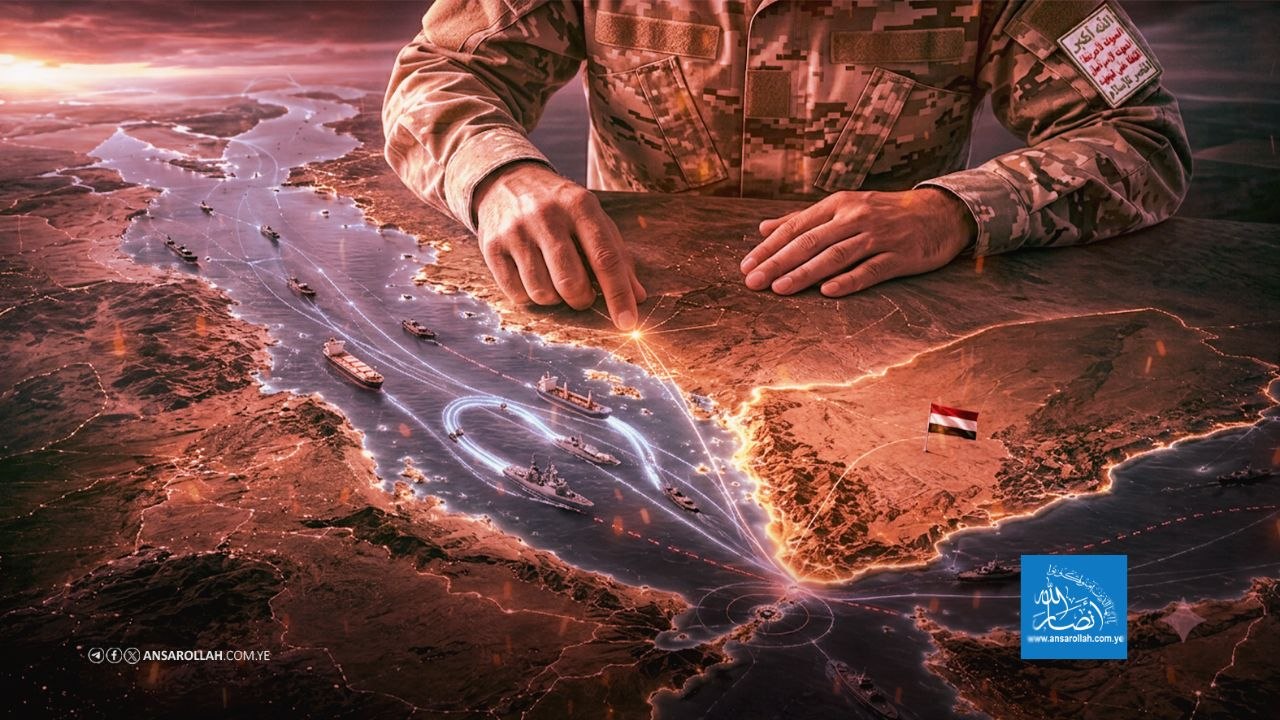
The first arena is overwhelmingly maritime, defined by a tightening naval chokehold on Saudi shipping aimed at severing its vital economic lifelines. The second is a proactive land campaign, characterized by neutralizing Saudi force concentrations and turning them into attrition zones that consume the enemy’s remaining options. Bridging these two arenas is the "Blockade for Blockade" doctrine proclaimed by the Armed Forces, currently being enforced through precision missile and drone operations.
The Red Sea Tightens the Noose on the Saudi Enemy
Since the Yemeni Armed Forces announced a naval blockade on Saudi shipping on July 22, the operational shift has unfolded at a rapid pace. Sana'a selected the maritime domain as a strategic lever to compel the enemy to lift its own siege, fully aware that 80 percent of the Saudi economy relies on oil revenues, with the Red Sea and Bab al-Mandab Strait serving as the primary arteries for those exports.
Yemeni military efforts in this theater have been deployed across three integrated, high-pressure fronts, forming an airtight pincer movement:
- The First Front (The Western Coast and the Red Sea): Waters long regarded by Riyadh as an extension of its sphere of influence have been rendered a no-go zone for its vessels. Nine Saudi oil tankers have been directly targeted, while 29 others were forced to turn back and alter their routes. The clearest message came with the targeting of the tanker Wafa off the coast of Yanbu in the northern Red Sea—a practical demonstration that the blockade is not confined to Bab al-Mandab in the south, but extends northward to encircle Saudi navigation from all directions.
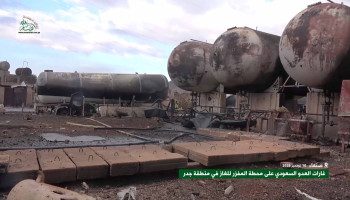
- The Second Front (Strikes on the Saudi Strategic Depth): Yemeni ballistic missiles and drones—which the enemy repeatedly claimed its air defense systems could intercept—successfully penetrated these defenses, striking major energy hubs in Jubail, Yanbu, Buqayq, and Aramco refineries in Jizan, which burned for days. Consequently, Riyadh was forced to halt oil pumping from facilities producing over 400,000 barrels per day. The Saudi energy infrastructure, the backbone of its economy and political clout, has thus become an exposed and vulnerable target.
- The Third Front (Targeting Enemy Mobilizations Inside Yemen): While detailed further below, the critical takeaway lies in the synergy between these fronts. As energy facilities burned and maritime traffic ground to a halt, the enemy attempted to open new overland avenues through its local proxies to reverse the balance of power. This attempt was met with advanced intelligence and military readiness that thwarted the scheme before it could materialize.
Preemptive Strike: The Demise of Proxy Assets
When Riyadh realized that its unlawful blockade on Yemen was met with a counter-blockade choking its own economy, it resorted to a desperate measure: assembling thousands of local proxy fighters from various factions, equipping them with heavy military hardware to open multiple fronts. The objective was to distract the Yemeni Armed Forces and disrupt the full execution of the "Blockade for Blockade" doctrine. This mobilization took place across diverse regions—some near active contact lines and others deep within enemy-controlled territory—under strict secrecy and media blackout.
However, subsequent developments dealt a major strategic shock to the coalition. Leveraging high-level intelligence capabilities, the Yemeni Armed Forces monitored every detail of the operation, tracking the movement of personnel and hardware down to mapping command units and weapons depots. At the critical moment, just as final preparations were nearing completion, synchronized waves of ballistic missiles and drones launched toward precisely identified targets:
- In Al-Wade'ah region (Eastern Yemen): A primary staging ground for Saudi-backed Salafist forces, strikes hit Al-Ruwaiq, Al-Abr, and Al-Thaniyah camps, as well as the so-called First and Third Emergency Regiments. The resulting toll included hundreds of casualties alongside the total destruction of armories and military vehicles that had taken months to assemble.
- In Marib: Sahn al-Jin camp—housing Saudi-backed mobilizations aligned with the Muslim Brotherhood—was struck in targeted operations that reduced its weapons depots and command centers to rubble.
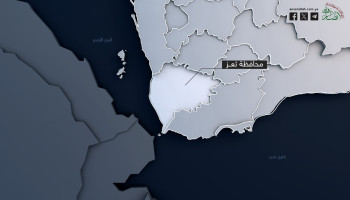
- In Al-Mocha (Western Coast): Strikes extended to Saudi-backed force concentrations composed of units that had been kept insulated from internal proxy rivalries in recent years, systematically built up to serve as the tip of the spear in any future offensive.
These combined operations carry several strategic implications:
- Intelligence Penetration: They demonstrate that Yemeni intelligence can penetrate the enemy's most granular logistical movements, allowing commanders to pinpoint the optimal window for execution.
- Proactive Doctrine: They confirm that the Yemeni Armed Forces do not merely wait to absorb attacks; rather, they employ a preemptive doctrine designed to paralyze enemy capabilities before they can maneuver.
- Vulnerability of Proxies: They send an unequivocal signal to those relying on Saudi capital to forge a force capable of confronting Yemeni troops: these proxy assets have become exposed targets, lacking effective human shields or fortifications capable of blunting precision missile strikes.
Al-Mocha: The Bridgehead Turned Strategic Trap
The targeting of Saudi-backed forces in Al-Mocha warrants distinct analytical focus given the coastal city's strategic weight in the regional conflict equation. Situated directly along Bab al-Mandab Strait and just six kilometers from the international shipping lane in the Red Sea, its proximity rendered it a critical military foothold following its occupation by Emirati and Saudi forces.
Through local figures such as Tareq Afash, the UAE transformed the port of Al-Mocha from an economic facility into an expansive military complex overseen by Saudi and Emirati personnel. This transformation aimed beyond controlling Yemen to securing broader regional and international leverage. Al-Mocha, alongside neighboring Mayun Island, functions as a maritime checkpoint over one of the world's vital trade corridors. Securing control over these points affords the occupying forces influence over international commercial shipping—aligning with broader U.S. and Israeli operational objectives while posing a strategic counterweight to China's Belt and Road Initiative.
After years of investing in this position, coalition forces operated on the assumption that they had established an impenetrable sphere of influence capable of launching offensives against non-occupied governorates at will. However, the recent Yemeni strikes shattered this premise. The precise ballistic missile and drone strikes against enemy personnel, proxy forces, and supply dumps delivered a two-fold message: first, no occupying force on Yemeni soil remains beyond reach, regardless of its defensive posture or location; second, the era of staging offensives from Al-Mocha has ended, permanently shifting the area from an offensive launchpad into a strategic trap for any forces attempting to consolidate there.
Three Pillars of Yemeni Readiness
The remarkable success achieved concurrently on land and at sea cannot be understood in isolation from the extraordinary level of operational readiness attained by the Yemeni Armed Forces. This readiness rests on three foundational pillars that collectively formed an integrated system capable of deciding the engagement:
- Intelligence Superiority: Recent operations proved that the Armed Forces possess a surveillance network capable of tracking enemy movements from origin to destination. The movements of Saudi-backed proxies in Al-Wade'ah, Marib, and Al-Mocha were under constant observation, as were the movements of Saudi vessels attempting to evade detection by disabling their Automatic Identification Systems (AIS). Collected intelligence allowed commanders to determine the optimal strike timing to maximize physical, material, and strategic impact.
- Precision Execution: Yemeni ballistic missiles and drones did not merely strike targets; they hit critical vulnerabilities—command and control nodes, ammunition depots, and troop concentrations during final pre-deployment stages. This level of precision reflects significant technological advancement, with targeting accuracy refined to a circular error probable of under ten meters.
- Strategic Maneuverability across Multiple Fronts: While naval and missile forces enforced the blockade on Saudi shipping and struck Aramco facilities, intelligence and special operations units monitored proxy mobilizations inland, holding launch platforms ready for the execution order. This high degree of joint-force coordination reflects a sophisticated military doctrine integrating defensive and offensive operations, combining economic attrition with direct military application.
Economic and Strategic Repercussions for Riyadh
Analyzing the neutralization of Saudi mobilizations is incomplete without examining the severe economic headwinds facing Saudi Arabia, which provide the broader context for Yemen's adherence to the "Blockade for Blockade" posture. After twelve years of maintaining an air, sea, and land blockade on Yemen, Riyadh now finds the paradigm reversed.
Saudi maritime transit in the Red Sea has turned into a logistical nightmare. Tracking data from international maritime agencies indicates that Saudi oil tankers either disable AIS transponders to evade tracking or reroute entirely around Africa via the Cape of Good Hope. This alternative route extends transit times from 24 days to up to 56 days, driving freight and insurance costs to unprecedented levels. Furthermore, underwriters at Lloyd's of London have begun excluding Saudi-linked vessels from war risk coverage, leaving Saudi maritime ventures largely uninsured.
At the macroeconomic level, Saudi Gross Domestic Product (GDP) contracted by 4.8 percent in the second quarter of 2026—the sharpest quarterly decline since the COVID-19 pandemic—driven by a steep 24.7 percent drop in the oil sector caused by shipping disruptions. Vision 2030 projects, championed by Mohammed bin Salman to diversify the economy, face a dual strain: surging transport and insurance overhead coupled with diminishing oil revenues.
This economic distress explains why Riyadh deployed its proxy assets in a desperate attempt to relieve operational pressure. Saudi decision-makers assumed opening inland fronts would divert Yemeni military resources; instead, the strategy backfired. Saudi Arabia lost its proxy formations and equipment, failed to break the maritime blockade, and demonstrated an inability to shield its assets inside Yemen.
The End of the Saudi Gambit: All Cards Spent
Following these synchronized operations, the Saudi regime faces a critical juncture after exhausting its tactical options. The economic blockade imposed on Yemen was met with a counter-blockade on Saudi shipping; aerial and technological superiority crumbled against missiles and drones penetrating air defense networks; inland proxy mobilizations were neutralized in Al-Wade'ah, Al-Mocha, and Marib; and international coalition-building failed, as 40 out of 51 invited nations declined to join a new naval coalition. Meanwhile, Washington has sought to avoid direct escalation, and the Saudi-Turkish-Pakistani alignment lacks the offensive posture required to enter the Yemeni theater.
Consequently, these developments mark a fundamental recalibration of the regional balance of power. Yemen, having endured twelve years under a severe blockade, now holds primary strategic leverage. The "Blockade for Blockade" doctrine has expanded from maritime interdiction to preemptive land operations, establishing a clear reality: ending the aggression and lifting the blockade are no longer items for negotiation, but conditions enforced on the ground through multi-domain deterrence.
The message from Sana'a remains definitive. The Saudi regime is left with two distinct paths: accede to the demands for lifting the blockade, paying employees' salaries, ending the occupation, and addressing damages; or continue down a path of compounding losses where every additional day of delay brings further military and economic attrition. While time will reveal which path Riyadh selects, the underlying equation is fixed: Sana'a has fulfilled its operational commitments, demonstrating the impact of sustained strategic resolve.