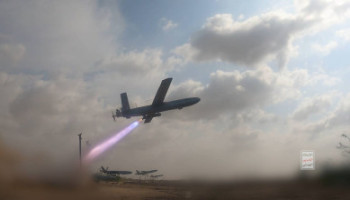

Uncertainty is growing surrounding Saudi crude oil exports via the Red Sea as oil tankers resort to turning off their tracking systems to avoid Yemeni attacks, making oil loading operations at Yanbu port take place "in the dark," according to analysts. This comes after the Yemeni Armed Forces announced on July 20 a naval blockade on Saudi Arabia, followed by their announcement of targeting tankers linked to the Kingdom and oil facilities in Yanbu and the Jizan refinery.
The agency indicated that the spread of what is known as "dark voyages" has made it difficult to determine the extent of the impact of Yemeni threats on Saudi oil flows, with estimates varying among global ship-tracking firms. Vortexa estimated Yanbu loadings in the week beginning August 3 at approximately 2.38 million barrels per day (bpd) compared to 2.71 million in the previous week, while Kpler estimated them at 1.78 million bpd compared to 4.04 million, whereas AXSMarine indicated an increase to 850,000 bpd compared to around 420,000.
George Morris, an analyst at Vortexa, told the agency that all recent loadings in Yanbu took place without turning on the vessels' Automatic Identification System (AIS), confirming that no loading operations are currently occurring with normal tracking signals. Nohway Khin Soe from Kpler added that about 70% of loadings on the Saudi west coast over recent weeks took place without continuous AIS coverage, and that all Yanbu shipments since July 23 were transported via vessels that turned off tracking.
Navigation data indicates a decline in vessel traffic through the Bab al-Mandab Strait, where the daily average of transiting ships dropped to about 32 vessels last week compared to around 50 vessels prior to the Yemeni Armed Forces' announcement of their naval blockade. In contrast, Saudi Arabia turned to moving more oil northward through the Red Sea using the Suez Canal or Egypt's SUMED pipeline; the Sidi Kerir terminal recorded a record loading average of 2.17 million bpd, an increase of nearly 50% over the previous week, with about 90% of it consisting of Saudi crude oil.
The agency confirmed that war risk insurance costs have risen, and tanker operating companies have begun adjusting their routes. Sven Moxnes Harfjeld, CEO of DHT, stated that the situation has become more difficult, noting that most supertankers are now heading north and northwest instead of crossing Bab al-Mandab. Saudi Aramco did not comment on these developments.