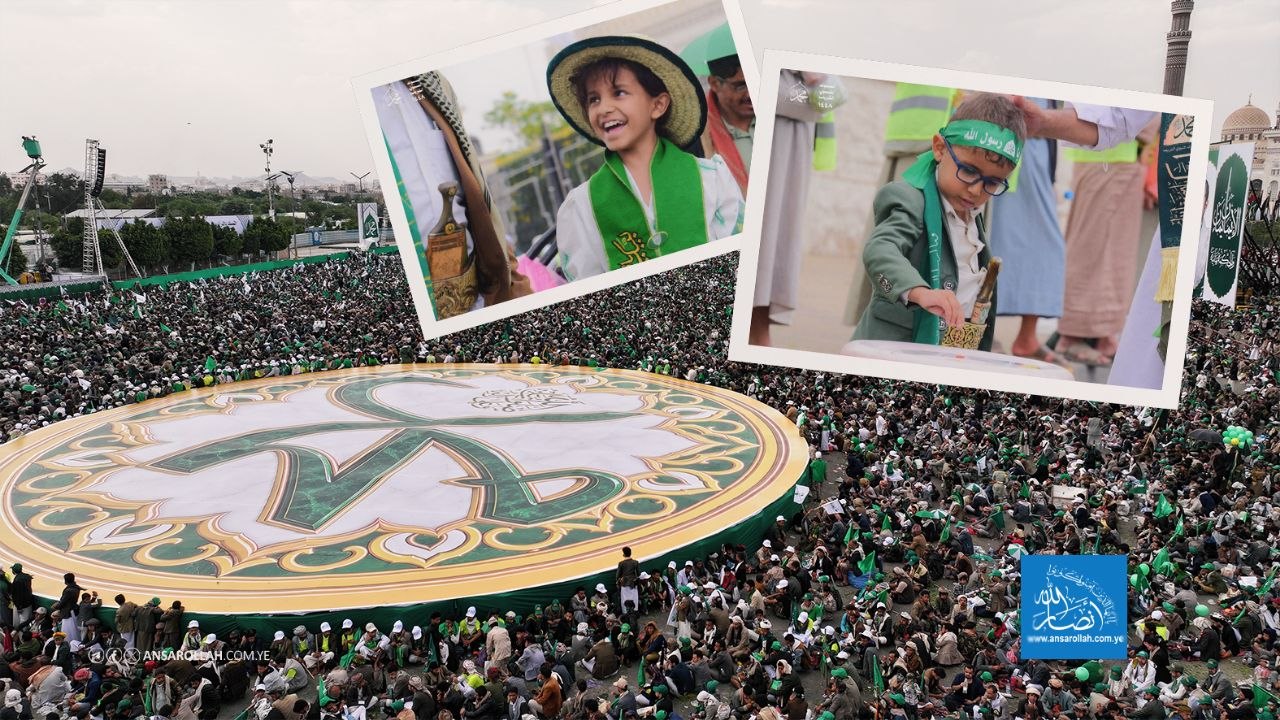
It is not the first time that Yemen’s vibrant celebrations marking the anniversary of the Prophet Muhammad’s birth have captured the attention of the international community.
This year, however, the celebrations have taken on an even greater and more expansive scale. The widespread public participation and keen interest in the occasion have demonstrated that the Yemeni people’s bond with the Noble Prophet, and their commemoration of his birth, are not merely the product of a fleeting response to the prevailing atmosphere.
Rather, they are a tangible expression of the profound love for and allegiance to the Greatest Messenger of Allah, peace and blessings be upon him and his family.
Since the middle of the past month of Safar, various parts of Yemen have witnessed an unprecedented momentum of celebrations and preparations in anticipation of the occasion.
At every level—within institutions and local authorities, neighborhoods, and schools—the remembrance of the Noble Prophet has filled Yemenis’ hearts with strength and steadfastness in their faith and adherence to its teachings, as well as with a commitment to the values of goodness and the principles of reform aimed at addressing the distortions that have marred the purity of the way of life ordained by God for humanity on Earth.
The Most Profound Expression of Reverence for the Sacred Rites of Allah
On the day of the grandest celebration, the yearning in people’s hearts had reached maturity, culminating in a state of full readiness to commemorate the momentous occasion.
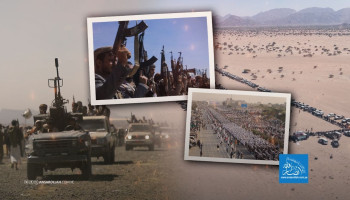
Souls poured into the squares dedicated to the Greatest Messenger, raising chants of allegiance and devotion to the one who brought the light of guidance, and reaffirming his enduring presence in the collective consciousness of a people who have never severed their bond with him—a people undazzled by the spectacle of Satan’s followers as they seek to obscure the purity and clarity of the straight path with the trivialities of worldly life and its false pleasures.
The scale and grandeur of the gathering surpassed every expectation. From thousands of miles away, the international community followed the scenes, underscoring that the message had reached its intended destination.
Once again, as they had done in the early dawn of Islam, Yemenis succeeded in carrying the Muhammadan voice to the farthest corners of the earth, presenting perhaps the most compelling example of reverence for and revival of the sacred rites of Allah—rites that are rooted in the God-consciousness of the heart.
And just as Allah promises a way out for those who remain conscious of Him, intellectual commentary and political and media analysis soon began drawing a connection between the level at which Yemenis have asserted their presence and will, and the depth of their adherence to and identification with their faith and religious identity.
Yemenis and Their Love for the Prophet: A Tradition Rooted in History
The million-strong Yemeni celebrations of the Prophet Muhammad’s birth were by no means a fleeting local event. Rather, they became a major focus of attention for international and Western news agencies, research centers, and news outlets—much as they had been in the past.
Historical accounts by numerous Western Orientalists and travelers who visited Yemen during the nineteenth century and the first half of the twentieth century devoted considerable space in their journals and books to documenting the distinctive Yemeni traditions surrounding the commemoration of the Noble Prophet’s birth.
With a mixture of astonishment and fascination, these researchers and travelers recorded how Yemen’s historic cities—notably Old Sana’a, Zabid, Tarim, and Shibam—would take on a unique festive atmosphere, illuminated and filled with crowds as the month of Rabi’ al-Awwal began.
They noted that Yemeni society possessed deeply rooted Sufi, social, and religious traditions passed down through generations over the centuries.
They also documented how gatherings, Quranic schools, and mosques would begin reciting accounts of the Prophet’s life, including works such as those attributed to al-Barzanji and al-Dayba’i, while devotional songs and praises of the Prophet were performed to the accompaniment of drums and traditional Yemeni melodies.
These early accounts affirmed that the Yemeni bond with the person of the Prophet Muhammad was far more than the observance of a conventional religious ritual.
It formed part of the social fabric that shaped everyday life, serving as a source of solidarity and cohesion among both tribal and urban communities in the face of turmoil and crises.
Greater Than Suffering, Siege, and Aggression
In the modern era, as events across the region have intensified, the million-strong scenes of Yemenis commemorating the Prophet Muhammad’s birth have become the subject of reports by leading international news agencies, including Reuters, Agence France-Presse (AFP), and the Associated Press, as well as global news networks such as the BBC, Deutsche Welle, and France 24.
Major newspapers and Western research institutions, including the Washington Institute for Near East Policy, have likewise devoted extensive coverage to these immense gatherings.
A number of Western reports have expressed both astonishment and admiration at the remarkable organizational capacity and extraordinary mobilization demonstrated across Yemen’s provinces despite conditions of suffering, siege, and aggression.
Numerous media outlets have noted that these million-strong gatherings, awash in green and filling public squares from Sana’a to Saada, Hudaydah, Taiz, Ibb, and beyond, rank among the largest religious and political gatherings in the entire Muslim world.
Some Western analyses have gone further, describing this annual mobilization as a strategic political and popular force that reflects the cohesion of Yemeni society and embodies a distinctive form of faith-based and popular mobilization—one that is reshaping the balance of power in the region and affirming that the Yemeni character finds in the Greatest Messenger an absolute symbol of liberation, resistance, and sovereignty.
Those Who Have Broken Away from the Path of the Greatest Messenger
By contrast, a starkly different picture emerges among those who have chosen the path of retreat and separation from the Greatest Messenger, peace and blessings be upon him and his family, and from his enduring path.
This estrangement is not merely a passing political stance or a binary intellectual choice; rather, it represents a deviation in faith and moral conduct, whose consequences are manifested in subservience and submission to projects of domination and aggression.
These retreatists have chosen to place themselves at the mercy of the enemies of the Ummah, turning their backs on the values of dignity and honor brought by the Prophet of mercy and humanity, peace and blessings be upon him and his family.
There is little doubt that failing to commemorate these great occasions, belittling their significance, or seeking to discourage people from observing them reflects a state of spiritual emptiness and intellectual dependency that has taken hold of the hearts of those who have replaced the authenticity of their Muhammadan identity with Western alternatives and the illusions of cultural globalization.
While millions of Yemenis gather to affirm that Muhammad, peace and blessings be upon him and his family, is their leader, exemplar, and ultimate point of reference, those who have severed themselves from his path seek to strip the Ummah of its sole source of strength, promoting notions of moral and social dissolution and appeasement under the banners of renewal or a false modernity.
History has repeatedly demonstrated, at various turning points, that peoples and nations who turn their backs on their prophets and abandon their great leaders and their liberating message inevitably fall into the trap of humiliation, servitude, and civilizational decline, becoming nothing more than dependent instruments and consumers on the margins of other civilizations.
By contrast, peoples who remain steadfast in their authentic Muhammadan identity, drawing their strength from the noble Prophetic biography and its enduring examples of confronting the arrogant and the tyrannical, remain resilient in the face of defeat and subjugation.
They are capable of weathering even the most formidable circumstances and overcoming the most treacherous of those who have surrendered themselves before their enemies.
The contrast could not be clearer: between the living spirit that draws its endurance from monotheism and divine revelation, and the deadened souls that have willingly reduced themselves to the tails of those who wage war against Allah and His Messenger.
Steadfastness of Position and Authenticity of Belonging
The continued growth and momentum of Yemen’s annual commemoration of the Prophet’s birth, gaining ever greater scale and intensity with each passing year, sends an unequivocal message to the international powers and those lying in wait for the Ummah: the roots of this people run deep into the history of faith, and the persistent attempts to sever them from their sacred traditions and foremost symbols have failed spectacularly.
Yemenis will remain, as the Noble Prophet described them, “tender-hearted and gentle in spirit; faith is Yemeni, and wisdom is Yemeni.” The blessed anniversary of his birth will continue to serve as a source of spiritual, political, and moral renewal, a moment in which this great people renew their covenant and pledge to the Prophet of Mercy and reaffirm their steadfast resolve to confront all forces of arrogance and retreat—unyielding and unwavering.
In this way, Yemenis offer the Muslim and wider human community a practical vision of what it means to maintain a “Muhammadan bond,” in which the Noble Messenger remains present in standing for truth, defending the oppressed, and confronting the forces of injustice and tyranny.
This annual commemoration will remain a message of steadfastness and authenticity, affirming that Yemen—whose people once served as a pillar and source of support for the dawn of the first Muhammadan era—will always carry the banner of truth, undeterred by challenges and drawing strength from the values of monotheism, freedom, and dignity brought by the Seal of the Prophets and Messengers.