Ansarollah Website - Report
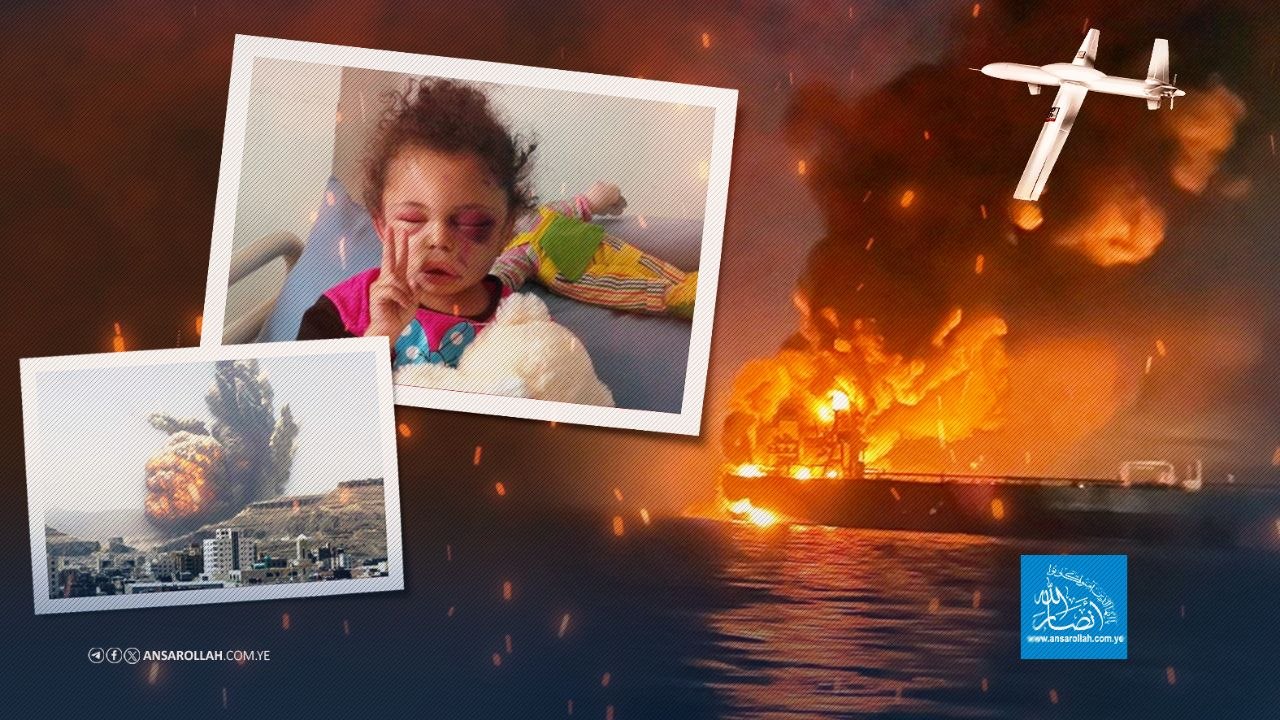
In Yemen alone, a kidney failure patient stands at the hospital entrance, searching for hope in a dialysis session that may never happen. Meanwhile, their family frantically searches for insulin vials or anesthetics—now rare commodities in a country under siege by the Saudi enemy for twelve years. This scene is the daily reality for millions of Yemenis whose lives have turned into a journey of continuous suffering between the lack of medicine and the collapse of the healthcare sector. Yet, the "civilized" world turns a blind eye to this tragedy because it does not concern them; what occupies its mind is ensuring Saudi oil arrives on schedule, unaffected by the Yemeni blockade—a step that came only after the Yemeni people were nearly brought to the brink of death.
Bleeding Figures and Lives Falling in Silence
During a press conference organized by the Republican Teaching Hospital Authority in the capital, Sana'a, a few days ago, the tragedy unfolded in all its painful details. Dr. Ameen Qabaas, Chairman of the Supreme Board of Drugs and Medical Appliances, presented the truth to the audience: the Saudi siege and the closure of Sana'a International Airport have not only deprived Yemenis of the right to travel, but have also stripped patients of their basic right to medicine. Drugs requiring a specific cold chain perish along rugged land routes or arrive expired after grueling journeys through Djibouti, while international pharmaceutical companies have withdrawn, leaving a fatal vacuum behind. Why is all this happening? The answer is simple: Yemen's fate was to be a neighbor to the Kingdom of Saudi Arabia, which refuses to see a free, independent people outside its hegemony.
The figures released in the statement by the Ministry of Public Health and Environment read like a deferred death registry: 1.5 million diabetic patients are left searching for virtually non-existent insulin. The annual requirement for premixed insulin ranges between 800,000 and 1 million units, while 30,000 vials of regular insulin are needed annually but remain unavailable—as if discussing a luxury rather than a life-sustaining hormone for millions of hearts.
Hemophilia and bleeding disorder patients require 100,000 vials of Factor VIII and 50,000 vials of Factor IX annually. These numbers represent stories of children bleeding to death due to the absence of clotting factors, and helpless mothers watching their children fade away in front of their eyes. Remaining silent in the face of such crimes is unacceptable at a time when the Yemeni people possess the means to inflict severe consequences on the Saudi enemy—a course of action that has already begun.
Anesthesia: When the Operating Room Becomes an Execution Chamber
Dr. Abdullah Al-Ashwal, Vice President of the Republican Teaching Hospital Authority, highlighted the gravity of the situation, stating: "Surgical operations cannot be safely performed without essential anesthesia supplies. A patient awaiting surgical intervention cannot remain hostage to the unavailability of a basic drug."
The shortage of anesthesia and resuscitation medications has stripped operating rooms of their purpose as places of healing. Open-heart surgeries and oncology procedures have ground to a halt, not due to a lack of skilled surgeons, but due to the absence of basic anesthetic agents needed to keep patients alive on the operating table.
It is a stark irony: a surgeon stands helpless in front of a patient requiring urgent intervention—not for lack of medical expertise, but for lack of anesthesia to perform the procedure. This reflects the reality imposed on the Yemeni people.
"Humanitarian" Organizations Are Tools of Aggression
The statement issued by the Ministry of Public Health and Environment did not merely detail the scale of the catastrophe; it also highlighted what it described as the politicization of humanitarian work. International organizations, expected to serve as a lifeline for Yemenis, have transformed into tools of pressure and leverage under Saudi and American influence. The suspension of $48 million in aid for drugs and medical supplies within a single year, along with $16.3 million for operational expenses and $14.1 million for medical equipment, was not a technical decision, but a deliberate policy aimed at pushing the healthcare system toward collapse.
Even more striking, only 19% of the 2019 Health Response Plan was implemented, a figure that dropped to below 5% in 2025 and reached total cessation in 2026. In November 2025, the World Health Organization (WHO) and UNICEF halted support to two-thirds of the targeted areas, threatening the closure of thousands of health facilities and crippling nutrition and epidemic-control programs. Meanwhile, the International Committee of the Red Cross (ICRC) delivered 130,000 insulin vials before stopping, offering a mere drop in an ocean of need.
Closed Airports and Blocked Lifelines
The closure of Sana'a International Airport by the Saudi enemy since 2016 has served as a death sentence for thousands of patients. Medications requiring specialized cold-chain storage cannot be transported overland across hazardous roads and countless checkpoints. Freight costs have surged by 500%, turning the transport of medicine from occupied Aden to Sana'a into a grueling ordeal that frequently results in damaged or expired shipments.
A report by the Supreme Board of Drugs revealed a total shortage of 120 types of chronic disease medications, including resuscitation and anesthesia drugs. Thalassemia and blood disorder patients require 2,672,258 capsules, while chronic kidney failure patients await 200,000 vials of Erythropoietin to treat severe anemia. Pregnant women are equally affected, with 2,487,070 vials of Oxytocin—essential for preventing postpartum hemorrhage—remaining largely out of reach. This situation persists as the Saudi enemy continues measures aimed at punishing a population that posed no threat.
Diabetic Comas and Kidney Failure: A Slow Death in Full View of the World
Diabetic patients in Yemen face a daily crisis: insulin is practically non-existent, and oral medications have been unavailable for extended periods. Those unable to purchase insulin on the black market at inflated prices risk falling into diabetic comas that lead to death or severe complications. Those forced to purchase expired or counterfeit drugs face equally grave risks.
Dr. Al-Ashwal summarized the tragedy: "A patient's suffering does not end at the hospital gates. Many patients face—in addition to their illness—the burden of securing medicine, covering transportation costs, and accessing medical services, while their families bear growing psychological and financial strain."
15,000 Health Workers Deprived of Incentives
A second statement issued during a press conference at the Kuwait University Hospital detailed another dimension of the crisis: the suspension of humanitarian aid has crippled the health sector by stripping 15,000 health workers of their financial incentives and leaving 2,207 health facilities without basic operational funding. Five million children have been deprived of life-saving routine vaccines, and 30,000 children annually have lost access to malnutrition treatment centers that previously saved them from starvation.
Dr. Abdul-Latif Abu Taleb, Director of Kuwait University Hospital, held the Saudi enemy responsible for the collapse of health conditions, emphasizing that the politicization of humanitarian work by international organizations has exacerbated the tragedy. Furthermore, the blocking of medicine shipments from Aden to Sana'a, alongside severe logistical obstacles, detentions, and delays imposed by Saudi-backed entities, constitutes an additional violation that international organizations have shirked their responsibilites.
Appeals Met with Silence
The Ministry of Public Health and Environment demanded the immediate release of all detained shipments of medicine, medical supplies, solutions, blood bank materials, diagnostic reagents, and laboratory equipment currently held up by the World Health Organization. It called for an immediate end to arbitrary inspections and delays, urging an end to the use of Yemenis' health as a political bargaining chip. The ministry also demanded the full and sustainable reopening of Sana'a Airport as a vital corridor for medical aid and t unhindered movement of aircraft transporting medicine, blood bank supplies, and derivatives.
However, these appeals—like those before them—continue to meet an internation wall of silence and Systematic com
The Ministry of Health concluded that the pharmaceutical crisis is not a temporary shortage, but a deliberate collapse of the health system, adding that millions of lives hang in the balance amid medicine shortages and declining support. Yet, if the international community remains deaf to the cries of the sick, it should inevitably do the same to the escalation of Yemeni missile and drone strikes seeking accountability for those affected.
In Yemen, Death Becomes a Merciful Option
In this war-torn nation, millions remain trapped in agonizing anticipation: a cancer patient waiting for a chemotherapy dose that may never arrive; a mother terrified for her hemophiliac child; a young kidney failure patient wondering if they will receive dialysis this week; and a pregnant woman fearing she may not survive childbirth due to uncontrolled bleeding without oxytocin. Blockades restrict access to essential medicine, while international organizations scale back their humanitarian obligations.
In many cases, death has become a far less painful alternative to endless suffering. Illnesses easily treatable with simple medication have turned into death sentences, and hospitals built to save lives now stand as silent witnesses to a severe humanitarian crisis. Yet, faced with this reality, does the Yemeni people not have the right to wrest their rights from their oppressors? If there are laws that stand in the way, their rightful place is the trash heap. Talking about the healthcare sector is not merely a matter of structures, equipment, and numbers; it is fundamentally about human life and the right to treatment, medicine, and medical care. These words, spoken by Dr. Abdullah Al-Ashwal, capture the essence of the tragedy: behind every one of these harrowing statistics lies a human being with a name, a face, a story, a family awaiting them, and dreams they cherish.