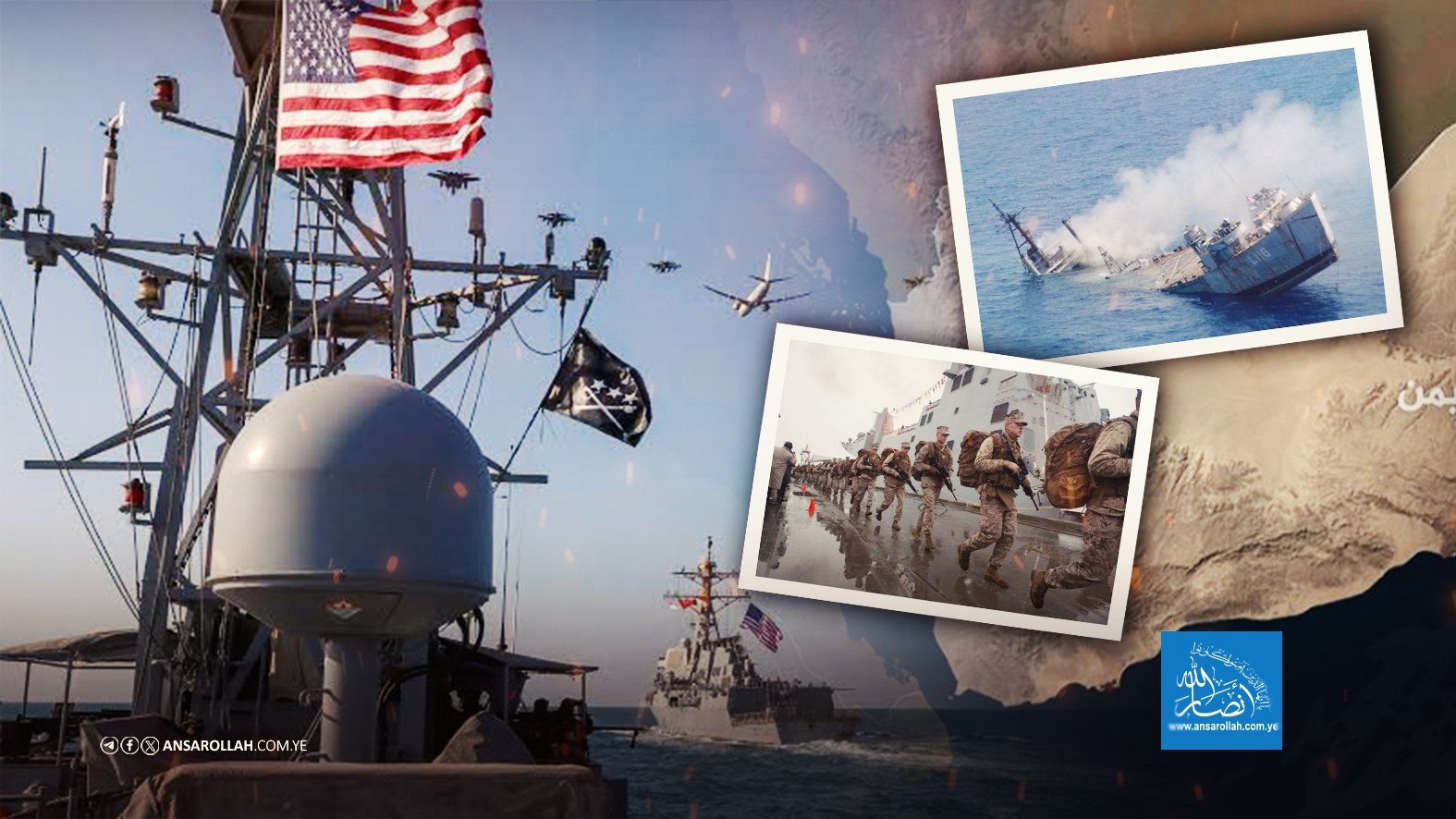
The recent shifts in the U.S. military presence in the Middle East reveal an interconnected regional context that directly affects Yemen and the Red Sea. The United States is not moving toward a comprehensive withdrawal from the region, but rather toward a redistribution of its forces by reducing its ground presence in Iraq and Syria, while maintaining forces and capabilities associated with Iran, the Gulf, and maritime routes. This shift raises the strategic importance of Yemen, the Red Sea, the Bab al-Mandab Strait, and the Arabian Sea in U.S. military and security calculations related to aggression.
Recent U.S. statements confirm that Washington is not setting a timetable for ending its deployment related to Iran, while continuing to reduce its presence in other theaters. With more than 50,000 U.S. military personnel remaining in the region, alongside continued naval and air power and missile defense systems, the withdrawal from Iraq and Syria does not necessarily mean a decline in U.S. capacity for aggression against Yemen. Rather, it may allow Washington to concentrate greater capabilities in the Gulf and maritime routes connected to Yemen. Nevertheless, the Yemeni people remain prepared to defend their sovereignty and continue to support the armed forces in carrying out these sacred national duties.
The U.S. Position on Maintaining Its Forces in the Region
Recent U.S. statements reveal that the Trump administration is not moving toward a comprehensive military withdrawal from the region. Instead, it is reshaping its deployment among different theaters by ending or reducing its ground presence in Iraq and Syria, while maintaining deployments associated with aggression against Iran and the protection of U.S. bases and allies in the Gulf.
On September 3, 2026, U.S. Vice President J.D. Vance refused to set a date for the end of the aggression against Iran, linking its conclusion to Tehran ceasing attacks on shipping and maritime navigation associated with the United States and its allies. He also confirmed that Washington is not conducting negotiations with Iran while the attacks continue.
This was preceded by an announcement from U.S. Central Command on September 1 stating that “more than 50,000 U.S. military personnel are operating across the Middle East and are prepared to continue operations ordered by the President.” The announcement came after new strikes were carried out against Iranian targets, placing this deployment within the framework of an ongoing operational force rather than reinforcements being prepared for withdrawal. The U.S. administration also rejected, on July 30, a Senate resolution calling for the withdrawal of U.S. forces from hostile actions against Iran and strongly opposed the resolution, reaffirming the continued positioning of forces to address threats facing Americans, as well as Washington’s allies and partners in the region.
These positions indicate that the U.S. administration does not link forces assigned to the confrontation with Iran to a specific timetable for withdrawal. Rather, it links the level of its deployment to the continuation of what it calls the “Iranian threat, and the security of navigation" in the Strait of Hormuz, and the protection of U.S. and Israeli bases and interests.
Withdrawal from Iraq
The U.S. position on Iraq is taking a different course. In July, Trump announced that the United States no longer sees a need for the continued presence of the U.S. military there, as part of arrangements for the withdrawal of forces by the end of September 2026. This represents a withdrawal from a specific theater whose operational function has diminished for Washington. However, it is taking place alongside the continued presence of tens of thousands of U.S. military personnel in the region, particularly in the Gulf and locations associated with aggression against Iran.
The departure of U.S. forces from Iraq does not necessarily mean that all of them will return to the United States. The withdrawal process may instead be accompanied by the redistribution of some capabilities and forces within the area of responsibility of U.S. Central Command, according to the requirements of the regional confrontation.
Reduction of the U.S. Presence in Syria
The U.S. presence in Syria is also moving toward reduction, with greater responsibilities being transferred to the new authorities implementing the U.S. agenda following the change in the Syrian regime, and with the reduced need for a large ground deployment that remains open-ended in duration.
At the same time, Washington retains the ability to intervene from outside Syrian territory through its regional bases, aircraft, naval forces, and special forces when necessary. This makes the withdrawal from ground positions different from abandoning military capabilities toward the Syrian theater. The Iraqi and Syrian tracks therefore reflect a U.S. trend toward reducing ground forces distributed within individual countries, rather than abandoning regional military influence.
Iran Reshapes the U.S. Deployment
Iran currently represents the most influential factor in the future of the U.S. military presence in the Middle East. The confrontation with Iran has led to an increase in troop levels, the reinforcement of air and missile defenses, increased naval and air deployments, and the retention of rapid-response forces within the area of responsibility of U.S. Central Command.
As a result, Washington faces a dual situation: its global strategy seeks to reduce the burdens of the Middle East and concentrate greater resources in the Indo-Pacific, while the confrontation with Iran imposes the continuation of a high-level military presence in the Gulf and maritime routes.
This explains the divergence between the U.S. rhetoric toward Iraq and its rhetoric toward Iran. In Iraq, Washington is speaking of the end of the need for its forces, while the administration refuses to set a date for ending the deployment associated with the confrontation with Iran. If tensions with Iran decline, Washington could begin reducing the additional forces, naval assets, and units whose deployments were extended because of the war. However, this would mean a return from a wartime deployment to a “deterrence deployment,” rather than an end to the U.S. military presence in the Gulf.
In such a case, air and naval bases, the Fifth Fleet, air-defense systems, and command-and-control and intelligence networks would remain as a stable strategic infrastructure for U.S. interests in the region.
The Saudi Position
There is no indication in Saudi Arabia’s publicly stated positions of a direct request to Washington to extend the presence of U.S. forces in an officially declared form. However, Saudi security interests are closely linked to the continuation of the functions performed by the U.S. presence in the Gulf, which has historically served as a protector for the Kingdom.
Saudi Arabia benefits from early-warning and air- and missile-defense systems, intelligence and surveillance, command and control, and the U.S. naval and air presence, as well as Washington’s ability to intervene if the Kingdom or its facilities are subjected to a large-scale attack. However, this capability is no longer as effective as it was previously, nor is there the same strict U.S. commitment to carrying out these missions, particularly following the war of aggression against Iran and what the battle demonstrated regarding the decline of those capabilities.
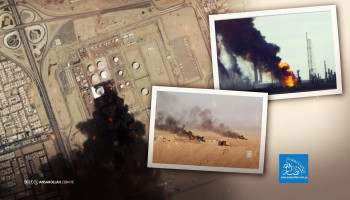
At the same time, Riyadh seeks to avoid turning Saudi territory into a base for an open-ended U.S. war against Iran, which would expose its oil facilities, cities, and military bases to direct Iranian attacks.
The Saudi position therefore takes shape around an equation based on maintaining the U.S. umbrella as a tool of deterrence and protection, while demanding that the Americans control its offensive use in a manner that prevents the war from expanding into Saudi territory.
This does not conflict with Riyadh’s move to expand its military partnerships with Turkey and Pakistan. Saudi Arabia is seeking to reduce its exclusive dependence on the United States and increase its alternatives, without dispensing with U.S. capabilities, which still represent the most advanced component of the regional defense system. The available information also indicates that decision-making regarding these capabilities rests with the Americans, not the Saudis.
Implications of the Redeployment for Yemen
The reshaping of the U.S. deployment carries direct implications for Yemen and the Red Sea. The withdrawal of forces from Iraq and their reduction in Syria does not necessarily mean a decrease in U.S. capabilities in the Red Sea, because the military center of gravity is shifting to a greater degree toward the Gulf, Hormuz, the Arabian Sea, and maritime routes connected to the confrontation with Iran.
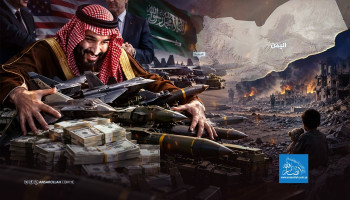
However, the continued depletion of U.S. forces, naval assets, and munitions in the confrontation with Iran raises the cost of launching a broad and prolonged U.S. military campaign against Yemen. It also makes Washington more inclined to distribute the burden among Saudi Arabia, the mercenary government, and its affiliated forces.
In this situation, the United States retains strategic functions such as intelligence, monitoring and reconnaissance, air defense, naval command, protection of U.S. shipping, and the ability to conduct strikes from long distances. At the same time, Saudi Arabia and its client mercenary forces would be assigned a greater share of the ground, coastal, and Yemen-related operational roles.
This trend intersects with Saudi efforts to develop broader regional security arrangements, strengthen the capabilities of forces aligned with it, and build maritime and security frameworks that reduce the need for direct U.S. involvement at every level of the confrontation.
Outlook
The U.S. military presence in the Middle East is likely to remain high in the near term despite the withdrawal from Iraq and the reduction of forces in Syria, because the continuation of the aggression against Iran will prevent Washington from reducing its forces in the Gulf and maritime routes. Therefore, any U.S. withdrawal is likely to be selective, with naval and air forces, missile defenses, and Gulf bases remaining at the forefront of the U.S. deployment.
If the confrontation with Iran continues without a settlement, Washington will be forced to extend the presence of some of its current reinforcements and rotate forces and naval assets rather than withdraw them. This will increase pressure on readiness and munitions and make Washington more cautious about opening another prolonged confrontation in Yemen, without preventing it from carrying out limited attacks under certain circumstances.
If the confrontation with Iran declines, Washington is more likely to withdraw some of the forces deployed during the war, while maintaining the bases, defenses, and naval presence necessary to protect its clients in the Gulf and monitor Iran.
In both cases, U.S. pressure on Saudi Arabia to assume greater military and security responsibilities in the Red Sea and Yemen is likely to increase, alongside greater intelligence and technical support for Saudi-backed forces and the strengthening of their naval, coastal, and defensive capabilities.
This means that the most immediate threat to Yemen is not necessarily a return of U.S. aggression on its previous scale, but rather an escalation of pressure through Saudi Arabia and its client forces, supported by U.S. capabilities in surveillance, intelligence, command and control, and maritime and air defense.
Nevertheless, the Yemeni armed forces are prepared for any developments and capable of defending national sovereignty, backed by the Yemeni people in the battle for defense and liberation.