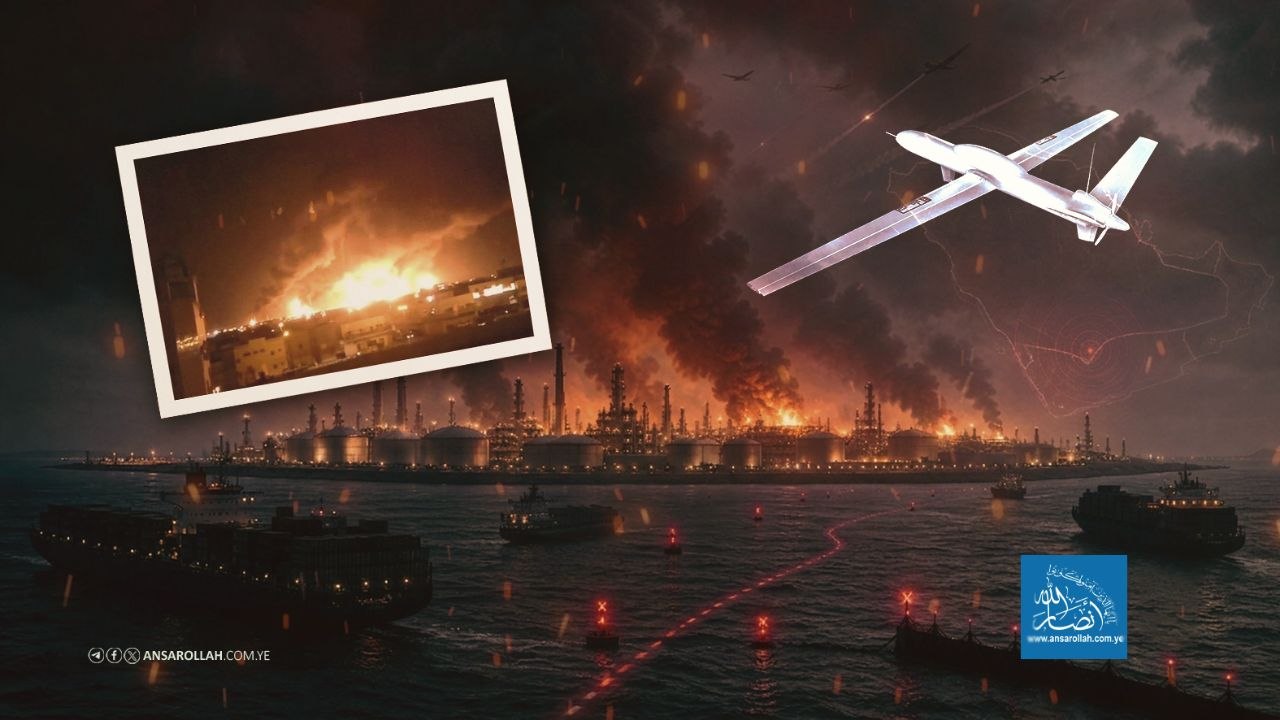
Not according to the usual calculations of parity, and not by the old rules of the game, Yemen’s deterrence volcano has erupted in the face of the forces of arrogance and aggression, setting fires deep inside Saudi Arabia.
Its lava and embers have spilled beyond the immediate borders, while its strategic shrapnel has struck U.S. and “Israeli” strongholds. It was a fierce military and tactical eruption that pounded a number of vital targets, leaving the Saudi regime to reckon with the fallout.
The eruption was born out of the crucible of steadfastness and siege, and has culminated in the establishment of decisive deterrence equations.
At the heart of the open confrontation, the armed forces have demonstrated their ability to seize the initiative, break the arrogance and excesses of those bent on oppressing the Yemeni people, and redraw the map of regional influence and deterrence.
This has been driven by remarkable military advances, unprecedented popular cohesion, and wise revolutionary leadership that has crippled the enemy’s capabilities and thrown its international allies into disarray.
This strategic transformation has emerged as a testament to a carefully calibrated, cumulative process built on developing self-reliant strength and advancing sophisticated military capabilities.
It also makes clear to all that Yemen has come to shape the defining headlines of a new phase in the region’s politics, while asserting its Arab and Islamic identity within the international equation.
From Warning to the Battlefield
Just yesterday, the Supreme Political Council warned that Saudi escalation would push the situation on the ground into a new phase, for which Riyadh would bear full responsibility.
The warning came in a statement issued following a blatant Saudi assault on several governorates, including the al-Islahiyah massacre in al-Jawf.
Prior to that, the acting prime minister had signaled a readiness to escalate under the “blockade-for-blockade” equation, invoking it as a legitimate right and a strategic principle for halting the economic and livelihood-related blackmail being imposed on the Yemeni people by the coalition.
It was not long before those words were translated into fiery action on the battlefield—an escalation that captured the world’s attention and forced the powers accustomed to living off the wealth of the region’s peoples to take notice.
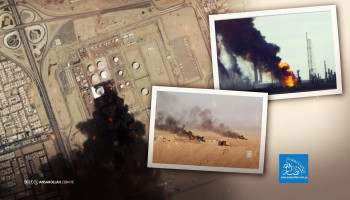
The threats became precise and decisive strikes reaching deep into southern Saudi Arabia and targeting vital areas. Plumes of smoke filled the skies over cities following the successful strikes, raising the specter of serious environmental and health risks “due to fires and carbon emissions threatening environmental safety and the health of residents.”
The Yemeni response was characterized by unequivocal legitimacy, grounded in the right to self-defense enshrined in religious law as well as international laws and principles.
Meanwhile, the Saudi enemy had run amok in its violations, leaving civilians dead and wounded at a particularly sensitive moment for Saudi Arabia, which is experiencing a state of weakness and seeing its prestige—and the deterrent advantage it has long boasted of—go up in flames.
Saudi Arabia’s reckless escalation against the Yemenis consequently triggered a sustained Yemeni wave of intensive attacks, which were examined from multiple political and military perspectives. Local and international analytical assessments converged on a fundamental conclusion: the intensity of the strikes, coupled with the scale and sensitivity of the targets, underscored the consolidation of the equation of liberation, reaffirmed the rejection of subordination, and demonstrated the use of every available means to break the blockade.
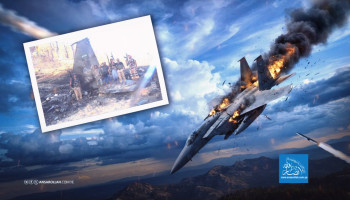
The attacks also demonstrated the armed forces’ readiness and high capacity to respond to every development on the battlefield—something that has become increasingly evident in recent days, whether through preemptive strikes against Saudi military buildups or the downing of advanced reconnaissance aircraft.
It was only natural for the Saudi regime to be gripped by a sense of defeat and confusion in the face of scenes to which it was unaccustomed and which it never expected its vital cities to experience.
Yet, ultimately, these developments are a natural consequence—and an unavoidable price—of continued intransigence and insistence on pursuing aggression, while besieging and starving the Yemeni people and killing them through poverty, disease, economic warfare and starvation, or even by denying them life-saving medicines.
The Yemeni strikes came as a consequence and a response; they were not an act of aggression. Accordingly, statements issued by the Yemeni armed forces have consistently affirmed that operations targeting Saudi military and economic facilities are carried out in response to the continuation of aggression and blockade, or to any escalation by the enemy.
This new reality is now forcing Riyadh to confront what numerous strategic studies and analyses have emphasized after examining the aggression and the steadfast Yemeni defense it has faced: Yemen cannot be bypassed or subdued.
It is the side that holds the just cause, and it has demonstrated that standing firm for the truth and defending it requires an unwavering internal commitment and a readiness to marshal every available source of strength.
Technological Superiority vs. the Collapse of Defensive Systems
A detailed assessment of the intensity of the Yemeni military operations in recent weeks leads observers to conclude that the Yemeni armed forces have effectively reached a very high level of operational proficiency and military capability, with a diverse arsenal possessing significant destructive and tactical potential.
Over the course of two years of the “Promised Victory and Holy Jihad” campaign in support of their oppressed brothers in Palestine, Yemen has repeatedly surprised the world and delivered harsh lessons to the forces of global arrogance—lessons that have left them largely silent as their strategic ally, Saudi Arabia, endures what is being described as the worst period in its history militarily and politically.
When political and military leadership in Sana’a asserts that Yemen will not stand idly by in the face of continued aggression and blockade, the force behind that declaration rests on its confidence in the advanced military capabilities that, by God’s grace, it has succeeded in developing in both scale and sophistication.
These capabilities range from hypersonic missiles capable of extremely high speeds and advanced maneuverability designed to penetrate defensive systems, to fragmentation missiles and projectiles that split into multiple components to disrupt radar networks and cover wide areas, and ultimately to precision-guided weapons and long-range unmanned aerial systems with a low radar signature.
This remarkable technological advancement has transformed the concept of military balance in the region. Analysts broadly agree that it has evolved into a sufficient and effective deterrent against any escalation that the so-called axis of evil and bullying might contemplate.
These realities are no longer confined to statements issued by political bodies or the armed forces. They are also reflected in documented assessments emerging from research and policy institutions associated with Yemen’s adversaries, including the United States and “Israel.”
Such assessments indicate that Yemen now possesses advanced weaponry that goes beyond conventional capabilities, giving it the ability to impose its own equations and reshape the geography of influence in the Middle East in response to this growing military transformation.
This technological superiority was particularly evident in the latest operations, which exposed what the text describes as a complete breach and an outright collapse of the Saudi defensive system. Modern U.S.-supplied Patriot and THAAD systems, along with advanced radar coverage, reportedly failed to intercept the Yemeni missiles.
This inability to protect cities and economic installations has exposed the vulnerability of the Western military technology on which Saudi Arabia has spent hundreds of billions of dollars, demonstrating, according to the report, its diminished effectiveness against the innovations and tactical ingenuity of the Yemeni military mind.
The Main Driver of Victory
This remarkable military transformation and strategic steadfastness would not have been possible without a solid foundation and a core component that has served as the true driving force behind these achievements: the overwhelming popular support and mass solidarity with the revolutionary leadership.
Despite years of aggression and bombardment, a suffocating economic blockade, and external efforts to fracture the country’s internal cohesion, the Yemeni people have demonstrated that they remain an unwavering pillar of support for their armed forces.
This solidarity has been manifested in weekly mass rallies drawing millions, convoys supplying the battlefronts, and broad and across-the-board popular backing for the leadership’s decisions and the operations carried out by the armed forces.
This deep-rooted social awareness has thwarted every foreign attempt to exert pressure on Yemen’s domestic front. The hunger and deprivation inflicted by the blockade have instead been transformed into a force of anger, resistance, and an unwavering determination to break free and assert national sovereignty.
A New Phase and the Birth of a New Yemen
Today is not what it was yesterday. Fueled by the strength of faith and the wisdom and strategic acumen of revolutionary leader Sayyed Abdul-Malik Badr al-Din al-Houthi, backed by military strength and the courage of the country’s armed forces and its oppressed people, these qualitative victories underscore that Yemen has been reborn and is now assuming the regional and international standing and leadership role befitting it.
The precision and impact of the operations targeting vital facilities—including Aramco installations in Abha and Najran, the Economic City, Aramco’s Jizan facilities, and the Khamis Mushait Air Base—using dozens of ballistic missiles and drones, with strikes landing accurately on their targets, provide further evidence of this strategic transformation.
Against this backdrop, the continued acts of aggression and violations targeting Yemen’s governorates appear little more than a desperate attempt by the enemy to turn back the clock and halt the course of history at this particular stage—at the very least—and prevent this transformation from reaching its full potential.
The United States and the international “axis of evil” remain unwilling to come to terms with this stark reality. As a result, their policies and calculations have consistently been marked by recklessness and grave misjudgment, drawing them, since the blessed October 7 epic against the Israeli enemy, into a historic strategic predicament they never anticipated.
Yemen has proven itself to be the decisive factor that cannot be bypassed or ignored. Any attempt to perpetuate aggression and blockade will invariably be met with painful retaliation and escalating deterrence—until justice is restored to its rightful owners, the aggression comes to an end, and the blockade is completely broken against the proud Yemeni people.