Ansar Allah website - Report -5 Rabi' al-Thani 1448 AH
The Armed Forces’ control of the western coast and the expulsion of Saudi military mobilizations from Mokha and the islands surrounding Bab al-Mandab affirmed the will of the Yemeni people and their resolute movement toward liberating the land and sovereignty, and the collapse of Riyadh and Washington’s bets on dismantling the social fabric and planting entities of trusteeship as a gateway to imposing hegemony and extending control over the country’s geography, with its strategic islands and maritime gateways.
This qualitative military achievement threw all regional and international calculations into disarray and deepened the sense of helplessness among the forces of aggression, which have been unable to achieve any strategic breakthrough in the steadfastness of the Yemeni nation, the strength of its faith, and its adherence to the truth. The Yemenis thus regained their sovereign decision over the entirety of the Bab al-Mandab Strait, one of the world’s most sensitive waterways, and brought about this transformation, which guarantees cutting off the hand of blatant interventions that have targeted the country’s sovereignty, territorial unity, and independent decision-making for decades.
Concern Over Closing the Chapter of Hegemony Forever
Amid this strategic transformation, reactions and positions within American, “Israeli,” and international political and military circles appeared confused, not only because of the geopolitical importance of the western coast, but also—and more importantly—because Yemen, despite all forms of continued targeting, continues to demonstrate strength in defending its rights and its steadfast people, and is making a strong and unexpected presence in the arena of powers that have long monopolized claims of strength and capability.
Yemeni affairs researcher “Adam Baron” told "Washington Post" that this transformation carries two interconnected implications: the first is Yemeni, linked to the shift in the balance of power through the fall of strategic positions that had been subject to Saudi directives; and the second is regional, represented by the entry of Bab al-Mandab into the pressure cards now possessed by the Resistance Axis in its confrontation with the Axis of Evil, Washington and its allies.
For its part, the "Wall Street Journal" affirmed that the entry of the Armed Forces into Dhubab and Perim Island gave Yemen effective control over one of the most dangerous maritime chokepoints in the world, and directly aggravated the predicament facing Saudi exports. Riyadh had relied on the East-West pipeline and Red Sea ports to circumvent the risks surrounding navigation in the Gulf and the Strait of Hormuz. However, the arrival of the mujahideen at the strait placed this alternative route under direct pressure.
In the same context, CNN described Perim Island as the “strategic prize” in the regional confrontation, explaining that its location at the narrowest point gives the force stationed there an advanced capability to monitor ships, track their movement, and control transit routes between the Red Sea, the Gulf of Aden, and the Indian Ocean.
Panic in the Zionist Entity
On the “Israeli” enemy’s side, a state of unprecedented panic and alert prevailed, as Zionist media coverage reflected fears over the repercussions of Sanaa consolidating its military presence on the future of navigation to the occupied port of Umm al-Rashrash, “Eilat.” Reports and analyses by enemy media outlets, such as Israel’s Channel 12, indicated that developments in Bab al-Mandab and Perim Island represent “a crisis more dangerous than the Strait of Hormuz crisis.”
The Zionist channel explained that the narrowness of the passage and its geographic proximity give the Yemeni forces a high capacity to monitor and target maritime and commercial traffic using direct weapons and artillery, without the need for complex technologies or long-range missiles. It warned that the simultaneous Yemeni pressure in Bab al-Mandab and Iranian pressure in the Strait of Hormuz places the navigation of hostile powers before a strategic pincer extending from the Gulf to the Red Sea.
In the same context, "The Times of "Israel"" covered reports confirming that this situation places supply and shipping lines connected to the entity under direct and continuous pressure. The Zionist newspaper considered the development a strategic shift that gives Yemen a geographic pressure card affecting the economic lifeline of the “Israeli entity” through the Red Sea, prompting it to call on its Western allies to rescue it through naval mobilization to confront what the newspaper described as the “direct threat” to trade routes heading toward the occupied ports.
Meanwhile, "Yedioth Ahronoth" claimed that the Yemeni moves are part of a broader regional equation and quoted a senior official attempting to distance the entity from the Saudi collapse by describing the developments as a “Saudi affair,” in order to avoid direct confrontation with Yemen. "Maariv" also questioned statements by the enemy “army” Chief of Staff, Eyal Zamir, regarding the entity’s so-called “long arm” and its ability to reach Bab al-Mandab, affirming the growing risks to the port of “Eilat.”
The "Jerusalem Post" and "Times of Israel" warned that Yemen’s tightening of its control over Bab al-Mandab gives it greater capacity to exert pressure on maritime traffic and isolate Gulf oil-producing states, foremost among them Saudi Arabia. The Zionsit website “Kikar Shabbat” described the developments as “dangerous and worrying,” affirming that they could prompt shipping companies to avoid Bab al-Mandab and adopt longer routes, increasing shipping and insurance costs and adding pressure to supply chains.
In contrast to this panic among the hostile parties, field data confirm that international maritime and commercial traffic continues normally and safely for all ships and cargo vessels belonging to various countries around the world, with the exception of shipping belonging to the Saudi side, as it is subject to the Yemeni blockade in response to the financial and economic blockade and the closure imposed on Yemeni ports, and as an affirmation that the stability of the global oil market through the continued flow of Saudi oil is linked to lifting the blockade on Yemen and ending all forms of aggression.
Decline of American Deterrence
In parallel, the United States is attempting to suppress its frustration over developments that reinforce the reality of the end of the era of its presence and influence in the region, limiting itself to providing logistical support to Saudi Arabia and avoiding direct involvement in any new and uncalculated confrontation, particularly after the Red Sea confrontations with Yemen exposed the limits of American capability to control the course of the confrontation and inaugurated a phase of its retreat in the Red Sea. This followed its failure to neutralize missile and drone capabilities, ultimately leading to the repositioning of its forces.
When the American position is unable to move beyond the limits of concern toward practical action that Riyadh had hoped for through its continuous contacts with Washington, this constitutes an implicit acknowledgment of the transformation of Bab al-Mandab from a passage under the Western umbrella and unilateral American control, protected by a cordon of warships and aircraft carriers, into an area administered under full Yemeni supervision and will. This is the new reality that establishes Sanaa’s ability to protect maritime security as a sovereign right rather than through foreign military presence.
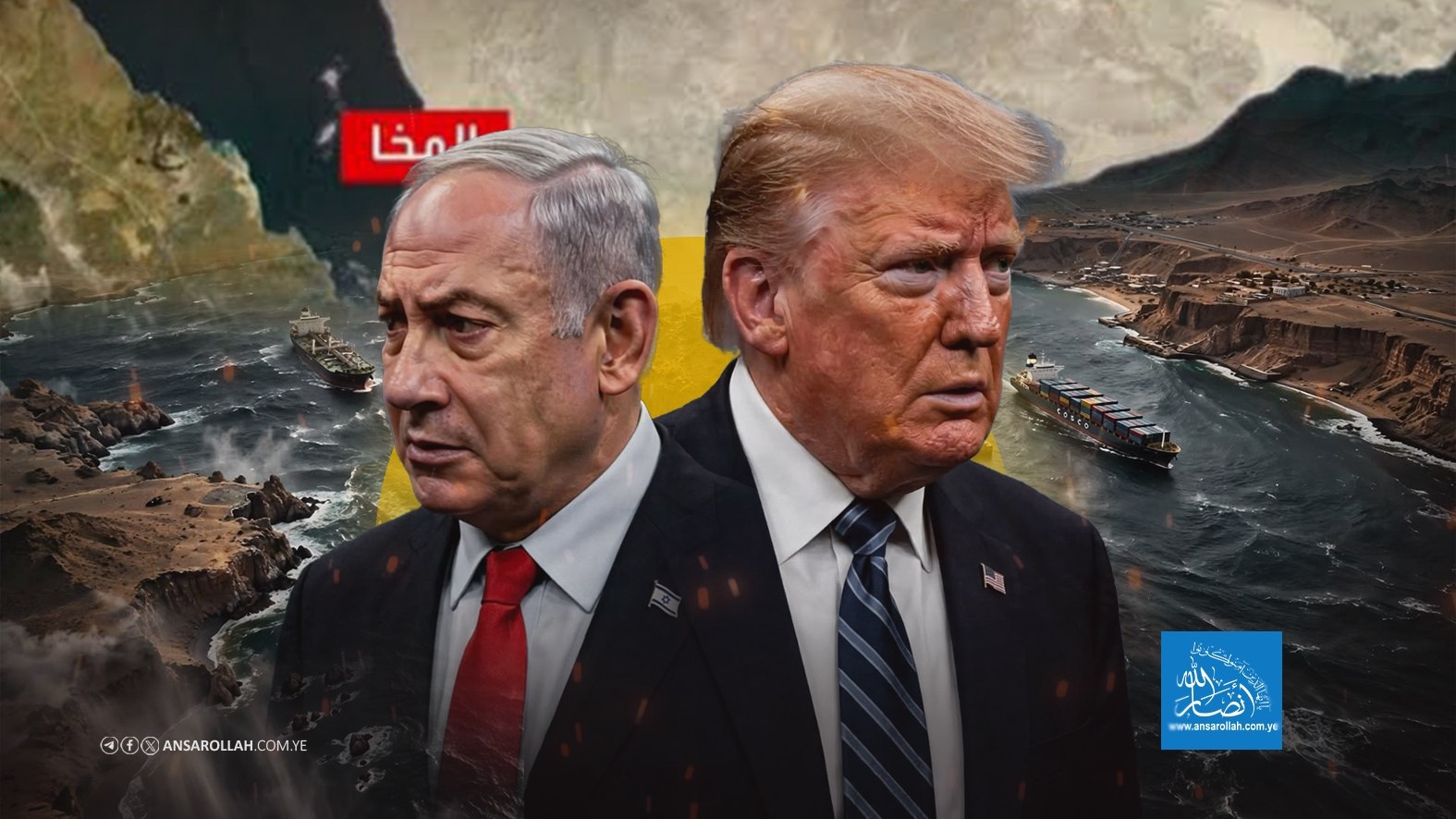
The Zionist newspaper "Haaretz" affirmed that what Mohammed bin Salman’s call to Trump revealed carries one clear implication: “Ansar Allah are redrawing the map of the region amid the decline of the American role.” The newspaper noted that Trump’s decision not to intervene by launching supporting strikes for Saudi Arabia in its war on Yemen left Riyadh alone in confronting the Yemenis.
The Zionsit newspaper considered the two phone calls made by “Bin Salman” to “Trump” a strategic shift unprecedented in the region’s history in the course of Washington’s relations with one of its most important allies, as the American president made clear that he had no intention of undertaking any direct military intervention in Yemen.
Collapse of Western Militarization Projects
There is no doubt that this accelerating pace of developments opens the door to precise assessments confirmed by reports from intelligence agencies and international strategic research centers, namely that Western militarization efforts and multinational naval alliances have always been the source of tensions and the foundation of hostile actions against the peoples of the region. This has generated a state of severe tension, and today these efforts are facing a heavy cost and practical and field-level inability to secure their shipping routes without acknowledging the other side’s right to security and stability.
In light of the development of deterrent capabilities and the steadfastness of the Yemeni will, which does not yield before threats and intimidation, and which everyone acknowledges, the Saudi-American alliance of aggression will have to recognize that this sharp cascade of developments, running counter to the direction of their hostile vessel, requires accepting the Yemenis’ right to completely and comprehensively halt all manifestations of aggression and blockade, ensuring that the country regains all its rights without any diminution or external dictates that dominate the independent national decision.
Otherwise, Yemen is moving—with reliance upon Allah Almighty —toward consolidating its position as a fully sovereign state, with undiminished sovereignty over its maritime gateways and international waterways, and toward cutting off any future attempts to impose trusteeship or redivide the country. It is also moving with full confidence toward laying the foundations for a new historical phase in which the country breaks free from the constraints of underdevelopment and colonialism, toward a developmental and strategic horizon befitting the magnitude of the enormous sacrifices made by the Yemenis and the level of popular aspirations, making Yemeni geography an inescapable and fixed factor in shaping the equations of regional and international security and stability as a whole.
As a result, all dreams of hegemony will fall, and the ambitions of the invaders will be shattered.