
In modern warfare, when conventional military options fail to deliver a decisive outcome on the battlefield or provide the moral justification needed to sustain a conflict, the weaker side—particularly when falling short in performance and military achievements—often turns to political and media tactics rooted in disinformation and the exploitation of religious sentiment, seeking to reshape public perception and steer collective consciousness.
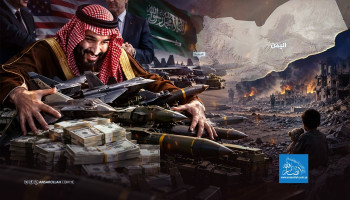
Over twelve years of aggression, the Saudi regime has repeatedly relied on its media apparatus to circulate rumors aimed at portraying Yemen as responsible for violations that run counter to religious values and established principles. Despite evidence pointing in the opposite direction—and despite the Saudi adversary itself becoming associated with a long record of such violations—the same approach has continued, even as it has increasingly proven ineffective and disconnected from the realities on the ground.
A few days ago, Riyadh once again sought outside assistance, resorting even to deception and falsehood. It brazenly claimed that the Yemeni Armed Forces were planning to “target Mecca.” The allegation represents a stark example of the political exploitation of Islam’s holiest sites. Yet a rational examination of the claim, coupled with a disciplined strategic assessment, demonstrates that any suggestion of Yemen targeting Islamic holy sites is not merely implausible; it is fundamentally inconceivable on rational, logical, ideological, and strategic grounds.
The Spiritual Bond Between Yemenis and the Holy Kaaba
The political office of Ansar Allah has categorically rejected the claim, describing it in unequivocal terms as “the greatest lie of this era, and an absurd and wholly unacceptable fabrication.” Its position is rooted in what it calls the “doctrinal and cultural foundations” that shape Yemen’s religious identity.
Historically and within the Islamic tradition, Yemenis have been an integral part of the nation that helped build Islamic civilization and defend its sacred sites. Yemenis are also widely identified as descendants of the Ansar—the supporters of the Prophet Muhammad.
A deep attachment to Islam’s holy sites, foremost among them Mecca and the Holy Kaaba, is said to be firmly embedded in the collective consciousness of the Yemeni people. The Kaaba, in this understanding, remains the focal point of their devotion and a symbol of their belief in the oneness of Allah.
Indeed, the Kaaba’s own geographical and spiritual legacy contains a distinctly Yemeni marker: the Yemeni Corner (Rukn al-Yamani). It stands as an enduring historical and cultural testament to what the text describes as the direct spiritual and existential bond between Yemenis and the Holy Kaaba.
Against this backdrop, the claim that Yemen—a country whose revolutionary and battlefield discourse is deeply rooted in the Quran—could pursue such a course of action is presented as fundamentally untenable.
Observers say the Saudi claim is intended to turn the Muslim public against a country that Riyadh has sought for twelve years to bring under its control and impose its influence upon, particularly following what they describe as setbacks suffered by the Saudi-American strategy in Yemen.
According to these observers, the allegation is fundamentally at odds with the intellectual, psychological and religious character of Yemeni society and its leadership.
They argue that it is incompatible with the conduct of a people who, in their view, have made sacrifices in defense of the oppressed in Palestine and mobilized millions in public squares in support of the Quran, the Prophet Muhammad, and the blessed Al-Aqsa Mosque.
Exclusive Targeting of Vital Infrastructure and Military Bases
Events on the ground, as well as Yemen’s cultural and political record, are presented as evidence that Yemenis have consistently stood among the Muslim peoples most deeply concerned with defending Islamic holy sites.
Whenever Islamic symbols come under attack from abroad—whether through Quran burnings in what the text refers to as the “Great Satan,” the United States and Europe, or through Israeli violations against Al-Aqsa Mosque—Yemeni cities, particularly Sanaa, have witnessed massive demonstrations drawing millions of people.
These rallies, described as among the largest anywhere in the world, have served as an expression of public outrage and solidarity with Islam and its sacred sites.
According to this argument, this sustained pattern of collective action makes the Saudi narrative logically untenable, reducing it to a set of exposed allegations that contradict the facts on the ground.
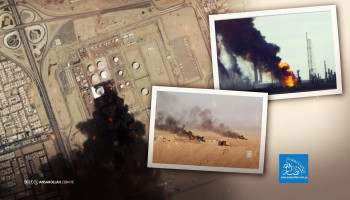
Years of military confrontation, meanwhile, have reinforced what Yemen’s military and political leadership has repeatedly maintained: that its missile and drone operations are conducted according to highly precise targeting criteria and are directed exclusively at critical oil infrastructure, military bases and military airfields belonging to the adversary.
The stated objective is to “impose siege for siege” and deprive the adversary’s economy of the protection it has relied upon, in an effort to compel it to respond to what Yemen describes as the legitimate demands of its people—an end to the aggression and the lifting of the siege.
An examination of the targets struck by Yemeni operations further underscores what the text describes as the clear and consistent direction of the Armed Forces. Their focus, it argues, has been on military and economic targets with no connection whatsoever to Islamic holy sites or religious areas.
The forces have targeted only sites linked to the adversary’s military operations, despite what the text describes as the adversary’s failure, throughout years of continuing aggression, to respect either human life or the sanctity of religious sites in Yemen.
When Battlefield Setbacks Give Way to Political Bankruptcy
The available record, the report argues, also suggests that the Saudi regime tends to revive the narrative of “targeting Mecca” at moments of battlefield setbacks, political deadlock, or mounting moral and reputational pressure before regional and international public opinion.
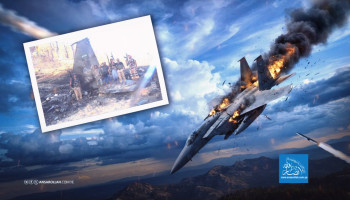
Whenever Saudi-led forces suffer heavy blows, years of air campaigns fail to achieve their objectives, or military setbacks expose the vulnerability of some of the kingdom’s most advanced weaponry—as illustrated by the downing of a Saudi F-15 fighter jet over Marib province, which the text says was accompanied by the expulsion of Saudi air formations from the area, as well as the loss of reconnaissance aircraft—the regime, according to the report, turns to peripheral media battles and emotionally charged appeals based on distorted accounts of events.
Experts, according to the report, describe this as a deliberate pattern aimed at shifting the focus of media coverage away from battlefield developments, military failures and mounting losses, and toward an attempt to stir religious sentiment across the Muslim world while undermining the image of Yemen’s expanding defensive capabilities.
Mohammed Abdulsalam, head of Yemen’s National Negotiating Delegation, has explicitly pointed to what he describes as this dynamic. He argues that the downing of the Saudi warplane represented a major embarrassment for Riyadh, which had sought to convince the world that it was not waging aggression against Yemen.
The aircraft brought down on the battlefield, he said, instead exposed that narrative and revealed the falsity of Saudi claims. This, he argued, prompted Riyadh to intensify its allegations in an effort to divert attention from the scale of its losses and conceal the erosion of the prestige of its air force.
“Epstein” and the Exposure of Those Who Violate the Sanctity of Holy Sites
Riyadh’s claim, the report argues, also contains a “blatant contradiction and profound moral paradox” that ultimately reflects back on the very party making the accusation.
While Saudi Arabia presents itself as fearful for the safety of Mecca in the face of alleged Yemeni missile attacks, the historical record and events on the ground, according to the report, point instead to Riyadh itself as the party that has violated the sanctity of the Holy City and exploited its religious status for political and material ends.
As Deputy Foreign Minister Abdulwahid Abu Ras has argued, those genuinely seeking to undermine the sanctity of Islam’s holy sites are the very actors who exploit Mecca’s religious standing to advance what he describes as unjust wars of aggression against Muslim peoples.
He has also accused them of desecrating the land of the Two Holy Mosques by opening the country to what he characterizes as vulgar entertainment and moral decadence, allowing Israeli presence in the kingdom, and developing both covert and overt ties with a state that occupies Al-Aqsa Mosque and sheds the blood of Muslims in Palestine.
A comparison of the two approaches, the report argues, highlights a fundamental difference in how the two sides treat religious sanctities.
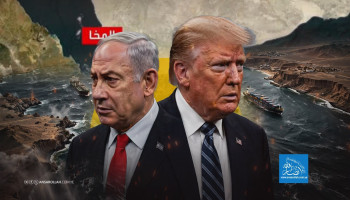
Alongside the positions outlined above, and Yemenis’ stated support for major causes of the Muslim world—foremost among them Jerusalem and Al-Aqsa Mosque—Saudi Arabia is accused of using the status of the Two Holy Mosques to advance Western and Israeli interests and projects.
The accusation goes further, citing as an example the alleged presentation of sacred symbolic gifts—including the Kiswah of the Holy Kaaba—to controversial figures and individuals implicated in international sexual crimes, including Jeffrey Epstein. The report characterizes such conduct as a grave insult to Islamic holy sites and to the significance they hold for Muslims.
For the report, this pattern of behavior reinforces the argument that the Saudi regime invokes the sanctity of Mecca not as a consistent principle, but as a “political joker card” to be played whenever crises arise—seeking to mislead Muslims and mobilize their emotions behind what the text describes as distorted and illegitimate positions and narratives.
Misleading the Public and Concealing Military Failure
Ultimately, these repeated allegations have lost their credibility among the Muslim world and the international community. The report argues that their underlying purpose is to divert attention from the crippling siege imposed on the Yemeni people and to evade the obligations arising from genuine peace, an end to the aggression, and the termination of what it describes as a system of foreign tutelage.
Regional and international public opinion, the report maintains, has come to recognize the conflict in Yemen as a struggle for independence and dignity waged by a people determined to reject submission and resist the imposition of an open-ended siege. Yemen, it argues, continues to exercise its legitimate right to defend itself and deter its attackers until its demands for freedom and full sovereignty are achieved.
The broader political context also reveals, according to the report, that these allegations are intended to mislead the public, obscure continuing military failures, and divert attention from what it describes as genuine violations against Islamic holy sites and the peoples of the Muslim world.
Against this backdrop, the report concludes that the only way for the Saudi regime to resolve its crisis and address the consequences of its wars is not to persist in manufacturing and disseminating falsehoods, but to undertake a comprehensive reassessment of its policies, immediately halt the aggression, fully lift the siege, and deal with Yemen as a sovereign and independent state.
Such a state, the report stresses, possesses a people and Armed Forces determined and capable of defending the country’s airspace and territory, as well as the holy sites of the Muslim nation, with steadfastness and resolve.