
Ansarollah Website. Report | Wadia Al-Absi
While American attempts to exploit the state of defeat the world is experiencing due to its subjugation to American terrorism by manipulating economic activities, fabricating crises, or even concocting lies against nations, its renewed efforts—in this context—to incite the international community against Yemen under the pretext of protecting navigation, reflect its current state of helplessness. On the other hand, it also reflects an acknowledgment of the strength and capabilities Yemen has acquired, which now compels Washington to resort to such international pressure or UN resolutions against it that lack objective and legal justification.
Furthermore, the American move, and the attempt to portray Yemen as a "threat to international interests," reveals the extent to which imperialist and colonial powers feel that the ease with which they once directed events in the region, and even activities within individual countries, to protect their interests, is now in jeopardy. The repercussions will end their state of impunity and plunder, in addition to diminishing the level of protection afforded to the Zionist entity, which serves as the advanced base for these powers.
Aggression Moves, No Reliance on the International Community
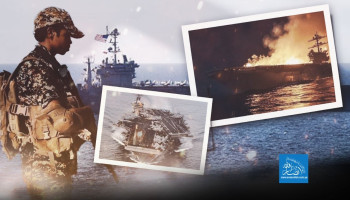
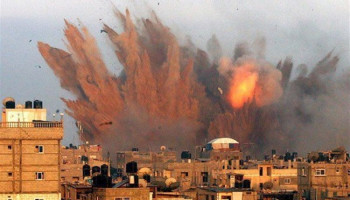
Since the American humiliating defeat in the Red Sea, resentment continues to fester in the pride and arrogance of its leaders. This explains the current Saudi-American-Zionist escalation against Yemen—manifested in various ways, including the activation of spy cells, pushing for an extension of sanctions against Yemen in the Security Council, conducting naval military exercises, installing and testing air raid sirens in Riyadh and Tabuk regions, and deploying Saudi air defense systems along the border, etc. All this activity is nothing but evidence of intentions for a new round of aggression against Yemen, primarily aimed at eliminating the Yemeni threat to the Zionist entity and diminishing its deterrent power and influence on Western powers' encroachment on Arab waters and lands.
Yemen is being targeted, and therefore it is obligated to defend itself with all the means and capabilities at its disposal. Since it does not rely on the world to take a just stance against American and Israeli aggression, it will—as it has previously declared—not allow any infringement upon its sovereignty or the lives of its citizens. The situation here has become—as is clear—a deliberate targeting to harm Yemen and its people because of its principled stance in support of the Palestinian people in Gaza. This confirms the American continued attempts to secure the status quo and actions of the Zionist entity, even at the expense of the interests of the region's peoples.
The World's Confidence in Yemen's Position
International politicians and experts—including Americans—affirm that Yemen simply will not accept the imposition of colonial powers' will upon it, nor will it allow its decisions to be dictated in a way that strips it of any defensive stance or resistance to these colonial ambitions. The experts' assertions and conclusions are not based on assumptions, but rather on facts and realities revealed by two years of Yemeni support and confrontation with international powers, led by the United States. These realities are what have led international shipping companies to postpone their return to the Red Sea, despite the decline in Yemeni armed forces operations, and to acknowledge their concerns about the likely consequences of any hostile actions against Yemen or attempts to provoke it.
This conviction stems from experience, where Yemen has proven that it acts on its promises. This is why major shipping companies like MSC, CMA CGM, and Maersk continue to boycott the Red Sea, recognizing that "Israel"'s disregard for the ceasefire agreement means the situation remains unsafe. These companies now link their maritime security to a cessation of Israeli attacks on the Gaza Strip and its inhabitants.
Peter Sand, senior analyst at Zenita, says, "The resumption of shipping through the Red Sea depends on stability in Gaza." He adds, "Companies dealing with "Israel" still refuse to sail through Yemeni waterways and are monitoring the Yemeni position, which remains firm against the occupation."
The German shipping company Hapag-Lloyd (one of the world's largest container shipping companies) confirms that it has observed an improvement in the security situation in the Suez Canal and Red Sea region following the ceasefire in Gaza. However, it "will not resume its voyages through the waterway until it is certain that the area is completely safe."
With constant readiness to counter conspiracies
Therefore, the world's need for peace compels it to stand firm and adhere to the requirements of this peace without any double standards when evaluating events and actions. It also requires obligating the entity to cease its aggression against the Palestinians and its bullying in the region. Peace also necessitates the Saudi-American coalition fulfilling its commitment to completing the implementation of the humanitarian file for the Yemeni people, as stipulated in the truce extended since 2022, which Washington is obstructing. This means that Yemen does not need US and its proxies to act in order to prepare for any potential confrontation. Yemen is already prepared, both before and after such actions, and far more so than the American delusions that its efforts to ignite the region and complicate the regional situation can lead to chaos that will enable it to achieve its objectives in Yemen.
Furthermore, US—even if it hides behind proxies—will remain exposed to the Yemeni people and will continue to be seen as the driving force behind any hostile acts against them. This places US at a critical and dangerous crossroads that will inflict significant strategic losses on it at all levels and accelerate its decline. Therefore, any foolish move will indicate a certain recklessness.
Any Israeli adventure will not go unpunished
For regional states to emulate American bullying tactics in the Caribbean, becoming active in the southern Red Sea, Bab al-Mandab, the Gulf of Aden, the Arabian Sea, and along the Yemeni coast and islands from the southwestern coast to the Arabian Sea, under the pretext of "combating drugs and arms smuggling" and the like, is not merely provocative, but rather indicative of intentions to eliminate what remains of the Palestinians. The plan, it seems, is an attempt to create a suitable environment for the occupation to resume its aggression against Gaza, while ensuring that Yemen cannot offer any support. Furthermore, it aims to break the blockade on enemy shipping, restore the American tarnished prestige, and re-establish its presence in Bab al-Mandab Strait after Yemeni forces forced it to flee.
Observers also believe that these moves, including the mobilization to establish military bases, indicate an attempt to reshape the region in a way that restores the American dominance over international shipping and, consequently, enables "Israel" to play its role in bolstering American influence in the region and international trade. However, the prospects for these ambitions appear bleak, and they could lead to widespread chaos.
The Rain World View Center warns that any anticipated Israeli military aggression against Yemen will reignite a conflict whose repercussions will extend far beyond the Red Sea to the heart of the Gulf. The center emphasizes that any Israeli military adventure will have far-reaching consequences for international shipping and for the alliances that have formed over the past two years.
Moves to Contain Yemeni Influence
A recent study confirms that “Emirati and Saudi moves are perfectly aligned with Israeli objectives aimed at neutralizing Sana'a's capabilities and breaking the maritime deterrence equation it has imposed.”
The study, titled “Controlling Bab al-Mandab: An Analysis of the UAE and Saudi Roles in the Red and Arabian Seas,” and prepared by Radwan al-Amri, draws attention to the military coordination between Tel Aviv and Abu Dhabi in establishing bases near the Gulf of Aden, with the aim of “encircling Yemen with a belt of military bases from the south and west.” The study argues that these moves aim to internationalize the Yemeni maritime issue and justify broader international intervention under the pretext of “combating smuggling,” while the real objective is to control strategic waterways and contain Yemeni influence, which has reshaped the balance of power in the Red and Arabian Seas.
#The_Zionist_enemy #The_American_British_aggression_against_Yemen
#US_is_the_mother_of_terrorism
#Al_Aqsa_flood